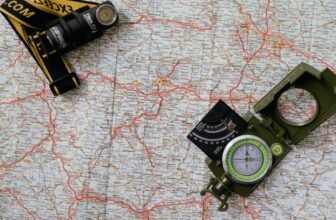
How to stay in contact and find your way when cell service fails — radio types and licensing explained plainly, plus map and compass skills that never need charging.
Advertised radio range is fiction. Real range depends on terrain, antenna, and power, and a household plan for who calls whom and when matters more than any radio you can buy.
A phone showing one bar of signal is not a navigation plan. When a storm takes down cell towers, when you drive past the last coverage area, or when a data plan expires, the map app you were ...
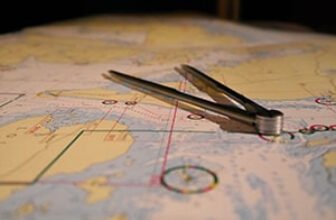
This free nautical charts course from Alison teaches chart reading, passage planning, tidal streams, lights, and buoyage. Advanced level, about 3 to 4 hours.
This free coastal navigation diploma from Alison teaches latitude, longitude, the magnetic compass, and chart plotting. Advanced level, about 10 to 15 hours.
This free celestial navigation course from Alison teaches solar positioning: sextant altitude, rational horizons, and time. Beginner level, 3 to 4 hours.
This free celestial navigation diploma from Alison teaches the celestial sphere, star coordinates, the sextant, and fixing position. About 10 to 15 hours.
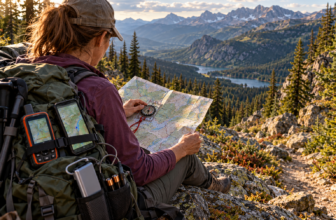
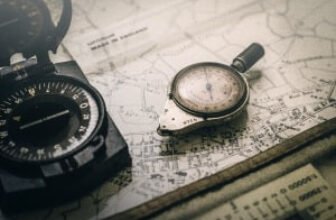
A paper map does not need a signal, a battery, or an account. It keeps working when a phone dies or a tower goes down, which is one reason the skill belongs in a preparedness kit next to water ...
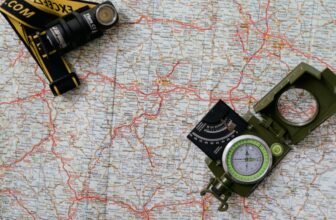
Batteries die. Cell phones lose connectivity. Even satellite service can be unpredictable. That is the argument for keeping a map and compass in your pack, because those two tools keep working ...
A two-way radio is the piece of gear you hope you never have to use, right up until the day the cell network goes quiet and it becomes the most important thing in the closet. Ham operators have ...
Emergencies rarely call ahead. One minute the house is running its normal routine, and the next a storm or a fire is forcing fast decisions with your people scattered across work, school, and the ...
The storm rolls through, the lights flicker, and you reach for your phone out of pure habit. No bars. Just like that, the device you trust for everything is a flashlight with a cracked screen. Cell ...
Radio-type explainers covering FRS, GMRS, amateur, and CB, licensing walkthroughs, programming tutorials, weather alerting setup, and land navigation fundamentals. We use FCC rules for licensing questions and cite them, because this is an area where confident bad information is common.
The numbers that matter
• GMRS licensing: one inexpensive FCC licence, valid ten years, covers your immediate family, no exam required.
• Advertised range versus real range. Handhelds marketed at 30-plus miles typically deliver one to two in built-up terrain.
• Antenna over wattage. An upgraded antenna usually improves performance more than a jump in transmit power.
• SAME codes. County-specific alerting on a weather radio, so you’re woken for your area rather than the whole region.
Where to start
Buy a NOAA weather radio with battery backup and set your SAME code tonight. Add GMRS handhelds for household coordination, get the licence, and program them the same day they arrive. Then write a one-page family communication plan — a meeting point, an out-of-area contact, and a check-in time.
Learn to read a paper map of your own county. Current radio and navigation prices are on our comms deals page.
Sign up for our best daily picks
These guides are general information. Follow manufacturer instructions and local codes for any product you buy. Some links earn Prepping Bargains a commission at no extra cost to you — it never affects what we recommend.
This website uses cookies to improve your experience. We\'ll assume you\'re ok with this, but you can opt-out if you wish.
Read More
Cookies are small text files that can be used by websites to make a user\'s experience more efficient. The law states that we can store cookies on your device if they are strictly necessary for the operation of this site. For all other types of cookies we need your permission. This site uses different types of cookies. Some cookies are placed by third party services that appear on our pages.
Necessary cookies help make a website usable by enabling basic functions like page navigation and access to secure areas of the website. The website cannot function properly without these cookies.
Marketing cookies are used to track visitors across websites. The intention is to display ads that are relevant and engaging for the individual user and thereby more valuable for publishers and third party advertisers.
Preference cookies enable a website to remember information that changes the way the website behaves or looks, like your preferred language or the region that you are in.