By Diane | Sources checked November 20, 2026
Free seeds for a home garden come from five places: seed libraries, seed swaps, nonprofit programs that mail seed, school and community programs, and the seed you save yourself. Free rarely means no cost at all. Most programs ask for postage, a donation, or a share of the seed you grow, and most give older or surplus seed. I checked every source below on its own page on October 20, 2026, so you know who each one is for and when to ask.
Free seed sources, each checked on its own page on October 20, 2026. Programs change their rules and pause without notice: check the program’s page before you ask.
| Source | Who can ask | What you get | What it costs you | When to ask | Status when checked |
|---|---|---|---|---|---|
| Your library’s seed library (find one on the Seed Library Network map) | Rules set by each library; some ask for a card | Packets to take home; many ask you to return some saved seed | Nothing | Most restock for spring; ask your library | Over 500 seed lending libraries worldwide (USDA National Agricultural Library) |
| A local seed swap | Anyone at the event | Seed other gardeners bring | Nothing; bring spare seed if you have it | Dates set by the host (library, garden club, extension office) | Check the host’s page |
| Seed Savers Exchange (the Exchange) | Anyone can browse; an account is needed to request | Seed listed by home gardeners | Payment set by each lister | Any time; the printed Yearbook lists seed offered by 1 November | Running |
| Free Heirloom Seeds | Anyone in the US | About 5 packs without a donation; 30 packs for the suggested $20 | Nothing, or a donation | Any time; read the year’s request rules first | Vastly more requests without donations than they can fill |
| The Seed Girl | Anyone | Donated seed, new listings Mondays 10 AM MST | Shipping fee at checkout | Mondays | Running |
| Going to Seed (US Seed Collection) | US and Canada, one order per person | Up to 10 packets of diverse mixes | Packets listed at $0.00; check shipping at checkout | From 1 February 2027 | 2026 collection sold out |
| Live Monarch Foundation | Free for kids, educators, and people who are struggling | Milkweed and regional wildflower seed | A self-addressed stamped envelope | 2026 seed campaign running | Running; requests are moving to a code from their site |
| UNH Extension Free Seeds for Education | Educational gardens in New Hampshire only | Up to 10 packets per order | Nothing | Next season January 2027 | Closed until January 2027 |
| Slow Food USA, Plant a Seed | School gardens | Ark of Taste seed | Nothing (a $10 donation is suggested to reach more schools) | Each year’s campaign | 2026 campaign page live |
| A city community garden group (Denver Urban Gardens is one) | Families and nonprofits in that city | Packets for pick-up | Nothing | Spring | Denver: out for 2026, back March 2027 |
| The Free Seed Project | Named here once so readers stop waiting for it | Listed by many other guides | – | – | Paused indefinitely, by its own page |
No rows for the USDA or SNAP: neither gives free seed. Each has its own section below, because people search for both. Each source in the table has its block in the sections that follow.
How Free Seed Programs Get the Seeds They Give
Every source in that table gets its seed in a few similar ways. Free garden seed is usually seed somebody else already paid for: stores donate last season’s unsold packets, gardeners give or return seed they saved, and donors cover the postage. Postage is the real cost of a free packet. Free Heirloom Seeds says a request without a donation costs about $2 to send, which is why it suggests $20 for 30 packs.
Most free seed is surplus or older, so it may sprout at a lower rate than a fresh packet. UNH Extension explains that its seeds were packaged the previous year, which is why they are free, and that germination may be lower. Plant a few extra and test before you count on them. Choice is limited, and counts are small: one program sends as little as a single seed of a certain variety, and most cap how much a household can request. Two words you will see again are open-pollinated and heirloom. Most free programs give open-pollinated seed, the kind you can save and regrow true, and Free Heirloom Seeds fills requests first when the seeds requested do not cross-pollinate.

Find Free Seeds at a Seed Library Near You
The closest free seed is often at your public library. A seed library is a collection of seed packets, usually kept at a public library, that you take home to plant. Many ask you to save some seed at the end of the season and bring it back, so the shelf keeps going. The USDA’s National Agricultural Library counts over 500 seed-lending libraries worldwide.
To find one, search your own library’s website for “seed library,” ask at the desk, or use the Seed Library Network map and its “Explore the Map” tool. Each library sets its own rules: some want a library card, some cap how many packets you take, some ask for saved seed in return, and some do not. The library’s page or front desk tells you which, so do not assume one rule fits them all. Ask in late winter. Most seed libraries stock up before spring planting, so that is when the shelves are full, and the choices are widest.
Find Free Seeds at Seed Swaps and Exchanges
Gardeners also trade seed directly. A seed swap is an event where gardeners trade or give away seed, and many let you take some even if you bring none. The host, usually a library, garden club, or extension office, sets the date and the rules. Bring your own seed in labeled envelopes with the crop, the variety, and the year saved.
Seed Savers Exchange is a gardener-to-gardener exchange rather than a free giveaway. Anyone can browse the listings; an account is needed to request, and you send each lister the payment they ask for, with seed usually arriving within about two weeks. Listings added by 1 November appear in its printed Yearbook, which it has published every year since 1975. Local swap groups also run online, organized by region. To have seed to swap next year, save it from open-pollinated plants, which come back true from saved seed.
Request Free Seeds by Mail From Nonprofits
These four programs mail seed for free or close to it, and each one sets its own rules, so read its page first. Seed companies mail free catalogs, not free seed: those belong on a free seed catalogs guide of their own. One caution before you request: the Free Seed Project, which many lists still include, says on its own page that it is paused indefinitely, so check that any program’s page is active before you send a request.
Free Heirloom Seeds: With or Without a Donation
Free Heirloom Seeds mails heirloom seeds to anyone in the US. A request without a donation usually gets about 5 packs. The suggested minimum donation is $20 for the first 30 packs, then $10 for each additional 15.
The Seed Girl: Free Seeds, You Pay Shipping
The Seed Girl shares seed donated by herself and other gardeners, with new free seeds posted Mondays at 10 AM MST. The seed is free; you pay a shipping fee at checkout. Her policies say the age and germination of donated seed are not guaranteed, so treat these as seed to test rather than to count on.
Going to Seed: One Order a Year, From February
Going to Seed‘s 2026 collection is sold out; new seeds open 1 February 2027. Its earlier page set the limits at up to 10 packets, one per type, one order per person, for the US and Canada. Re-read those when 2027 opens, since the rules can change. Its mixes are meant to adapt to your garden: save seed from the plants that do best, and send some back for early access the next year. Packets showed at $0.00 when read, so check the shipping at checkout.
Live Monarch: Milkweed Seed for a Stamped Envelope
Live Monarch sends milkweed and regional wildflower seed for butterfly gardens, free for kids, educators, and people who are genuinely struggling, while others are asked to add a contribution (it lists 30 or more seeds per dollar for most varieties). You send one self-addressed stamped envelope for the return. With US letter stamps starting at $0.82, a request runs about $1.64 in stamps. New requests will soon need a code from their site, so start at the page.
Get Free Seeds for a School or Community Garden
Teachers and community gardens have their own programs. Several free seed programs serve only schools, youth groups, and community gardens, and many are run by a state’s extension service or a nonprofit, so ask your county extension office whether your state runs one.
UNH Extension’s Free Seeds for Education sends up to 10 packets per order to educational gardens in New Hampshire only, one order per classroom or organization, with the next season opening January 2027. Slow Food USA’s Plant a Seed campaign gives free seed to school gardens each year and suggests a $10 donation to help reach more schools. City groups run spring giveaways too: Denver Urban Gardens hands out tens of thousands of free packets for pick-up across metro Denver each spring, and on the day it was read it was out for 2026 and due back in March 2027. That is one example; search your own city’s community garden network for the rest. And for low-income households, the mail programs above that put them first say so, with Free Heirloom Seeds filling no-donation requests first for those who cannot afford one.
Can You Get Free Seeds From the USDA or Government?
No. The USDA does not give free garden seed to home gardeners. Its National Agricultural Library says the Agricultural Research Service provides free germplasm samples only to scientists, geneticists, and plant breeders. Those collections exist to preserve plant genetic resources for research and breeding, and the unit is dedicated to preserving germplasm, not supplying gardeners.
The same USDA FAQ points everyone else to retail seed companies, local seed swaps, seed libraries, and extension services. What the government does offer is local: county extension offices, run by state land-grant universities, sometimes run seed programs, and public libraries host most of the seed libraries covered above. So there is no national free-seed office to write to, but there is very likely a free source near you.
Pay for Food Garden Seeds With SNAP Benefits
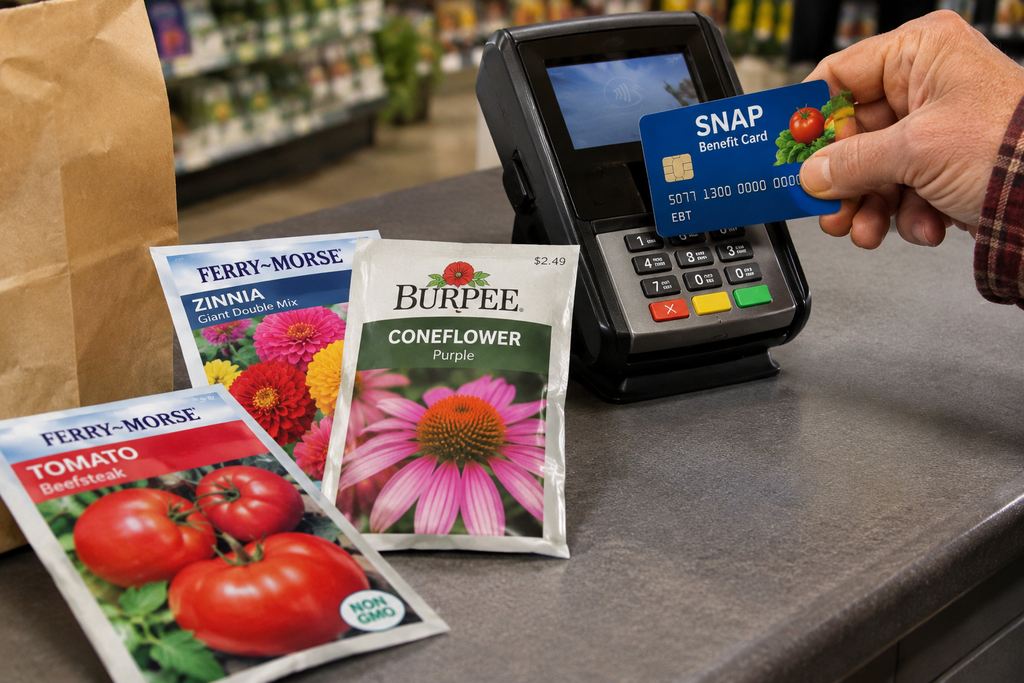
One USDA program does help with seed, though it is not free seed. SNAP benefits can pay for seed: the USDA’s SNAP page lists seeds and plants that produce food for the household to eat among the items households may buy. That means vegetable, fruit, and herb seed, and food plants such as seedlings, bought with benefits at a store that accepts SNAP.
Flower seed does not produce food, and garden supplies are nonfood items, so the same page excludes them. If a cashier is unsure whether seed qualifies, the USDA’s “What Can SNAP Buy?” page is the one to show. Online and in-store rules vary by retailer, so check the store’s own SNAP page before you shop.
When to Ask for Free Seeds, Month by Month
Dates from each program’s own page, read October 20, 2026.
| Month | What to do | Source of the date |
|---|---|---|
| October to November | List spare seed you saved on Seed Savers Exchange by 1 November to appear in the next Yearbook | exchange.seedsavers.org |
| December | Read each program’s new request rules; plan what you will grow and which seed you need | Each program’s page |
| January | UNH Extension’s education program opens (New Hampshire schools and groups); swap season starts at libraries and garden clubs | extension.unh.edu (“January 2027”); the host’s page |
| 1 February | Going to Seed opens its new US collection | goingtoseed.org (“February 1, 2027”) |
| February to March | Ask at your library’s seed library as it restocks; mail any envelope requests before planting time | Your library’s page (no single date) |
| March | City giveaways such as Denver Urban Gardens open for spring | dug.org (“check back in March 2027”) |
| Any time | Free Heirloom Seeds takes requests all year; The Seed Girl lists new seed every Monday | freeheirloomseeds.org; theseedgirl.com |
Timing decides whether a free packet arrives before planting. The free seed year runs on dates each program publishes: UNH Extension opens in January 2027, Going to Seed on 1 February 2027, and Denver Urban Gardens in March 2027, so a request made in December or January arrives in time for spring. Ask for what you will actually plant this year, because most programs cap requests: 5 packs without a donation, 10 packets per order, one order a year, and free seed does not improve sitting in a drawer. Ask for open-pollinated or heirloom seed if you want to save your own next year; hybrid seed does not come true from saved seed. And ask first for the short-lived crops: a viability guide names onion as the classic short-lived type, often spent after roughly a year. Work out your sowing dates from your last frost date when you are ready to plant, and a seed starting calculator works out when to start each seed, per crop.
Test Free Seeds Before You Count on a Harvest
Free seed is often older seed, so test it before you build a garden around it. Two of the programs say as much themselves: UNH Extension warns that germination may not be as high, and The Seed Girl does not guarantee the germination of donated seed. A simple germination test settles it in a week or two: lay ten seeds on a damp paper towel, slide it into a bag, and count how many sprout. If a free packet tests low, sow it thicker rather than throw it out, and replace it only if almost none come up. For how long seeds last, and a simple test, see our seed viability guide.
Get Answers to Common Free Seeds Questions
Can I get free seed catalogs by mail?
Yes, many seed companies mail a free catalog on request, but the seed itself is not free. A free seed catalog guide covers which companies send one.
Are free seeds by mail really free?
The seed is free; the cost is postage. Free Heirloom Seeds suggests $20 for 30 packs; The Seed Girl charges shipping; and Live Monarch asks for a stamped envelope (about $1.64 in stamps).
Are free seeds any good?
Free seeds are often surplus or older seed, so they can sprout at a lower rate than a new packet. Test ten seeds first; most open-pollinated free seed grows true and can be saved.
Is it illegal to save and replant seeds?
Saving seed from your own garden is ordinary gardening. Some protected varieties carry rules on who may market and sell them, which the USDA describes as Plant Variety Protection, and seed from swaps and libraries is shared to be saved. This is not legal advice.
Do garden centers or big stores give away free seeds?
No store giveaway was found on a store’s own page when checked. Some garden centers throw out last season’s packets, which is how UNH Extension’s program began, so ask yours at season’s end.
What is the cheapest way to buy seed when free seed runs out?
End-of-season sales at garden centers and dollar stores cut seed prices well below spring. A gardening-on-a-budget guide covers how to stretch a seed dollar once the free sources run dry.
For more free things, see more free resources; for current prepping and garden deals, see today’s prepping and garden deals. Under the free resources, you will find free courses on gardening and soil building and more.
I hope you have learned something from these lists and are ready to order some seeds. I didn’t even know about some of these resources until I started writing and researching this. I hope this list saves you a lot of money and provides plenty of food for you and your family.
Diane the Bargains Propagator