Old seed packets accumulate fast. You buy a packet, plant part of it, and the rest goes into a plastic tote at room temperature for another season. Two or three springs later you are standing in the garage holding a half-used envelope of squash seed and wondering whether it is worth the garden space. The honest answer is that nobody can tell you from the packet alone. Seed longevity depends on the species and mostly on how the seed was kept, and a five minute germination test will tell you more than any date stamp.
Seeds Do Not Expire, They Lose Viability
A printed date on a seed packet is not an expiration date in the way people think of one on a food label. Seed does not go bad on a schedule. It loses viability, meaning a growing share of the seeds in the packet are no longer alive enough to sprout. That decline happens slowly in good storage and fast in bad storage.
Most garden seed will last a couple to several years when it is kept cool and dry. Store the same packets where they get warm and damp and the timeline collapses. Most seed companies recommend replacing seed every two to three years, which keeps their customers buying fresh packets, but it is not a botanical rule. Eighteen year old seed has been grown successfully when storage was handled properly.
Species matters a great deal. Some cultivar seeds hold for several years while others lose viability within a single year. Onion is the classic short-lived type, often spent after roughly a year. Muskmelon commonly holds about five years. Beans sit at the other end of the scale and are among the longest storing seeds, with bean seed known to sprout after a century under ideal conditions.
Typical Storage Life by Seed Type
The ranges below reflect general seed viability guidance. Treat them as planning estimates rather than promises, because storage conditions can push a packet well past its category or wipe it out early. If you want to be certain about your own seed, the test later in this article is the reliable route.
| Seed category | Typical storage life |
|---|---|
| Vegetable seeds | 3 to 6 years |
| Fruit seeds | 2 to 6 years |
| Herb and flower seeds | 1 to 3 years |
| Onion | About 1 year |
| Muskmelon | About 5 years |
| Beans | Among the longest storing seeds, able to sprout after a century in ideal conditions |
Short-lived types such as onion, parsley family crops, and many herbs deserve fresh seed more often. Long-lived types such as beans, cucumbers, and melons are worth testing before you spend money replacing them. If you garden on a budget, testing first is the cheapest habit you can build
What Room Temperature Storage Really Does to Seed
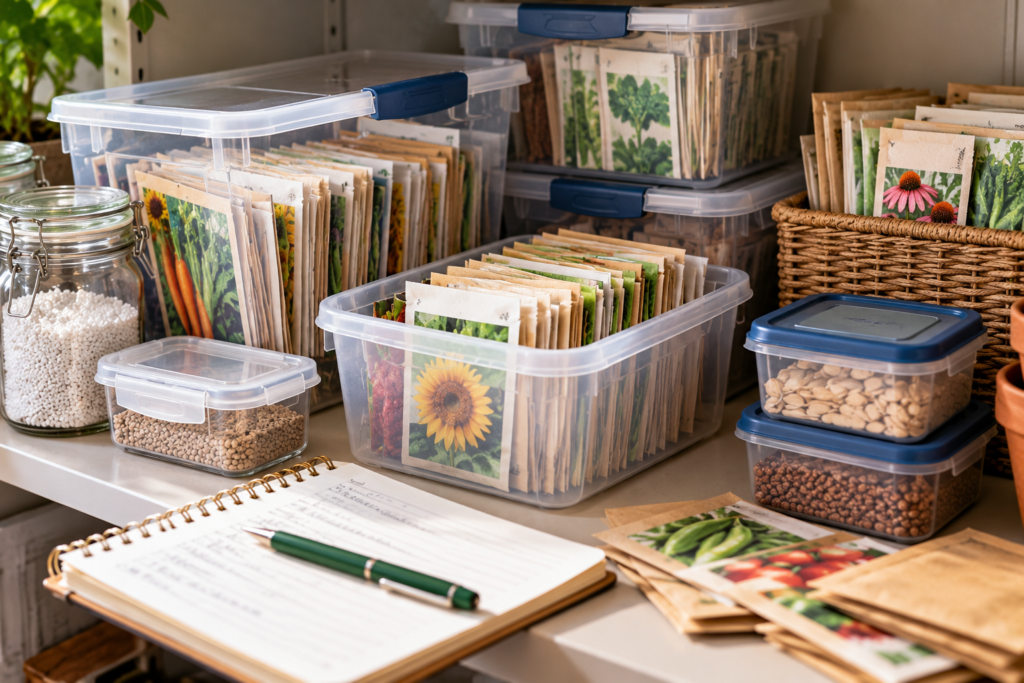
A plastic tote at room temperature is a reasonable starting point and better than a paper bag on a shelf in a humid room. A closed tote blunts humidity swings and keeps pests out, which helps. What it does not do is slow the clock in any meaningful way if the room itself runs warm.
Three things drive seed decline: warmth, moisture, and oxygen. Every increase in temperature speeds up the respiration happening inside each seed, and that burn of stored energy is what eventually kills it. Moisture is worse, because damp seed can mold or begin to germinate prematurely and then die. Oxygen exposure adds to the process over long stretches of time.
You can think of storage quality as a rough ladder. Cool and dry is the goal. Cool and slightly damp is a step down. Warm and dry is workable for a season or two. Warm and damp is where seed collections go to die, and it covers a lot of garages, sheds, and unfinished basements.
That is why the same packet can behave completely differently for two gardeners. A tote in a cool closet in a climate controlled house will outperform an identical tote in an attached garage that swings from freezing in February to ninety degrees in July. If your tote sits in a space with wild temperature swings, expect your seed to age faster than the table above suggests.
A Simple Viability Test You Can Run at Home
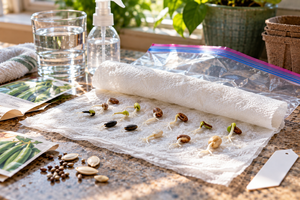
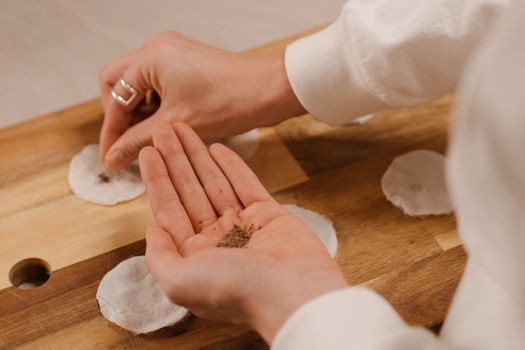
A germination test answers the only question that matters: how many of these seeds will actually grow? You do not need lab equipment. A paper towel, a plastic bag, and a week or two of patience will do it.
What You Need
- A sample of seeds from the packet you want to test
- Paper towels, unbleached and unscented if you have them
- A zip top plastic bag or a shallow container with a lid
- Water in a spray bottle or a clean cup
- A marker or tape for labeling
- A warm spot out of direct sun
How to Run the Test
- Count out a sample of seeds. Ten seeds is a practical number for a small home test and makes the math easy.
- Moisten a paper towel so it is damp but not dripping. Squeeze it out if it is sopping wet.
- Spread the seeds across one half of the towel with a little space between them so they do not tangle as they sprout.
- Fold the towel over the seeds and slide it into the plastic bag or container. Leave the bag partly open if you are using one, so some air can move.
- Label it with the variety and the date you started. This matters if you are testing several packets at once.
- Set it somewhere warm but out of direct sun. A kitchen counter away from the window works fine.
- Check the towel every day or two and mist it if it starts to dry out. Dry towel, dead test.
- Count the seeds that sprout as they appear. Give the sample a week or two before you call it, since slow starters such as parsley family crops may lag.
Reading the Results
Count how many seeds out of your sample produced a clear root or sprout. Ten out of ten is excellent and the packet is as good as new. Seven or eight out of ten is still strong enough to plant normally, though you may want to sow a little thicker. Half the sample sprouting means the seed is alive but tired, so plant heavily and expect gaps. One or two sprouts means the packet is nearly spent, and zero after a fair wait means it is time to replace it.
One failed test is not always the final word. Some species are slow, some need light to germinate, and some prefer cooler temperatures than a warm kitchen counter provides. If a packet surprises you with a poor result, run a second sample before you throw it out.
Storing the Rest of Your Seed Better
Once you know what is alive, protect it. Better storage means fewer replacement purchases and a seed stash you can actually rely on when a growing season goes sideways.
- Keep seed cool and dry above all else. A stable closet beats a garage with big temperature swings.
- Use airtight containers with a good seal rather than open boxes or paper envelopes alone.
- Keep packets labeled with the variety and the year you acquired them so testing is quick next spring.
- Group short-lived types together and plan to test or replace them first.
- Check on the stash once a year for moisture, pests, or a container that stopped sealing.
When to Replace Seed Instead of Testing It
Testing is cheap, but it is not always worth the trouble. Replace the packet without bothering if it is onion seed from several seasons back, if the seed is visibly moldy or clumped together, if it was stored somewhere that clearly got hot and damp, or if you need maximum germination for a small planting where gaps are unacceptable. A packet of a long-lived variety kept cool and dry deserves a test before it goes in the trash.
Frequently Asked Questions
Do garden seeds expire?
Not in the way food expires. Seed loses viability over time rather than going bad on a fixed date. Most garden seed lasts a couple to several years when kept cool and dry, and some types hold far longer. Most seed companies suggest replacing seed every two to three years, but that is a guideline rather than a hard deadline.
Will ten year old seeds still grow?
Sometimes. It depends on the species and how the seed was stored. Beans are among the longest storing seeds and have sprouted after a century in ideal conditions, while onion seed can be spent in about a year. Ten year old seed kept warm and damp is unlikely to perform, but a germination test will settle it.
Why did my old seeds fail to sprout?
Age is only one possibility. Storage conditions are usually the bigger factor, especially warmth and moisture. Planting depth, soil temperature, and watering habits also affect results. Before blaming the packet, run a paper towel test on a sample of ten seeds so you know whether the problem is the seed or the garden bed.
Is room temperature storage good enough for seeds?
It works for a season or two with many varieties, particularly if the container is airtight and the room stays fairly cool and stable. It shortens the life of the packet compared to colder, drier storage, and short-lived types like onion will still decline quickly. A cool closet beats a hot garage every time.
Should I buy new seeds every year?
Not automatically. Long-lived varieties such as beans, cucumbers, and melons often stay productive for years with decent storage. Short-lived types are worth refreshing more often. Test what you have before you shop, then spend your garden budget on the varieties that actually need replacing and keep the rest for another season.