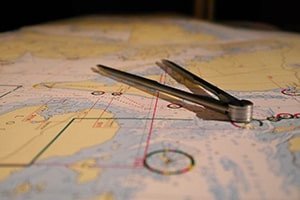
When the electronics fail on the water, a paper chart and the skill to use it are what get a vessel home. This free online nautical charts course from Alison teaches that skill. In about 3 to 4 hours at an advanced level, it covers reading nautical charts, planning a passage, understanding tidal streams, and recognizing the lights and buoys that mark safe water. It is the most boating-focused course in this set, and for anyone who spends time on the water, it is a genuinely valuable backup to a chartplotter.
Why This Matters for Preppers
Preparedness means having a backup for the systems you rely on, and on the water almost everyone now relies on GPS. Electronics fail, batteries die, and signals drop, usually at the worst moment. Knowing how to read a paper chart and fix your position by traditional means is the maritime version of keeping a manual can opener next to the electric one. It is the skill that keeps working when the screen goes dark.
The self-reliance angle is direct. This course teaches you to plan a route, track your position, and read the markers that keep you off the rocks, all without depending on a device. For anyone who boats, fishes, or lives near navigable water, that independence is real safety. It also deepens your understanding of tides and currents, which shape what the water is doing whether or not you are looking at a screen.
There is a value angle too. Formal maritime navigation training is expensive, and this course delivers core chart-reading skills for free. For a boater on a budget, or a prepper who wants water-travel skills in the toolkit, that is meaningful knowledge gained at no cost, and it is the kind of skill that can prevent a very expensive or dangerous mistake.
And on the water, the person who can navigate by chart becomes the one others trust when technology lets everyone down. That competence is quiet and reassuring, and it is exactly what a prepared group heading out on the water wants aboard.
How Chart Navigation Works
A nautical chart is a detailed map of the water, showing depths, hazards, and the markers that guide safe passage. Navigating by chart means combining a few simple ideas: your last known position, your course and speed, and fixed references you can see, to keep track of where you are. Two core concepts anchor it all: dead reckoning, your best estimate of position from course and speed, and a fix, a confirmed position from observed references.
The course teaches how to move between the two and how to read the water's own signposts. You learn the colors, phases, and sectors of navigation lights, the ranges at which they are visible, and the internationally recognized buoyage system that marks channels and dangers. You also study tidal streams, which push a vessel off course if ignored, and the running fix, a clever way to confirm position from a single landmark over time.
What You Will Learn
This is an advanced, practical course in traditional chart navigation. The main outcomes include:
- Understand tidal streams: learn the causes and effects of tidal movement on a vessel.
- Use DR and FIX: grasp dead reckoning and confirmed position fixes.
- Read navigation lights: identify light colors, phases, and sectors.
- Judge light ranges: understand geographical, luminous, and nominal range.
- Plot a running fix: fix your position by transferring position lines.
- Know the buoyage system: recognize the IALA buoyage that marks safe water.
Together these skills let you navigate by chart and observation alone. That traditional competence is a true backup for the water, one that keeps working long after the batteries have run flat.
What the Course Covers
- Nautical charts: reading the map of the water and its hazards.
- Passage planning: preparing a safe route before you set out.
- Tidal streams: how tides push a vessel and how to allow for it.
- Position fixing: dead reckoning, fixes, and the running fix.
- Navigation lights: colors, phases, sectors, and visible ranges.
- Buoyage: the IALA system that marks channels and dangers.
Where It Fits in Your Prep
This is a specialized skill for anyone whose plans touch the water. Pair it with a paper chart of your local waters, a compass, and basic plotting tools, and practice fixing your position while your electronics are still on, so the manual method is familiar before you ever need it alone. Keeping paper charts aboard as a backup is simple insurance that this course teaches you to actually use.
It complements the coastal and celestial navigation courses on the Free Shelf, which handle position-finding over longer distances and out of sight of land. Where those go big-picture, this course keeps you safe in the detailed, near-shore world of channels, marks, and tides. Together they build a complete traditional navigation skill set for the water.
What This Course Is and Is Not
Be clear on the scope: this is an advanced, maritime-specific course about nautical charts and marine navigation. It is genuinely useful for boaters and for water-travel preparedness, but it is not land navigation and not a professional mariner's license. It suits people who spend real time on the water and want a solid manual backup, rather than someone looking for general map-reading. Always follow safe boating practice and local regulations.
The lessons are free to finish. When you complete the course, a certificate is available that you can add to your resume or LinkedIn, and a credential like this can help you make the case for a job or a raise. Buying the certificate is optional and is never required to finish the lessons.
Final Thoughts
Electronics are wonderful right up until they quit, and on the water that moment can be serious. A paper chart and the skill to read it are the backup that never fails, and this course teaches exactly that. For anyone whose preparedness includes time on the water, that traditional navigation ability is worth having, and it is free to learn.
Start the free course and earn your certificate.
Looking for more like this? Browse the Free Shelf, our growing shelf of free Alison courses for preppers.
Some links are affiliate links, and they never change your price. Details: /disclaimer