Electricity runs almost everything you depend on, right up until the moment it does not. Knowing how a circuit actually works, and how to stay safe around it, is one of the most useful skills a prepper can build. This free Alison course, Introduction to the Electrical Trade, covers wiring basics, safety standards, and core electrical theory in about 1.5 to 3 hours. It costs nothing, and it gives you a foundation you will use for the rest of your life.
Why This Matters for Preppers
Self-reliance and electricity have a complicated relationship. When the grid is up, we barely think about it. When it goes down, or when a solar setup or generator needs wiring, suddenly a little knowledge is worth a great deal. Understanding voltage, current, and how a circuit is built lets you plan a backup power system, read a schematic, and talk to an electrician without feeling lost.
There is a real budget angle here too. Electricians are not cheap, and their time is in short supply after a storm. The more you understand the basics, the better you can maintain what you own, spot a problem early, and avoid paying for work you could safely do yourself once you know the rules. That is the show-the-math side of learning a trade skill.
Above all, this course leads with safety, which is exactly what electrical knowledge should do. It teaches what electric shock does to the body, the OSHA safety standards professionals follow, and lockout/tagout procedures that keep people alive. Respect for the danger is the first mark of someone who actually knows what they are doing.
How the Electrical Basics Work
At its heart, electricity is the flow of charge through a circuit. The course builds that picture from the ground up, defining power, charge, and current in plain terms, then introducing the laws that describe how they relate. Ohm's law ties voltage, current, and resistance together, and Kirchhoff's principles explain how current and voltage behave across a circuit. You do not need to be a mathematician to grasp the ideas, and understanding them takes the mystery out of wiring.
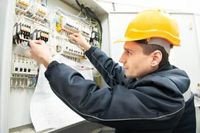
From theory the course moves to the real world: how wiring systems are laid out, what the job of an electrician actually involves, and how to work safely. Lockout/tagout is a simple, powerful concept: before you touch a circuit, you make sure it truly cannot be energized, and you tag it so no one switches it back on. Ladder and equipment safety round out the practical side, because most electrical injuries are avoidable with the right habits.
Learning the mechanism first is what makes the safety rules stick. Once you see why a circuit is dangerous, the precautions stop feeling like red tape and start feeling like common sense.
What You Will Learn
By the end you will have a clear, beginner-level footing in how electrical work is done safely. You will be able to:
- Outline wiring systems and how a basic circuit is put together.
- Identify job requirements of the electrical trade.
- Describe shock effects and why electricity demands respect.
- List OSHA safety standards used on real job sites.
- Explain lockout/tagout so a circuit stays safely de-energized.
- Apply electrical laws including Ohm's and Kirchhoff's principles.
Together those skills give you the vocabulary and the safety mindset to work around electrical systems with far more confidence.
What the Course Covers
- Wiring system basics: how circuits and systems are structured.
- The trade itself: what electricians do and what the job requires.
- Electrical safety: shock effects, OSHA standards, and lockout/tagout.
- Ladder and equipment safety: avoiding the most common injuries.
- Electrical theory: power, charge, current, and the core laws.
Where It Fits in Your Prep
This course is a cornerstone of the Keep the Lights On part of your plan. It pairs naturally with a solar energy course, a battery course, and a home wiring course, because all of them assume you understand the basics this one teaches. If you plan to build any kind of backup power, this is the groundwork that makes the rest make sense.
It is beginner friendly and suits anyone who wants to understand their home's electrical system, maintain a generator or solar setup, or simply be a safer, smarter homeowner. The knowledge does not expire, and it makes every later electrical project easier and less intimidating.
A concrete example shows the value. When you set up a solar power station and want to wire in a few outlets or understand a battery bank's connections, the terms stop being jargon. You can read the diagram, follow the flow, and ask the right questions. That is the difference between guessing and knowing, and it starts with the fundamentals this course lays down.
A straight word on limits. This course teaches theory and safe practice, but it does not make you a licensed electrician. Electrical codes and permit rules vary by location, and plenty of work, especially anything tied into your home's main panel or service, legally requires a licensed pro. Use what you learn to understand, maintain, and stay safe, and bring in a qualified electrician for anything beyond your training. That is not a limitation on the course; it is the responsible way to use it.
The lessons are free to complete. When you finish, a CPD-accredited certificate is available that you can add to your resume or LinkedIn, and a credential like this can help you land a trade job, support an apprenticeship application, or make the case for a raise. Buying the certificate is optional and never required to finish the lessons.
A few hours here leave you with a real, transferable understanding of how electricity works and how to respect it. That is one of the most practical, self-reliant skills you can own, whether the lights are on or not.
Start the free course and earn your certificate.
Looking for more? Browse the rest of the Free Shelf: free Alison courses for preppers.
Some links are affiliate links, and they never change your price. Details: /disclaimer