By Kay – Sources read November 18, 2026
When you leave for a shelter, the papers you bring prove who you are, help reunite your family, and start any insurance or aid claim later. A Red Cross shelter gives you a safe, dry place to sleep, but it is not a bank, a pharmacy, or a records office, so the documents come with you or they do not come at all. FEMA’s Safeguard Critical Documents checklist and the Red Cross shelter list agree on the short version: identification, insurance and property papers, medical and medication records, your contacts, and your pets’ papers. Here is exactly what to pack, how to keep it dry, and how to keep it current.
Disclosure: We earn a commission when you buy through some links on this page. It does not change your price.
A Shelter Keeps You Safe, Not Your Paperwork
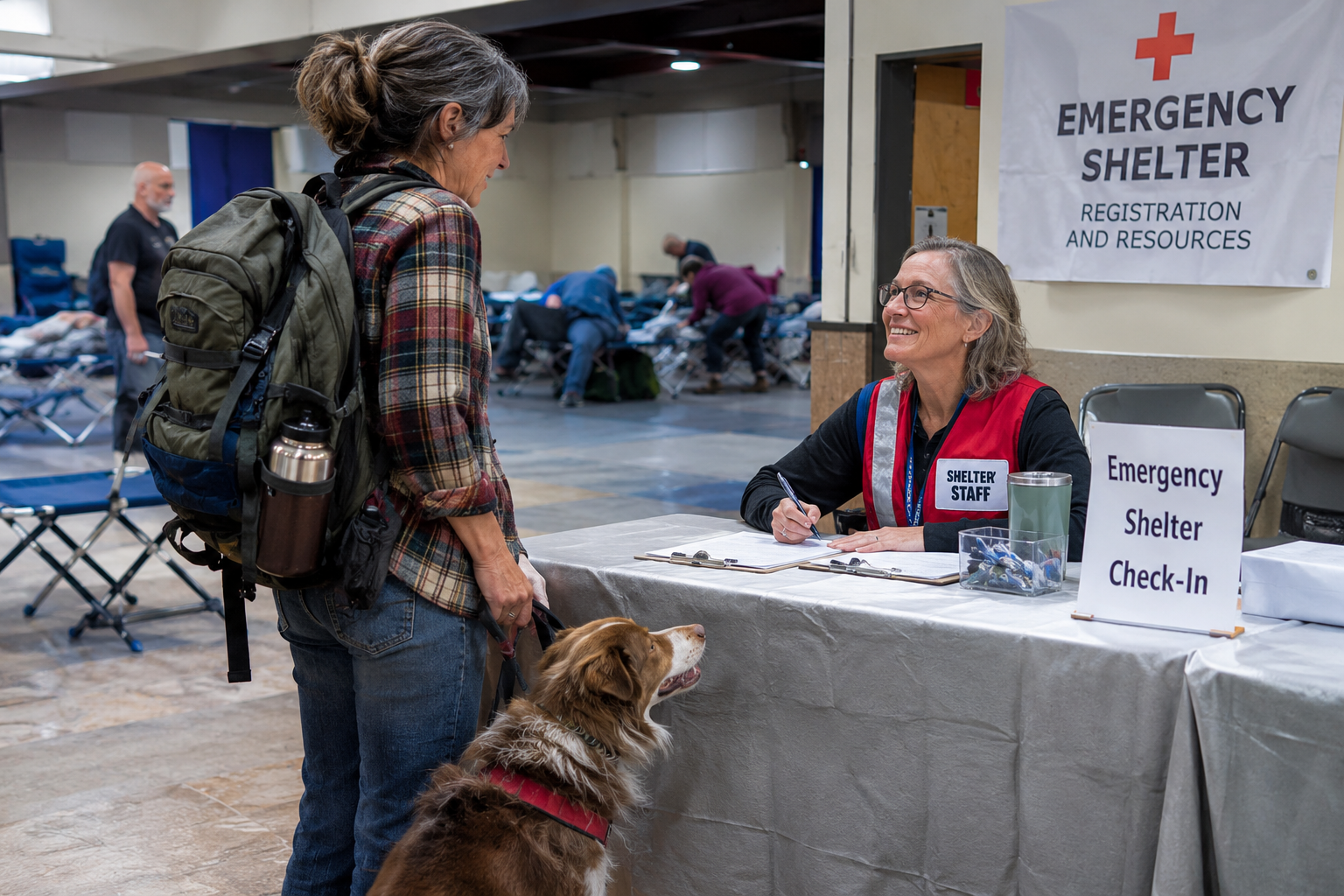
Here is the part people learn the hard way. The American Red Cross is clear: a shelter provides shelter and may not have other supplies, so bring your own medicine, your own special foods, and your own documents. Nobody at the door has your insurance policy or your child’s prescription list. The staff can hand you a cot and a meal. They cannot reprint your deed.
That is why the paperwork matters as much as the water and the flashlight. If your home is damaged, those same documents are what you hand an insurance adjuster or a FEMA caseworker to start your claim. Pack them once, while things are calm, and you are not hunting for a Social Security card while the radio is telling you to leave.
The Records to Pack, Grouped the Way FEMA Does
Start with the categories FEMA uses, so nothing important slips through. The list below is short on purpose. Copy the hard-to-replace records, skip the everyday clutter.
Grouped from FEMA’s Safeguard Critical Documents and Valuables checklist (FEMA P-1096, 2018) and the Emergency Financial First Aid Kit (EFFAK, 2019).
| Group | What to include | Why it earns a spot |
| Identification | Driver’s license, Social Security cards, passports, birth certificates, military ID | Proves who everyone is, and unlocks disaster aid |
| Insurance and property | Home or renter policy, auto policy, deed or lease, a photo home inventory | Starts a claim and proves what you owned |
| Financial and legal | A list of bank and card accounts, power of attorney, will | Keeps bills and benefits moving |
| Medical | Medication list, prescriptions, immunization and medical records, allergies | A shelter nurse or a new pharmacy can help faster |
| Contacts | Emergency contacts, one out-of-town contact, your doctors | Reunites your household |
| Pets | Vaccination and ownership papers, microchip number, a photo of you together | Many shelters ask for proof before they take an animal |
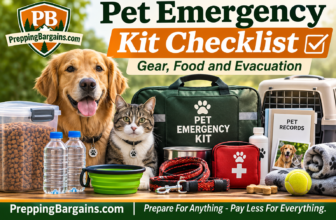
Keep it to what is hard to replace: the records that prove identity, ownership, health, and how to reach people. If you have already built a pet emergency kit, the pet row above is in it, so you copy those papers only once.
Pack Them So They Survive the Trip
A document only helps if it is still readable when you arrive. FEMA’s advice is to store paper and electronic copies of all files in safe locations, which in plain terms means two copies in two forms.
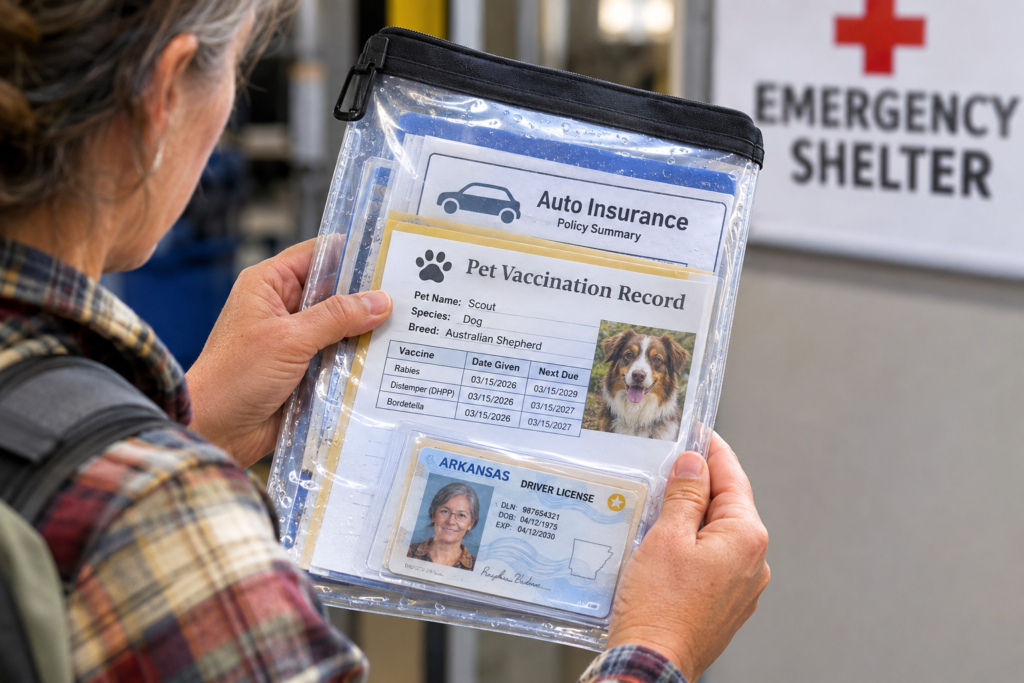
- One paper set in a waterproof sleeve. A zip pouch or a document bag keeps rain and spills off the originals. If you need one, you can see today’s price on Amazon for a waterproof document pouch.
- One digital set on your phone. Photograph or scan each page, and keep a copy in the cloud so a lost phone is not a lost file.
- Lock the digital copy. Password-protect the folder or the PDF, since these pages hold account and ID numbers.
Keep the sleeve near the top of your go-bag, where you can hand it over fast at the shelter door.
Keep the File Current
Records go stale. The one rule worth remembering from the Emergency Financial First Aid Kit is to review your checklist and update documents when your household circumstances change: a new baby, a move, a new policy, a new medication. Tie the review to something you already do twice a year, like the clock change, the same time you check the smoke detectors and your emergency kit. Ten minutes, twice a year, and the file is ready the day you need it.
Put One Sleeve by the Door
The hardest part of leaving is doing it fast. A single waterproof sleeve by the door, copied once and checked twice a year, turns the paperwork from a scramble into a grab. You already know where your people and your pets are going. Now your records go with them.
For the rest of the plan, our pet emergency kit guide and our other emergency planning guides walk through the gear and food that travel alongside these papers.
Want deals worth your inbox? Our hand-picked prepper deals go out free every day, and you can see the current ones any time on our deals page.
Common Questions About Shelter Records
Common Questions About Shelter Records
What documents should I take to an emergency shelter?
Bring your identification (driver’s license, Social Security cards, passports, birth certificates), insurance and property papers, a medication list and medical records, an emergency contact list, and your pets’ vaccination and ownership papers. Keep one paper copy and one digital copy.
Does a Red Cross shelter provide food and medicine?
Not always. The American Red Cross says a shelter provides shelter and may not have other supplies, so bring your own prescriptions and emergency medicine, any special-diet foods, and your own documents.
How should I store copies of important documents?
Keep one paper set in a waterproof sleeve and one digital set on your phone and in the cloud, then password protect the digital copy. FEMA’s guidance is to keep paper and electronic copies in safe locations.
What pet records do I need at a shelter?
Vaccination and ownership papers, your pet’s microchip number, and a photo of the two of you together. Keep them with your pet emergency kit, since many shelters ask for proof before they take an animal.
How often should I update my document file?
Review it twice a year, and update it whenever your household changes, such as a move, a new baby, a new insurance policy, or a new medication.
Sources (link these in the body, read November 18, 2026): Ready.gov / FEMA, Safeguard Critical Documents and Valuables (FEMA P-1096, 2018); FEMA Emergency Financial First Aid Kit (EFFAK, P-2063, 2019); American Red Cross, sheltering and what to bring.
If you have other questions, send them to us. We want you to be as prepared as possible. Facing a disaster is no time to try to find your documents last minute or make copies. Be prepared.
Kay