By Jason – A long-time fisherman who usually has rods in the car.
The best rod for a small stream depends on what blocks the cast.
A trout may be holding just beyond a low branch, with alder stems behind the angler and a fast tongue of water between. A shorter fly rod is easier to move through that pocket without catching the tip in leaves. But once the fly lands, a little more length can help keep loose line off the near current and guide a drift past the fish.
That makes clearance versus control the useful trade-off. On a creek enclosed by branches, a rod around 6½ to 7½ feet may feel less awkward. Where the banks are brushy but the space above the water is open, a rod closer to 8 feet can offer welcome reach. The width of the creek matters less than the space available for the cast—and the water the line must cross afterward.
Where length helps and where it gets caught
A narrow creek does not always call for the shortest rod. If the sky is open, a little extra length can help place a cast beyond near-bank weeds and keep line off water running at a different speed. Even when the opposite bank is only a few steps away, reach can make it easier to guide a lure or fly around a rock without stepping into the stream.
A low canopy changes the calculation. Every additional foot of rod raises the tip closer to branches during a cast and gives it a wider path through leaves on a sidearm stroke. The trouble is not limited to casting: a long tip can catch foliage while an angler moves between pools or lifts a fish near an overgrown bank. A shorter rod is easier to maneuver, though it cannot create room for a full backswing where none exists.
Line control is the main reason not to go too short automatically. A longer rod can hold more line clear of a fast seam or steer it around a snag, particularly from a cramped spot on the bank. Under low branches, that advantage may be worth less than a clean casting lane. On an open stretch, more reach may be welcome; under a leafy tunnel, the rod that can move freely often fishes better than the one that reaches farther.
A starting length for mixed brush
For a stream with alternating open pockets and brushy banks, 7 to 7½ feet is a practical range to try first. It is short enough to move through many tight spots without constantly catching the tip, while retaining enough reach to keep line off nearby water. It is a starting point, not a rule: two streams of the same width can fish differently if one has branches over the casting position and the other has only brush along the bank.
The 7-foot end makes sense where casts often start beneath low limbs or from a narrow opening in the shrubs. A shorter tip is easier to keep within that opening, especially with compact sidearm casts. The trade-off becomes noticeable when a good drift requires holding line beyond a near-bank current.
A 7½-foot rod may suit a stream with frequent openings between covered stretches. That extra six inches offers a little more room for line control, but it can also put the tip into branches during a roll cast or when lifting a fish close to shore. Casting style matters: an angler who relies on low sidearm casts may be comfortable with more length than one who regularly casts overhead.
Before choosing, look at several actual fishing positions rather than judging by stream width alone. Note where the rod tip would travel during the cast—and whether a longer rod would solve a problem often enough to justify the extra clearance it needs.
When six to six-and-a-half feet makes sense
A rod around 6–6½ feet earns its place when low branches are a repeated obstacle, not an occasional snag. If the tip catches leaves while the angler walks the bank, and even a low sidearm cast has little room to travel, losing a foot of rod can make fishing less awkward. A six-and-a-half-footer is often enough of a reduction; six feet suits the tightest canopy, where every bit of clearance matters.
The trade-off shows up after the cast. A shorter rod has less reach to hold line off the water, steer it around a rock, or make a small mend across a current seam. That can shorten a clean drift and make a fish on the far side harder to present to. Working closer, using shorter casts, and choosing a position with fewer currents between rod and fly can help, but none fully replaces the missing reach.
Narrow water alone is not a reason to go this short. A small stream with open space above it may be easier to fish with a longer rod, especially where its banks prevent a close approach. The deciding question is whether branch clearance causes trouble on most casts, rather than once in a while.
When eight feet or more makes sense
An eight-foot rod can seem excessive on a narrow creek, but stream width is not the deciding factor. Where the sky is open and a steep or overgrown bank limits where an angler can stand, extra reach helps place the fly near the far seam without wading closer. It can also keep the line clear of grass at the angler’s feet.
The advantage becomes clearer when currents run at different speeds. Suppose a fast tongue separates the bank from a slow pocket holding fish: a longer rod can lift more line off the fast water, making it easier to mend and let the fly drift with the pocket’s current. From an awkward foothold, the longer tip also offers a little more room to steer the fly around a rock or keep it off a snag. These are gains in line control, not necessarily casting distance.
Check the whole casting path before relying on that reach. A clear opening over the pool may still leave branches behind the caster, and a long tip is easier to snag while moving between spots. Where overhead space stays open, eight feet or more can be useful; under a low canopy, the shorter rod remains easier to handle.
Check the casting lane, not just the canopy
A rod that fits under the branches still needs a path for the rod tip and fly line. Before choosing a length for a familiar stream, notice which casts are actually available from where anglers stand, not just how much sky shows above the water.
Overhead, sidearm, or roll?
An overhead cast needs clearance behind and ahead of the angler. A low branch on either side can catch the line even when the rod itself passes beneath the canopy. A shorter rod may make the stroke easier to fit, but it will not help much if the backcast flies into a wall of leaves.
A sidearm cast can slip beneath branches through a gap along the bank. That gap must be wide enough for the rod tip and the line’s sideways sweep. A short rod is easier to keep clear of nearby stems, though the line can still snag brush at the edge of the opening.
A roll cast avoids a long airborne backcast, making it useful where trees crowd the rear bank. It still needs line resting on the water, room for a small loop behind the rod tip, and an open path toward the target. Brush directly behind the tip or across the water can close that option too.
If none of those paths is open, changing position—or passing up the cast—matters more than cutting another foot from the rod.
From the intended casting spot, trace where the line would travel behind, beside, and in front of the rod. An open tip path alone is not enough.
Length, weight, and action do different jobs
A shorter rod changes where its tip can travel. It may slip beneath branches and make a tight sidearm stroke easier, but it gives up some reach for keeping line off conflicting currents. Those trade-offs remain even if the rod carries a heavier line.
Line weight is a separate choice: it affects how comfortably the outfit casts different flies and handles different conditions. A small dry fly on a sheltered creek and a weighted nymph in a brisk pocket may call for different setups, even where the same rod length fits the banks. For that comparison, see how a 4-weight compares with a 5-weight.
Action describes how a rod bends and responds. A slower rod may feel forgiving on short casts; a faster one may suit a brisk stroke. Neither creates room beneath a branch, so judge clearance first, then consider the line weight and action that suit the fishing.
Match the rod to the stretch
These lengths are overlapping starting points, not cutoffs. The better fit is the rod that can be cast and carried through the usual brush while still providing enough reach for the water being fished. A few typical fishing positions reveal more than the stream’s width alone. I might not be the best fisherman, but I try and usually have rods in the car so I can throw a line any chance I get. You never know, we might need to catch fish to feed our families some day. See you at the lake, – Jason
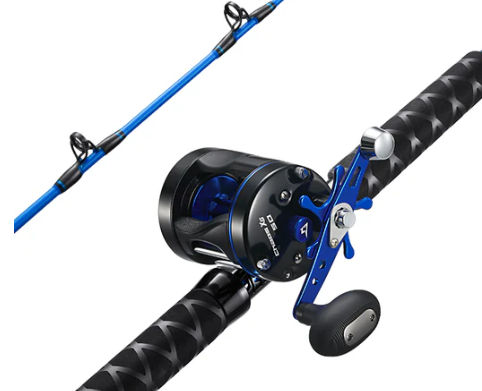
For great deals on reels and rod-and-reel combos, check out the Piscisfun page for current deals.