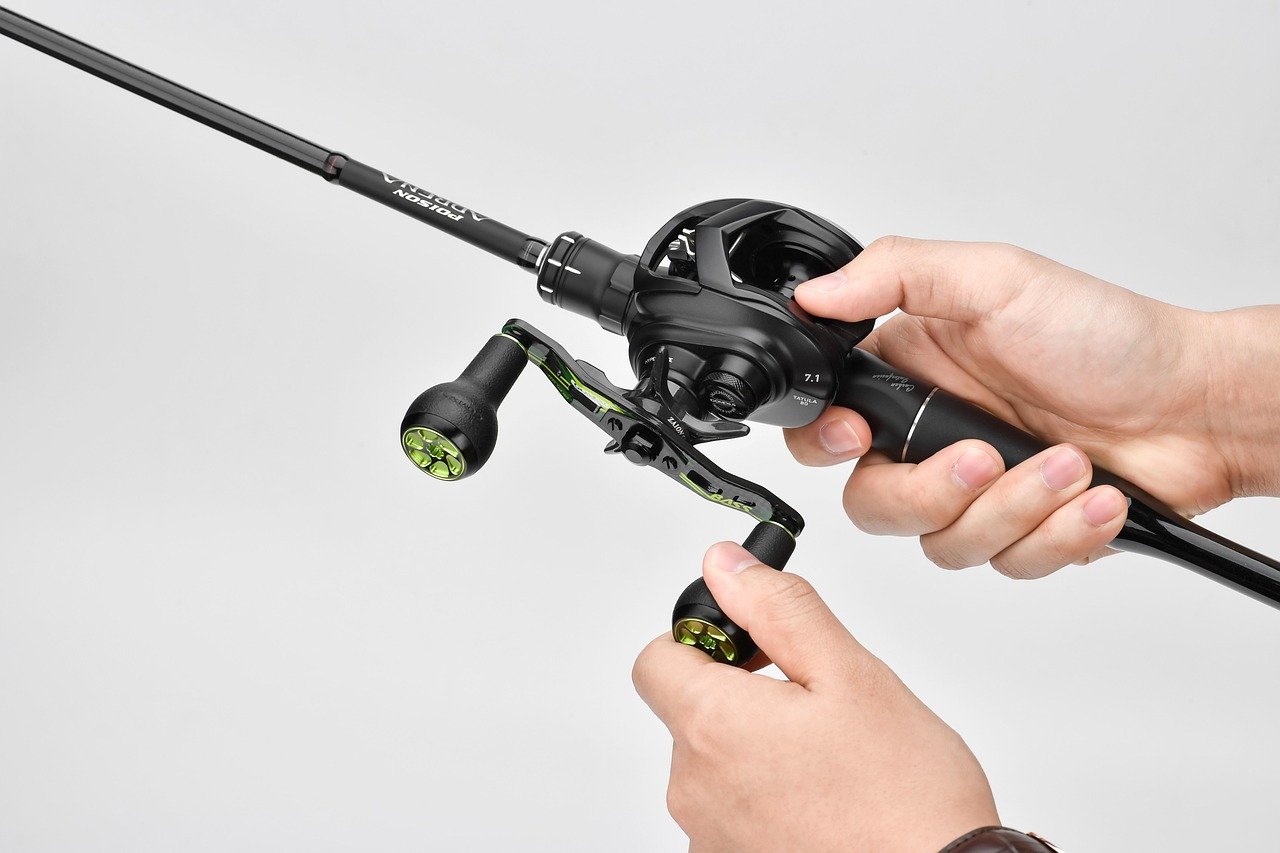
The biggest number on a reel box is not always the easiest one to fish.
A crankbait ticking along a rocky bank can climb out of its intended depth when the handle turns too quickly. That is the trade-off behind a fast baitcaster: it picks up slack promptly, but steady retrieves take more attention.
Gear ratio describes how many times the spool turns for one handle turn. For a first reel used with a mix of lures, something around 6.3:1 to 7.3:1 is a practical starting point. An 8:1 reel can be handy for taking up slack after a jig hop, but it is not automatically better for winding a lure back. Actual line pickup also varies with spool size, so the ratio tells only part of the story.
What 6.3:1 actually means
A 6.3:1 gear ratio means the spool turns 6.3 times for every full turn of the reel handle. Ten handle turns would produce about 63 spool rotations. The number describes how the reel is geared; it is not a score for reel quality.
It also does not specify how fast a lure travels. Each spool rotation takes up a length of line, but that length depends on how much line is on the spool. As line is retrieved and the spool fills, each rotation picks up more line. Two reels with the same gear ratio can therefore retrieve different amounts of line per handle turn.
Handle speed matters, too. A steady, slow crank on a high-ratio reel may move a lure more gently than a quick crank on a lower-ratio reel. Gear ratio is a useful starting point, not a substitute for watching how the lure moves in the water.
Inches per turn: the pickup number
Inches per turn (IPT) is the length of line a reel takes up with one full turn of the handle. Gear ratio says how many times the spool rotates; IPT adds the amount of line each rotation wraps onto it.
That amount depends on the diameter of the line sitting on the spool. A larger, well-filled spool takes up more line per rotation than a smaller or partly emptied one. For example, at 6.3:1, a 1.4-inch line-bearing diameter would recover about 28 inches per handle turn. At 1.2 inches, the same ratio would recover about 24 inches. As line leaves the spool during a cast, pickup drops until the line is reeled back in.
Published IPT is most useful for comparing reels measured under similar conditions, especially similar spool fill. A reel advertised at 30 IPT may not maintain that pickup at the end of a long cast. When comparing models, treat the printed figure as a starting point, then consider spool size and how much line will typically be out.
Why slower gears can feel easier
A deep-diving crankbait can pull hard enough to make a retrieve feel like a workout. A lower-ratio baitcaster generally trades line pickup for more mechanical advantage at the handle. That can make it easier to keep turning steadily, rather than speeding up, tiring out, and then slowing down again.
This is useful with hard-pulling lures, including deep-diving crankbaits and some large bladed lures. A deliberate retrieve gives an angler more time to feel a lure wobble, bump cover, or briefly stop working as intended. It can also make a comfortable pace easier to maintain across a long cast.
The reel does not set the lure’s action by itself. A crankbait’s design, the depth it reaches, current, and the actual cranking pace all affect how it moves. A lower ratio may help an angler avoid winding too quickly, but it does not automatically make a lure dive deeper or wobble better. The same reel can move a lure quickly if the handle is turned quickly enough.
For a beginner who often fishes lures that resist the retrieve, a moderately slower reel may feel more manageable than a fast one. It is still worth checking inches per turn: spool size and line fill affect pickup, and handle length can affect how much effort the reel feels like it needs. The practical test is whether the setup allows a steady retrieve without forcing an uncomfortably slow handle pace.
A sensible first ratio
For a first baitcaster expected to handle several techniques, roughly 6:1 to 7:1 is a practical place to start. It can keep a spinnerbait or swim jig moving without demanding a frantic handle pace, while still picking up line between hops of a Texas rig or jig. A moderate reel gives an angler room to slow down or speed up rather than committing to a specialized retrieve from the outset.
The exact number matters less than how the reel fits the lures used most often. A beginner who mainly throws deep-diving crankbaits may appreciate a slower reel when pulling against their resistance. Someone who often pitches into cover and needs to gather slack quickly may eventually prefer a faster one. Neither preference makes a midrange reel a poor first choice for mixed fishing.
Manufacturers do not all offer the same ratios: one lineup’s middle option might be 6.3:1, another’s 6.8:1. When choosing between them, consider the reel’s published inches per turn alongside the ratio, then favor the option that suits the lure tied on most often.
When a faster reel helps
A reel around 7:1–8:1 or higher earns its place when the job is to take up loose line quickly, not pull a lure hard all the way back. That difference matters most when a bite or a fish’s movement creates slack unexpectedly.
With a jig or Texas rig, the lure often falls on a semi-slack line. A fish may pick it up during the fall and swim away—or toward the angler. Fast pickup helps remove the slack so the angler can feel the fish, set the hook, and keep the line tight. It cannot replace watching the line closely, but it gives less ground to make up once a bite is noticed.
Some topwater presentations benefit for a similar reason. Walking a surface bait creates slack between rod twitches; a quicker reel can gather that loose line without requiring frantic handle turns. The retrieve still needs restraint: cranking too much between twitches can drag the bait forward instead of letting it work in place.
Fast pickup also shortens the empty retrieve after a jig or topwater bait has passed the useful part of a cast. Over many casts, that small saving is convenient. It is a reason to favor speed for those routines, not a promise that a faster reel will make every lure fish better.
When speed works against the lure
Fast pickup is useful when a lure leaves slack line, but it can be less helpful during a steady retrieve. A high-ratio reel takes in more line with each handle turn, so a familiar cranking rhythm may move a crankbait faster than intended. That can make it harder to keep the lure at a consistent pace, especially when the goal is a slow, steady run.
A deep-diving crankbait also pulls hard as its bill pushes through the water. On a faster reel, that resistance may feel more noticeable at the handle. Slowing the retrieve helps with pace, but it does not necessarily make a hard-pulling lure comfortable to crank all day. An angler who fishes those baits often may prefer a slower reel; an occasional crankbait does not automatically call for a separate setup.
Gear ratio is not a casting-distance setting. On a typical baitcaster, the spool turns freely during the cast rather than being driven by the retrieve gears. Likewise, a lower ratio will not cure a backlash. Casting control comes from an appropriate brake setting, spool-tension adjustment, and a cast suited to the lure’s weight. The brake and spool-tension adjustments that help prevent backlash are worth learning independently of reel speed.
After a cast, watch how the crankbait runs at a comfortable cranking pace. If it races along or feels tiring to retrieve, slow down before assuming the lure—or reel—is wrong.
Match the reel to the lures in the box
-
Mostly hard-pulling moving baits
For frequent crankbait or other resistant retrieves, a lower ratio can make steady winding more comfortable. Lure action still comes from the bait and retrieve pace, not the gear number alone.
Look forA lower ratio if resistance dominates most outings.AvoidChoosing speed just because it sounds more versatile. -
A little of everything
A reel around 6:1 to 7:1 is a practical starting point when the box holds both moving baits and slower presentations. Among beginner-friendly baitcasters, comfortable handling and predictable braking may matter more than a small ratio difference.
Look forA midrange reel that feels manageable.AvoidTreating one ratio as perfect for every lure. -
Frequent slack-line presentations
For jigs, soft plastics, or walking topwaters, a higher ratio can pick up loose line promptly. It need not be wound fast throughout the retrieve.
Look forFaster pickup when managing slack is routine.AvoidRushing a lure that needs pauses. -
Two reels with close ratios
Check each reel’s stated inches per turn (IPT) and the lures it will actually fish before deciding. Then compare braking, spool capacity, and how easily the reel fits the hand; close gear ratios alone rarely settle the choice.
Look forUseful pickup and controls that feel approachable.AvoidBuying by the ratio printed on the box.
A useful test starts with a lure the angler already knows. Make several normal casts and retrieve it at the pace that gives it its usual action. Does the handle turn comfortably, or does it take constant restraint to keep the lure from racing? With a hard-pulling lure, does each turn feel like work? A reel that feels fine for one cast may become awkward over a longer stretch.
Next, try a presentation that creates slack, such as letting a soft plastic fall or working a walking bait. Check whether the reel restores contact promptly without frantic cranking. The goal is not the highest pickup number; it is a comfortable retrieve that still takes up slack when needed. One clumsy cast proves little. A mismatch that keeps showing up with familiar lures says more than a blanket preference for faster gears.
Gear to Consider
If you are shopping for a first baitcaster, these Piscifun models come in a range of gear ratios — check the ratio in each listing against the guidance above. Prices below are live and update automatically.

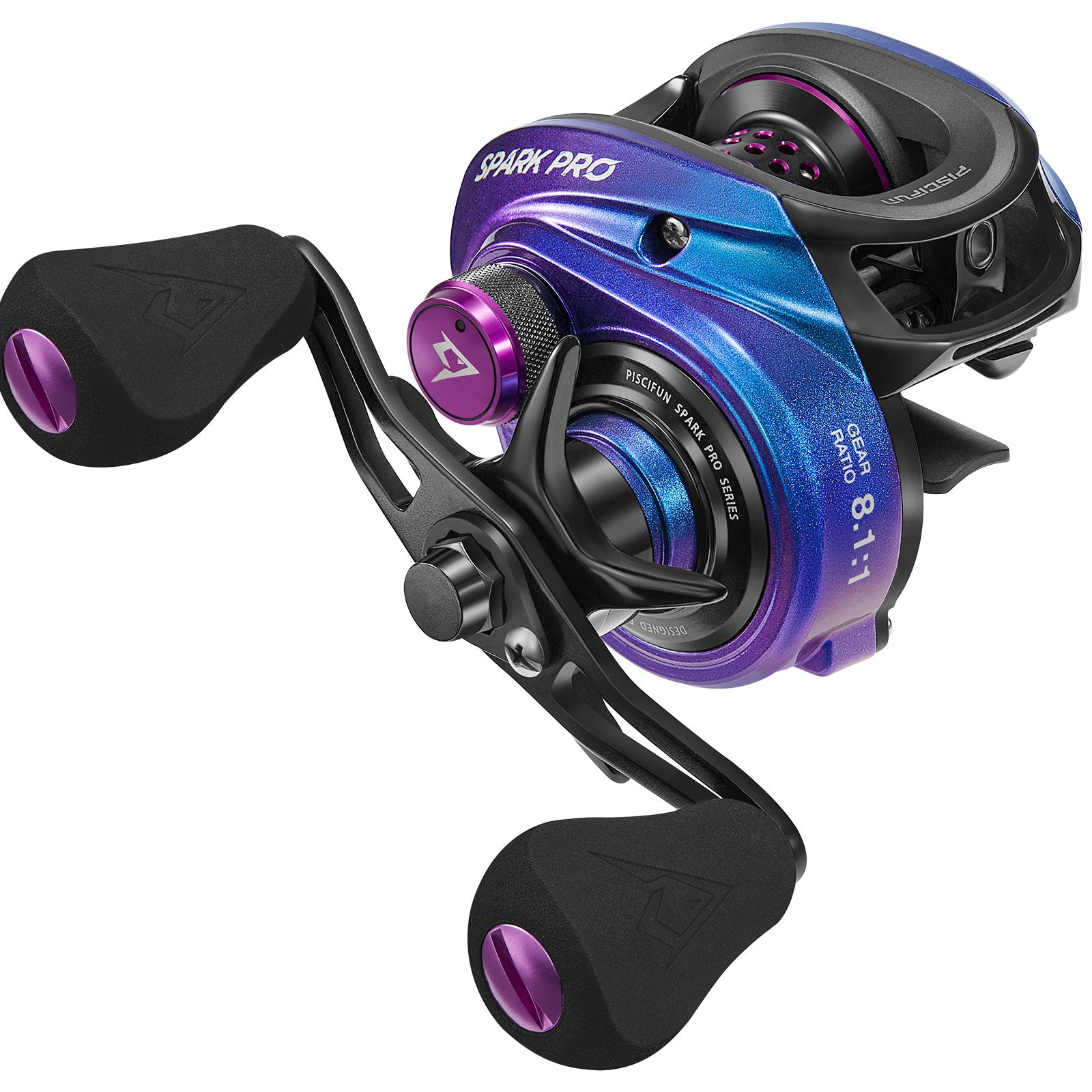

See more Piscifun gear → We may earn a commission when you buy through our links, at no extra cost to you.