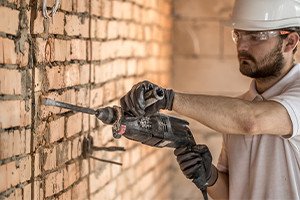
There is real satisfaction in laying a straight, solid course of brick, and it is a more learnable skill than most people think. This free Alison course, Bricklaying and Masonry Techniques for Beginners, teaches the hands-on side: mixing mortar, building foundations, setting out, and laying walls. It costs nothing, and it takes you from understanding masonry to actually doing it, which is exactly what a self-reliant property owner wants.
Why This Matters for Preppers
Being able to build with brick and block means you can add durable, useful features to your property without hiring out every job. Walls, planters, foundations, and repairs are all within reach once you know the techniques. That practical building ability is a core part of a capable, self-reliant homestead.
The savings are significant, because bricklaying is skilled labor that costs a lot when someone else does it. Learning to mix your own mortar and lay your own courses turns an expensive contract into a weekend project and a sense of accomplishment. That is show-the-math self-reliance you can literally stand on.
This course is built around hands-on technique, which is what makes it valuable. It teaches the practical steps, from mixing to setting out to building a wall, with the accuracy tricks the pros use. Learning the right method from the start saves wasted materials and gives you results that actually hold up.
How Bricklaying Works
Bricklaying is the craft of bonding units together with mortar into a strong, level structure. The course covers cement and concrete, how to store aggregate and mix concrete, and the characteristics of mortar and how to mix it correctly. Good mortar, mixed right, is the glue that holds the whole job together.
From there it moves into the building itself: the attributes of bricks and blocks, laying procedures and tools, and how to build a foundation for the work to rest on. It teaches setting out, the crucial planning step of marking exactly where everything goes before you lay a single brick, including the 3:4:5 rule for getting perfect right angles. Setting out well is what keeps a wall square and true.
With mortar, foundations, setting out, and wall construction understood, you have the full sequence of a real bricklaying job. Following that sequence in order is what turns a stack of bricks into a structure that lasts.
The 3:4:5 rule is a good example of the kind of practical trick the course hands you. It is a simple way to guarantee a true right angle using nothing but a tape measure: mark three units along one line and four along the other, and when the diagonal between them measures five, the corner is square. Small, reliable techniques like that are what let a beginner produce work that looks and holds up like a pro did it, and the course is full of them.
What You Will Learn
By the end you will be able to approach a basic bricklaying project with real technique. You will be able to:
- Work with cement and concrete including storage and mixing.
- Mix mortar correctly for strong, workable joints.
- Use bricklaying tools and understand brick and block attributes.
- Build a foundation for the structure to rest on.
- Set out accurately using the 3:4:5 rule for square corners.
- Lay walls following sound construction principles.
Together those skills let you plan and build a straight, solid wall or repair, from the foundation up.
What the Course Covers
- Cement and concrete: characteristics, aggregate storage, and mixing.
- Mortar: its characteristics and how to mix it.
- Bricks and blocks: their attributes, tools, and laying procedures.
- Foundations: building the base a structure rests on.
- Setting out: planning the layout and the 3:4:5 rule.
- Wall construction: the principles of building a sound wall.
Where It Fits in Your Prep
This course is the hands-on partner to the introductory masonry course, both in the Fix-It Homestead track. Where the introduction gives you the vocabulary and fundamentals, this one puts a trowel in your hand. It pairs well with carpentry and welding to round out your building skills, and it suits anyone who wants to make durable improvements to their own property.
Although it is labeled advanced, it is aimed at beginners and contractors alike who want to do their own home improvement, so willingness to practice matters more than experience. A few basic tools, some bricks, and a bag of mortar mix are enough to start learning on a small project.
A smart way to build the skill is to start with a small, forgiving project where a mistake costs almost nothing: a short garden edge, a simple planter, or a low decorative wall. You practice mixing, setting out, and laying courses at low stakes, and you end up with something useful. By the time you tackle anything bigger, the motions are familiar and the results show it.
A clear word on limits and safety. This course teaches beginner techniques, not licensed construction. Structural and load-bearing work, and anything affecting a building's integrity, are governed by local codes and are best done under professional guidance and inspection. Wet cement and mortar are caustic and can burn skin and eyes, and the materials are heavy, so wear gloves and eye protection, lift carefully, and start with small, non-structural projects.
The lessons are free to complete. When you finish, an Alison certificate is available that you can add to your resume or LinkedIn, and a credential like this can help you enter the trade, support an apprenticeship, or make the case for a raise. Buying the certificate is optional and never required to finish the lessons.
A few hours here, plus some practice, leave you able to build something solid and lasting with your own two hands. For a self-reliant household, that is a deeply satisfying and genuinely useful skill to have.
Start the free course and earn your certificate.
Looking for more? Browse the rest of the Free Shelf: free Alison courses for preppers.
Some links are affiliate links, and they never change your price. Details: /disclaimer