When an injury happens miles from the nearest road, the usual advice to call for help and wait does not apply, and this free Alison course prepares you for exactly that. Wilderness First Aid Training runs about 3 to 4 hours with video and covers assessing and stabilizing injuries far from help, environmental emergencies, wounds, spine and musculoskeletal injuries, and the basics of a wilderness evacuation.
Why This Matters for Preppers
Wilderness first aid is arguably the most prepper-relevant first-aid training there is, because it assumes what preppers plan for: that professional help may be hours away or not coming at all. The skills are built around self-reliance and improvisation, not a quick ambulance.
The scenarios map directly onto emergencies during a disruption. Managing a wound, a broken bone, or a heat or cold emergency when you cannot simply hand the person to a hospital is the core challenge, and this course is designed around it.
It also teaches patient assessment and stabilization, which is the foundation of handling any serious injury far from help. Knowing how to evaluate someone and keep them stable buys the time that a delayed rescue requires.
And the environmental content, from heat and cold injuries to lightning and animal bites, covers the real hazards of the outdoors and of a world where climate control and easy shelter cannot be taken for granted.
It also builds a mindset as much as a skill set. Learning to improvise care with limited supplies, far from help, trains the resourcefulness that runs through all of preparedness. That way of thinking serves you in emergencies well beyond the backcountry.
The scenarios also tend to be higher-stakes precisely because help is far off, which is what makes the training so valuable. A twisted ankle in a parking lot is a nuisance, but the same injury ten miles from the trailhead is a genuine problem. Learning to handle that gap, calmly and with limited gear, pays off any time you are beyond easy reach of help, which for a prepper can mean far more than a hiking trip.
How Wilderness First Aid Differs
The course starts with assessing and stabilizing a patient, then moves through treating outdoor injuries and illnesses, managing environmental emergencies, and the protocols for a wilderness evacuation when someone must be moved to safety.
The key difference from ordinary first aid is time and distance. When help is far away, the goal shifts from a quick handoff to keeping someone stable and comfortable for the long haul, sometimes with improvised gear. That mindset is exactly what preparedness calls for.
As with all first aid, the knowledge is strongest with hands-on practice. Use the course to learn the assessment process and the treatments, and reinforce the physical skills so you can rely on them in a remote setting.
Match your kit to the setting as you learn. Wilderness first aid leans on improvisation and a few well-chosen supplies, so think through what you would carry and how you would adapt it, and the course becomes a plan rather than just information.
Make it concrete by building an outdoor-appropriate kit and thinking through communication and evacuation before you need them. Practice improvising splints and dressings from what you carry, and rehearse the patient assessment on a willing family member, so the sequence is familiar when a real situation demands it.
What You Will Learn
The course teaches the skills for handling emergencies where help is not close. Here is what you will learn:
- What wilderness first aid is and how to assess and stabilize a patient
- First-aid treatments for common outdoor injuries and illnesses
- The protocols for medical emergencies and wilderness evacuations
- How to manage cuts, wounds, and spine injuries
- How to handle musculoskeletal injuries in remote settings
- How to address heat and cold emergencies and lightning injuries
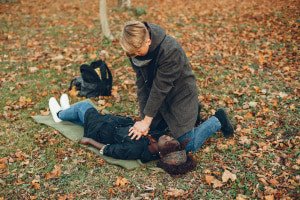
- How to respond to animal bites, plus basic CPR
Together, these lessons prepare you for the emergencies preppers most need to be ready for: the ones where you are the help. That self-reliant capability is exactly what the Well-Stocked Body track is about.
What the Course Covers
- Assessment and stabilization: how to evaluate a patient and keep them stable far from help.
- Outdoor injuries and wounds: treating cuts, wounds, spine injuries, and musculoskeletal problems in the field.
- Environmental emergencies: handling heat, cold, lightning, and animal-bite injuries.
- Evacuation: the protocols for moving an injured person to safety.
- Basic CPR: the core resuscitation steps in a remote context.
Where It Fits in Your Prep
For preppers, this may be the single most relevant first-aid course on the shelf, because it is built for exactly the conditions preparedness anticipates: help that is far away, delayed, or unavailable.
It builds beautifully on a general CPR and first-aid foundation, extending those skills into remote and grid-down scenarios. Take the basics first, then this, and you cover both everyday and worst-case emergencies.
Pair it with a well-stocked kit suited to the outdoors and a plan for communication and evacuation. The training and the gear together are what make remote self-reliance real rather than theoretical.
Because it is so aligned with the prepper mindset, it is worth prioritizing even if you already have basic first aid. The remote-and-delayed-help scenario is exactly the one general courses tend to skip.
This is educational first-aid knowledge, not a substitute for hands-on certification or professional medical care. Serious injuries still need professional treatment and evacuation whenever it is possible, and this course does not make you a medical provider. As preparation for handling emergencies when help is far away, backed by practice, it is one of the most valuable courses a prepper can take.
The lessons are free to finish. When you complete the course, a certificate is available that you can add to your resume or LinkedIn, and a credential like this can help you make the case for a job or a raise. Buying the certificate is optional and never required to finish the lessons.
Preparedness means being ready when help is not coming quickly, and few skills embody that better than wilderness first aid. This free course is a strong place to build it. Learn to be the help, and distance stops being so frightening.
Start the free course and earn your certificate
Looking for more free training like this? Browse the full lineup on our Free Shelf, our hand-picked collection of free Alison courses for preppers.
Some links are affiliate links, and they never change your price. Details: /disclaimer.