The number on a sleeping bag is a test result, not a guarantee of warm sleep.
At 3 a.m., a camper can be shivering inside a 20°F bag while the forecast says it is 20°F outside. The first thing to check is which rating appears on the label. A bag’s lower-limit rating describes a colder sleeper curled up to retain heat; its comfort rating is a better guide to a restful night.
The campsite can also be colder than the forecast, especially in a low spot where cold air settles. A thin sleeping pad lets warmth escape into the ground, and a tired or hungry camper may feel the cold sooner. For a forecast near the bag’s printed limit, leave some temperature margin rather than counting on that number to deliver comfort.
What a temperature rating means
A sleeping bag’s temperature rating is an estimate of how it performs under specified test conditions. Standardized tests use a heated mannequin with defined clothing and insulation beneath it, then measure how quickly heat escapes. The number helps compare bags; it does not predict exactly how warm any one sleeper will feel.
The rating also does not describe the temperature inside a tent. A tent blocks wind and precipitation, but it provides little insulation on its own. Nor is a bag’s lowest printed number a promise that a person can sleep comfortably—or safely—at that temperature. Read the label to see which rating that number represents.
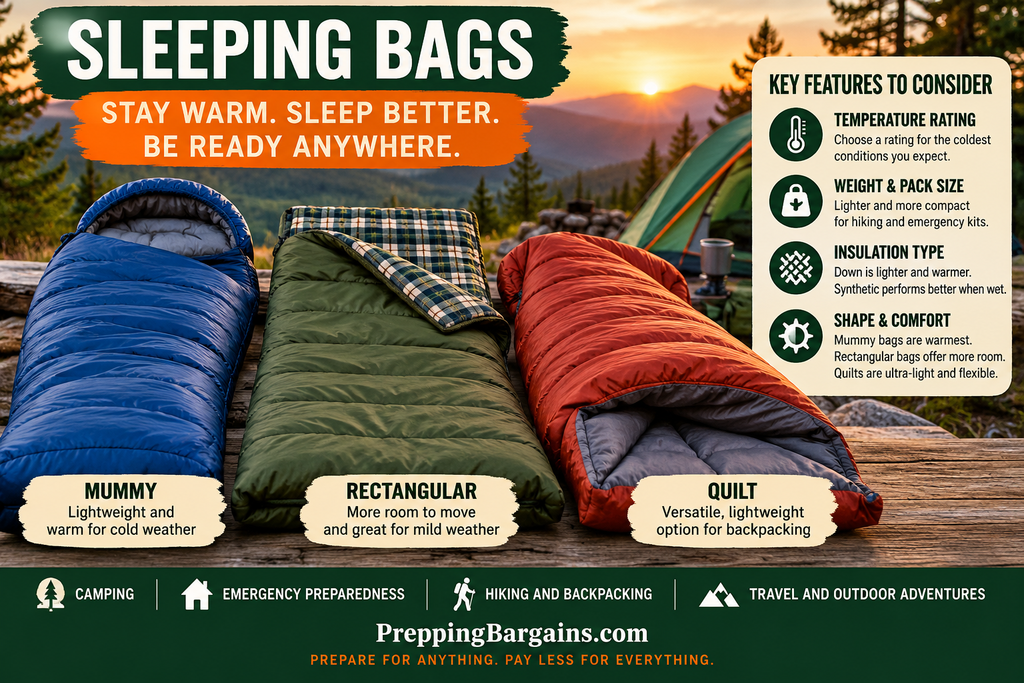
For shopping, look for the comfort rating: it is the more useful starting point for a cold-night sleeper than the lower-limit or extreme rating. Choose a comfort rating at or below the expected overnight low, and allow extra margin for uncertain forecasts or a tendency to sleep cold. That margin matters more than matching a bag’s headline number to a forecast exactly.
Comfort, lower limit, and extreme
- Comfort
The temperature at which a standard sleeper, modeled as a woman, can sleep in a relaxed position without feeling cold. It is the most useful figure for planning a night of ordinary sleep.
- Lower limit
The temperature at which a standard sleeper, modeled as a man, can stay warm while curled up. A night near this number may be tolerable rather than comfortable.
- Extreme
A survival threshold, not a sleeping target. At this temperature, serious cold injury remains possible.
- Headline rating
A single number on a product page may be the comfort rating, the lower limit, or a brand’s own estimate. Look for an ISO 23537 or EN 13537 test designation and the full set of figures before comparing bags.
ISO/EN testing puts bags on a more consistent footing, but it cannot account for every sleeper or campsite. A loose fit can leave more air to warm; gaps around the hood can let warm air escape. Damp clothing, fatigue, and individual cold tolerance also change how the same bag feels. When a brand gives only one number without identifying its test method or rating type, treat it as a claim rather than a direct comparison.
Choose a comfort rating below the forecast low
-
Find the coldest overnight low
Check the forecast for each night at the camping location, then plan around the lowest temperature—not the average for the trip. A nearby town may be warmer than a higher campsite.
-
Start 10–15°F (5–8°C) colder
Look for a bag whose comfort rating falls that far below the expected low. For a forecast of 30°F (−1°C), that points to a comfort rating around 15–20°F (−9 to −7°C).
-
Allow for an uncertain forecast
If the trip is several days away or the forecast keeps changing, leave more room below the predicted low. A precise-looking number is still an estimate.
-
Account for the actual campsite
A higher or exposed site can feel colder than the forecast location, especially when wind reaches the tent. If the overnight low is likely to be lower there, choose the bag against that colder estimate.
Adjust for the person in the bag
Two campers in the same rated bag can have very different nights. Someone who usually sleeps cold may need more insulation than the forecast-based cushion suggests; a warm sleeper may prefer a bag that can be unzipped easily without letting in drafts.
The day leading up to bedtime matters, too. Fatigue after a long hike, too little food, or damp base layers can make a bag feel less warm. Changing into dry clothes and eating dinner before turning in may help, but neither makes a thin bag suitable for a colder night.
Fit changes how efficiently a bag holds warmth. An oversized bag leaves extra space to warm up, while one that is too tight can compress insulation around the shoulders or feet. A bag that allows a comfortable sleeping position without large gaps is a better bet than choosing by rating alone.
Past trips offer the best personal reference. Note the overnight low, bag and clothing used, and whether sleep felt comfortable. If similar nights repeatedly end in shivering, choose a lower comfort rating next time; if they end with the zipper open, prioritize ventilation.
The pad matters as much as the bag
A bag’s temperature rating assumes an insulated surface beneath the sleeper. Its loft traps warm air above and around the body, but body weight flattens the insulation underneath. Once compressed, that part of the bag offers little resistance to heat escaping into the ground. A warmer bag may still feel cold if the pad is the weak point.
A pad’s R-value measures resistance to heat flow: higher numbers mean more insulation. For mild ground conditions, a modest R-value may be enough. Around freezing, an R-value of roughly 4 or higher is a useful starting point; on snow or frozen ground, roughly 5 or higher is often more reassuring. Those are guides, not guarantees—sleeping warm also depends on the person, the site and the rest of the sleep setup. For more detail, see how to choose a sleeping pad R-value for cold nights.
Check the pad before replacing a bag that already has an appropriate comfort rating. Adding a closed-cell foam pad beneath an inflatable pad can boost insulation; pad R-values can generally be added together. It also provides a backup if the inflatable pad leaks.
How fit and closures affect warmth
-
Room without excess space
A bag needs enough room for the sleeper’s shoulders, hips, and knees without flattening the insulation when turning. Too much empty space can also feel chilly, particularly around the torso.
Look forA fit that allows movement while preserving loft.AvoidA tight cut that presses insulation flat. -
A hood and collar that seal comfortably
A well-shaped hood limits heat escaping around the head while leaving the nose and mouth clear. In colder bags, a draft collar closes the gap at the shoulders, where warm air can otherwise spill out.
Look forAdjustable closures that seal without feeling restrictive.AvoidPulling the hood so tight that breathing becomes uncomfortable. -
Protection along the zipper
Zippers can leave a narrow cold spot even when fully closed. An insulated draft tube should lie over the zipper without bunching or getting caught in it.
Look forA draft tube that stays in place after turning over.AvoidAssuming a closed zipper is automatically draft-free. -
A secure quilt edge
The key difference in how camping quilts and sleeping bags retain warmth is that a quilt has no enclosed underside. On cold nights, pad straps and tucked edges help keep moving sleepers from opening a gap to outside air.
Look forPad attachments that hold the quilt edges close while allowing its loft to rise.AvoidTucking the quilt so tightly that its insulation gets compressed.
Putting the numbers together
A forecast low is a starting point, not the temperature guaranteed beside a tent. For each of these nights, compare that low with the bag’s comfort rating, then consider how the sleeper and pad might change the result.
A 45°F night
A bag with a 30–35°F comfort rating leaves roughly 10–15°F of room below the forecast. An average sleeper on a reasonably insulating pad might find that sufficient. A cold sleeper, or someone camping on damp ground, could favor the warmer end of that range and check that the pad is more than a thin, uninsulated air mattress.
A 35°F night
A 20–25°F comfort rating offers a similar starting cushion. This is where pad choice becomes harder to ignore: cold ground can drain heat even when the bag has ample loft. A cold sleeper might choose a bag closer to 20°F comfort and a pad intended for near-freezing conditions, rather than counting on extra clothing to make up the difference.
A 20°F night
A 0–10°F comfort rating gives more room than a bag rated to 20°F comfort, but the setup deserves closer scrutiny. An insulating cold-weather pad, dry sleep clothes, and a bag that closes comfortably around the shoulders all matter. For a cold sleeper or an exposed campsite, a comfort rating near 0°F—or a change of plans—may be the more sensible choice.
These are combinations to test against past experience, not guarantees. A familiar bag-and-pad pairing is more informative than either label alone.
When serious cold is possible, or the forecast low approaches the bag’s comfort rating, allow more margin in both the bag and pad. A warmer forecast can also hide a colder campsite.
-
Check the coldest plausible low
Use the overnight forecast for the campsite, allowing for a colder pocket of air or a forecast that shifts before morning.
-
Confirm the bag’s comfort rating
Check the manufacturer’s stated comfort figure. If the tag gives only an unlabeled temperature, do not assume it promises comfortable sleep at that temperature.
-
Add a personal margin
Choose a comfort rating below the expected low, with extra room for a cold sleeper, fatigue, or an unfamiliar campsite.
-
Match the pad to the ground
Make sure the pad provides enough insulation for the expected conditions; a warmer bag cannot fully make up for a cold pad.
-
Pack dry sleep clothes
Set aside dry layers for bed rather than relying on clothing worn through a damp day.
Pack for the night that might happen
If the rating, pad, or weather is uncertain, the safer choice is more warmth—or a trial night close to home before a remote trip. A bag that looks ideal on its tag is less useful than a complete setup ready for the coldest plausible night.
Gear to Consider
Traverseon’s sleeping bags list their temperature ratings — read them with the comfort-versus-limit guidance above in mind. Prices below are live and update automatically.


See more Traverseon gear → We may earn a commission when you buy through our links, at no extra cost to you.