By Diane, November 21, 2026
Part of our American Preparedness Statistics 2027 report.
A Power Outage Changes More Than the Lights
When the power goes out, the obvious annoyance is a dark room and a silent television. The real problem is everything else that quietly runs on electricity: water pumps, refrigerators, internet equipment, well pumps, sump pumps, heating and cooling, some cooking appliances, garage doors, and wastewater pumps. A long outage can knock out several of those at once, and that is when an inconvenience turns into a genuine household problem.
Two weeks is a planning horizon, not a prediction that your lights will be off for fourteen days. Some outages are fixed in hours. Others drag on, especially when severe weather damages transmission lines, substations, or the distribution equipment in your neighborhood. Your real risk depends on the season, your water source, how your home is built, how your utility responds, and whether you have somewhere safe to go.
The goal here is not to make your home fully independent of the grid. It is to figure out what stops working when the power fails, decide what your household truly needs to keep running, and line up realistic alternatives. A household that can safely handle the first three days, recognize when it needs outside help, and make good decisions during a longer outage is in far better shape than one that simply bought a generator and hoped for the best.
Start With the Systems Your Household Depends On
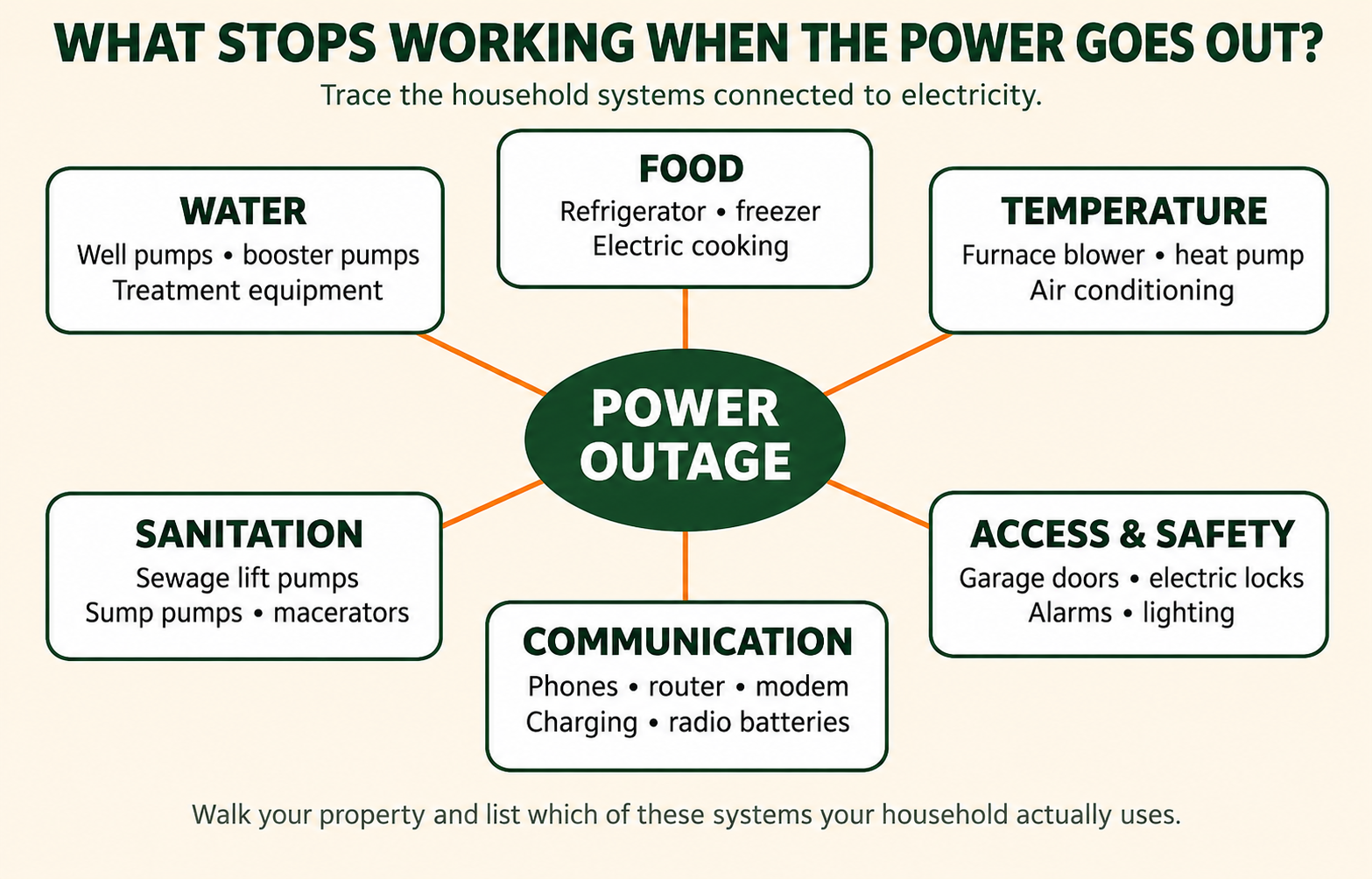
Walk through your home and property as if the electricity had already failed. For each system, ask three questions: Does it need electricity? How long can we manage without it? What is our safe alternative?
- Water: Are you on a municipal system, a private well, a cistern, or a pressure-boosting pump? A private well usually depends on an electric pump. Some municipal systems keep supplying water during an outage, but treatment, pressure, or local pumping can still be affected.
- Food: How much refrigerated and frozen food do you have, and do you have meals you can eat with no cooking, refrigeration, or heavy cleanup?
- Cooking: Does your range, oven, microwave, or outdoor kitchen need electricity? If you use an alternative-fuel appliance, is it designed and approved for where you plan to use it?
- Sanitation: Does your toilet rely on a septic pump, lift station, macerator, or other powered equipment? Is there a sump pump protecting a basement or crawlspace?
- Temperature: Does your heating or cooling need electricity for its controls, blower, ignition, or circulation pump, even if the fuel itself is gas, oil, or propane?
- Communication: How long will your phones, modem, router, cordless phone, and battery radio keep working?
- Access and security: Do your garage doors, gates, electric locks, alarms, or mobility equipment depend on power?
Write the answer down for each one. A simple list beats assuming you will remember every dependency in the middle of a storm.
Water: Plan for the Source, Not Just the Faucet
Water is one of the first systems to check, because a home can lose easy access to water even when the water itself is perfectly clean. A private well generally needs electricity to run its pump. A municipal connection may keep water flowing for a while, but an outage can still affect pressure, treatment, or local distribution. If you use a powered booster pump, filter, UV treatment system, or similar equipment, fold it into the plan too.
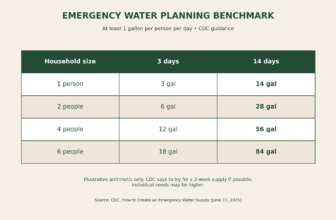
The CDC recommends storing at least one gallon of water per person per day for at least three days, and trying for a two-week supply when you can. That gallon is a baseline for drinking, cooking, and basic needs. It is not a promise that one gallon will cover every household’s sanitation, hygiene, pets, medical needs, or a stretch of hot weather. Store more where your situation calls for it.
- Store drinking water in clean, food-grade containers, somewhere protected from flooding, chemicals, and extreme heat.
- Include water for pets, and account for anyone who needs extra fluids, has a special diet, or requires water for care.
- Keep a manual can opener, cups, and a written water-use plan with the supplies.
- If you have a private well, learn how the pump is powered and whether a generator or other backup can run it safely. Ask a qualified well contractor or electrician about the right equipment and connection.
- Do not improvise electrical connections to a well pump. The wrong generator size or wiring can wreck equipment and create shock or fire hazards.
- After flooding, damaged well components, or an unusual change in how the water looks or smells, do not assume it is safe. Follow your local health department’s guidance and have the well checked.
Water you stored ahead of time is the simplest backup there is. A generator may be able to run a well pump, but it is not an automatic fix: the pump’s starting load, the wiring, the transfer equipment, and the installation all matter. CDC guidance after emergencies leans hard on using qualified professionals for well and electrical work. If the well or treatment system cannot run, your stored water and a safe alternative source become essential.
Food: Know the Clock Before the Outage Happens
Your refrigerator and freezer buy you a limited window, not a two-week food plan. Keep the doors closed as much as you can. CDC guidance says an unopened refrigerator keeps food safe for up to four hours. A full freezer holds a safe temperature for about 48 hours, and a half-full freezer for about 24 hours, as long as the door stays shut.
Once the refrigerator has been without power for four hours, perishable foods such as meat, poultry, seafood, milk, eggs, and leftovers should be thrown out unless they have stayed at or below 40 degrees Fahrenheit with a safe cold source. Never taste food to decide whether it is safe. Smell and appearance cannot reliably tell you whether food will make you sick.
- Keep appliance thermometers in the refrigerator and freezer so you decide by temperature, not guesswork.
- Freeze water containers or gel packs ahead of time, keep the freezer reasonably full, and group frozen items together.
- Have coolers and a plan for getting ice. If you move food to a cooler, keep it at 40 degrees Fahrenheit or below and watch the temperature.
- Build a pantry of foods your household already eats that need no refrigeration: ready-to-eat meals, canned foods, nut butters, shelf-stable milk, crackers, dried fruit, and the like.
- Choose foods that need little or no water and minimal fuel. Keep a manual can opener, and account for allergies, infant feeding, and special diets.
- Use perishable foods first only when you can keep them at safe temperatures. Do not gamble with food safety just to avoid waste.
You do not have to build a two-week pantry in one shopping trip. Add a few meals at a time, rotate what you store, and keep a written inventory. If you plan to use a camp stove or other outdoor cooking gear, follow the manufacturer’s instructions and use it only where it is designed to go. Never bring an outdoor stove, grill, or fuel-burning appliance indoors to cook.
Cooking and Backup Power: Convenience Is Not Worth a CO Hazard
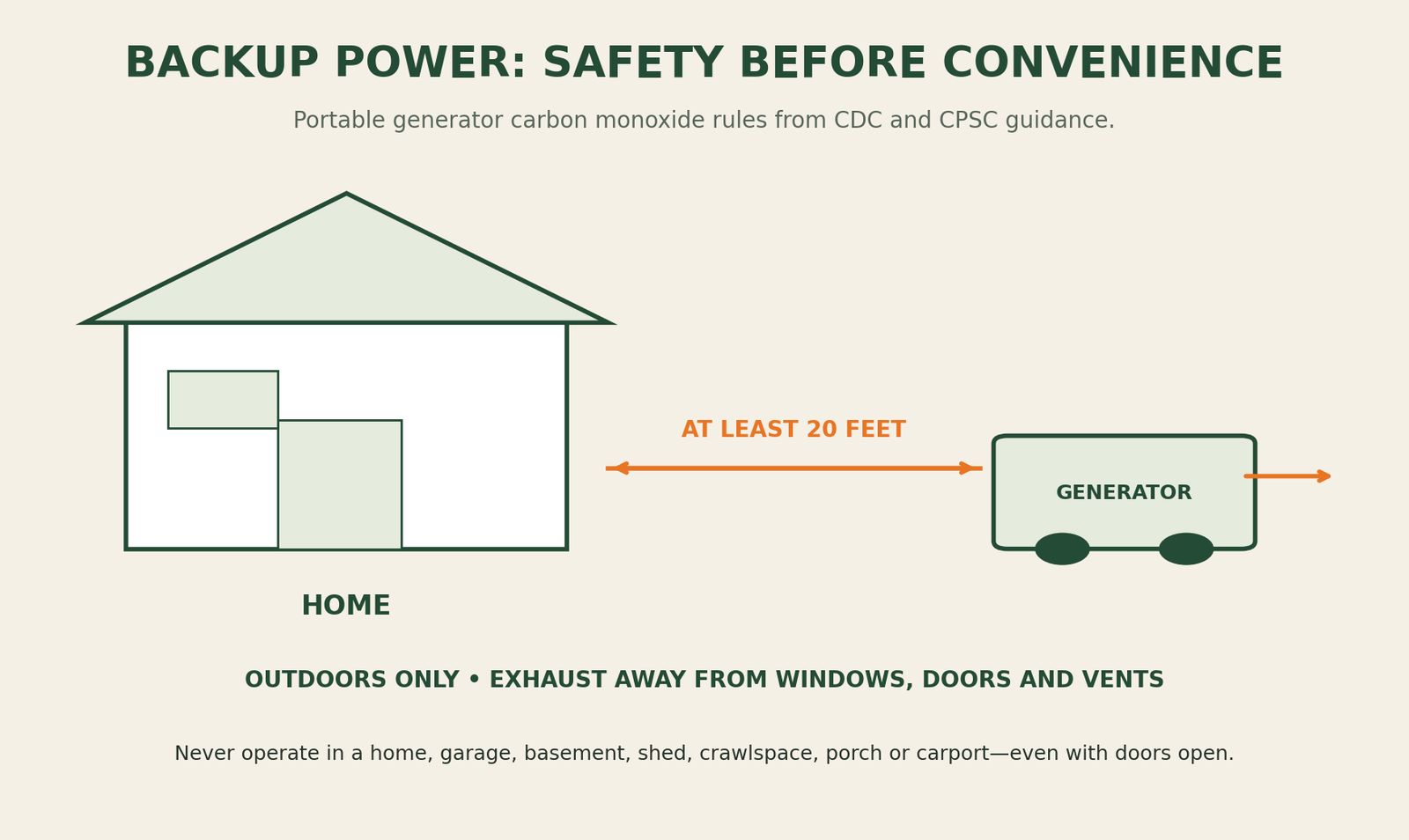
People tend to fixate on how many appliances a generator can run and skip right past where its exhaust is going to go. Carbon monoxide is colorless and odorless. It can build up indoors or in a partly enclosed space and cause sudden illness or death. A generator is not safe in a garage, basement, shed, crawlspace, porch, or carport. Not with the door open, not ever.
Generator safety is not negotiable: run a portable generator outdoors, at least 20 feet from the home, with the exhaust pointed away from windows, doors, and vents. Follow the generator manufacturer’s instructions and current CPSC guidance.
- Install working carbon monoxide alarms with battery backup on every level and outside sleeping areas, and test them regularly.
- Never run a generator in a garage or other enclosed space, even with doors or windows open.
- Keep generators dry and follow the manufacturer’s wet-weather and shock precautions. Do not rig a cover that traps exhaust or creates a fire hazard.
- Use properly rated outdoor extension cords, and keep the connections dry and protected from damage.
- Have a qualified electrician install a transfer switch or other approved connection if you want to power household circuits. Never plug a generator into a wall outlet or use any backfeeding arrangement.
- Store fuel only in approved containers, away from living areas and ignition sources, following local fire codes and the equipment manual. Do not refuel a hot generator.
You may not even need a generator. A smaller battery power station can cover phones, lights, a radio, and a few low-wattage devices. A generator makes more sense for a household that has to run a well pump, refrigerator, sump pump, or other essential loads, but the right size and setup depend on what you are actually running. List the loads you truly need, including their startup wattage, and have a qualified professional handle any household wiring.
For cooking, keep a stash of foods you can eat with no heat at all. If you use a camp stove, propane appliance, or charcoal grill, use it outdoors only and strictly by its instructions. Never use charcoal grills, camp stoves, or fuel-burning heaters inside a home, tent, garage, or any other enclosed area.
Heating and Cooling: Know When the House Is No Longer Safe
Temperature can become the most urgent problem in a long outage. A gas furnace may still need electricity for its blower, electronic ignition, or controls. A heat pump will not heat or cool normally without power. In hot weather a home can climb to dangerous temperatures, and in cold weather it can drop far enough to threaten both your health and your plumbing.
Before an outage, pick a place you can go if conditions turn unsafe: a relative’s home, a community cooling or warming center, a hotel, or anywhere with reliable power. Check local emergency announcements to see whether public facilities are open. Do not wait until someone is already showing signs of heat illness or hypothermia to make the call.
- In hot weather, close blinds on sun-facing windows, limit heat-producing activities, use battery-powered fans if you have them, drink fluids, and move somewhere cooler when you need to.
- In cold weather, dress in layers, use blankets, and gather in one appropriately sized room if it is safe. Protect exposed plumbing using proper home-maintenance guidance.
- Never use an oven, stovetop, outdoor grill, or generator to heat the home.
- Use portable heaters only if they are made for indoor use, run per their instructions with the required clearances, and paired with working smoke and CO alarms.
- Check on older adults, young children, people with disabilities, and neighbors who may struggle to relocate or regulate their body temperature.
Your plan should include a clear decision point: what indoor temperature, what forecast, what loss of water, or what household condition means it is time to leave? The answer varies by person and by home. Make that call before the emergency, not while you are exhausted and under pressure.
Sanitation, Wastewater, and Water Damage
A toilet may flush once or a few more times after the power fails, depending on your plumbing and the water on hand. But homes with sewage lift pumps, macerating toilets, or other powered wastewater equipment can lose the ability to move waste at all. A sump pump may also stop protecting your basement from rising water. Identify these systems before you need them.
- Ask a plumber whether any toilet, basement bathroom, septic component, or wastewater system in your home depends on electricity.
- Keep handwashing supplies, soap, hand sanitizer, toilet paper, disposable bags, and household cleaning supplies available.
- Store a lidded bucket and heavy-duty bags for an emergency sanitation contingency only if local public-health guidance and your situation make that appropriate. Keep waste isolated from food, water, and living areas.
- Do not flush if you have been told the sewer system is overwhelmed, if sewage is backing up, or if your system needs a powered pump that is not running.
- Never enter a flooded basement or touch electrical equipment in standing water. Arrange professional help for electrical and wastewater hazards.
Sanitation is not solved by stockpiling toilet paper. The real question is whether your plumbing can still carry waste away safely. If you are not sure, ask a licensed plumber or septic professional before an outage, not during one.
Communication, Lighting, and Information
A charged phone is useful, but it is not a communication plan on its own. Cell towers, home internet equipment, and local networks can lose their backup power or get congested. A cordless landline handset will not work without power, and some internet-based phone services need both electricity and broadband to function.
- Keep flashlights or headlamps where everyone can find them in the dark. Store extra batteries and test the gear now and then.
- Use battery banks or a portable power station for phones. Charge them before severe weather and know how many full charges they hold.
- Have a battery-powered or hand-crank radio, and consider a NOAA Weather Radio with alerts for weather information.
- Write down emergency contacts, an out-of-area contact, utility numbers, meeting places, and important addresses. Keep a paper copy.
- Sign up for utility outage alerts and local emergency notifications before an outage, and know where official updates are posted.
- Keep some cash on hand, because ATMs, card readers, and fuel pumps may not work during an extended outage.
- Use power-saving settings on phones and cut back on streaming, gaming, and background activity.
Pick one person outside the affected area as your family contact. If local calls or texts are unreliable, everyone can check in with that one person instead of trying to reach each other over and over. Agree on how often to check in and where to meet if communication fails altogether.
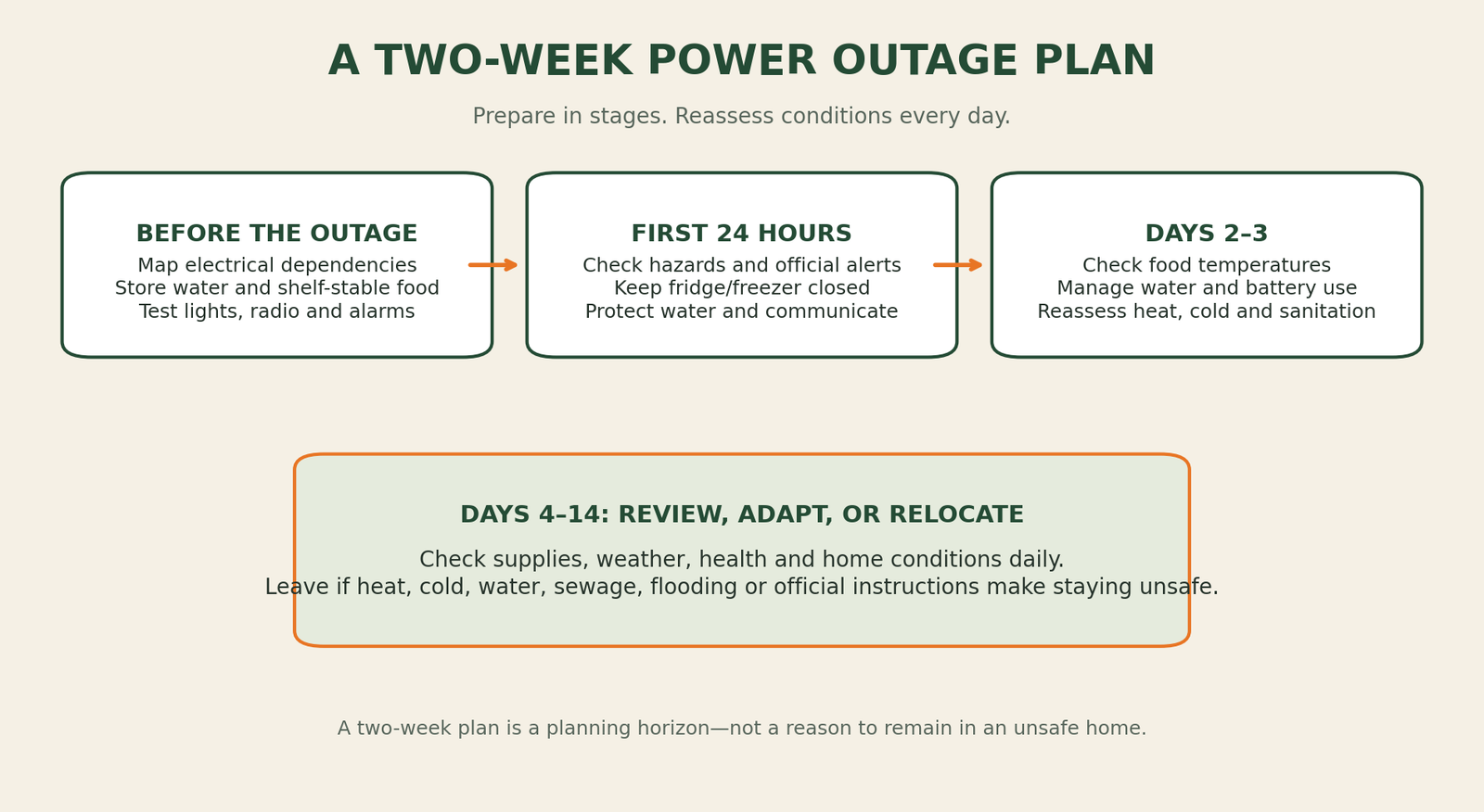
The Two-Week Plan: Prepare in Stages
Before the Outage: Make the Plan Usable
- Map your home’s electrical dependencies: well pump, water treatment, refrigerator, freezer, heating and cooling, sump pump, septic or sewage pump, garage door, and communications.
- Store a baseline water supply and build toward a two-week quantity for your household. CDC recommends at least one gallon per person per day and suggests trying for two weeks when you can.
- Build a rotating pantry of meals that need no refrigeration and can be prepared safely with the equipment you have.
- Buy and test thermometers, flashlights, batteries, power banks, a radio, CO alarms, and smoke alarms.
- Decide whether a generator or battery power station is right for you, and have electrical connections and generator sizing reviewed by qualified professionals.
- Identify cooling, warming, and overnight alternatives, and plan transport for household members and pets.
- Keep vehicles reasonably fueled ahead of forecast severe weather, and know which roads or routes may be affected.
- Coordinate with neighbors or relatives who may need help, and who could help you in return.
First 24 Hours: Protect People and Preserve Options
- Check for immediate hazards: downed power lines, fire, a gas odor, flooding, damaged electrical equipment, or a sounding carbon monoxide alarm. Stay clear of hazards and call emergency services when it is warranted.
- Report the outage to the utility and check official alerts. Do not assume the first estimated restoration time will hold.
- Keep the refrigerator and freezer closed. Record the time power was lost and monitor temperatures when you can.
- Fill clean containers with tap water if the supply is still running and officials have not issued an advisory. Do not wait if local conditions suggest water service may fail.
- Switch to flashlights rather than candles where you can. Turn off or unplug sensitive appliances, and leave one light switched on to signal when power returns.
- Check on household members, neighbors, and pets, and confirm that anyone with critical needs has a safe plan.
Days 2 to 3: Shift From Temporary Inconvenience to Resource Management
- Review food temperatures and discard perishables that have passed safe limits. Do not taste questionable food.
- Move safe food to coolers with ice if you can hold 40 degrees Fahrenheit or below; otherwise rely on shelf-stable meals.
- Set a daily water-use routine. Track your stored water and reserve drinking water before using supplies for anything else.
- Charge phones and batteries when power is available from a safe source. Conserve, and prioritize communication, lighting, and essential equipment.
- Check official updates for water advisories, road closures, shelter locations, cooling or warming centers, and restoration estimates.
- Reassess indoor temperature, sanitation, fuel supply, and household health, and decide whether relocating is safer than staying.
Days 4 to 14: Reassess Every Day
- Do not assume the original plan still fits. Review weather, health, water, food, sanitation, security, and the condition of the home each day.
- Use stored food in a planned sequence and avoid unsafe refrigeration or cooking practices. Replace supplies only when it is safe and practical.
- Arrange safe water replenishment. If you rely on a private well, do not attempt unqualified electrical or pump repairs.
- Keep generator use limited to essential loads and follow safe operating steps every single time. Recheck fuel storage and equipment condition.
- Rotate people through rest, care tasks, and supply checks. Fatigue leads to poor decisions and preventable injuries.
- Leave if heat, cold, medical needs, water, sanitation, structural damage, or official instructions make staying unsafe.
Decide in Advance When to Leave
Preparedness is not a contest to see how long you can tough it out at home. Evacuating or relocating for a while may be the safest choice if the home gets too hot or too cold, drinking water runs out, sewage backs up, flooding threatens the structure, roads are about to close, or someone in the household needs services that simply cannot be provided without power.
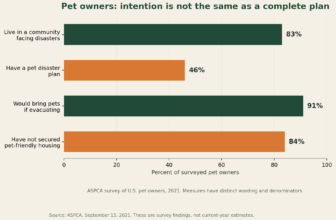
Prepare a go-bag for each person with identification, medications, essential records, phone chargers, clothing, and personal items. Include pet carriers, leashes, food, and records. Keep a list of places that can take your household and your animals. If you are told to evacuate, follow the official instructions rather than waiting for your supplies to run out.
A Practical Two-Week Household Checklist
- Water: stored supply, clean containers, pet water, and a plan for replenishment.
- Food: shelf-stable meals, special-diet foods, a manual can opener, coolers, and thermometers.
- Light: flashlights or headlamps, batteries, and safe work lighting.
- Power: charged battery banks, compatible cables, and a safe generator or battery plan if you need one.
- Safety: working smoke and CO alarms, a fire extinguisher, and first-aid supplies.
- Cooking: no-cook food and an outdoor-only cooking option used strictly by its instructions.
- Temperature: clothing, bedding, fans where useful, and a cooling or warming destination.
- Sanitation: soap, hand sanitizer, toilet paper, bags, cleaning supplies, and a wastewater plan.
- Information: a radio, paper contacts, utility numbers, local alerts, and cash.
- People and pets: medications, records, food, transport, backup helpers, and evacuation destinations.
Treat this as a starting point, not a universal shopping list. A household on municipal water has different needs from one on a private well. A home with a basement sump pump carries different risks from one without a basement. Add the equipment and supplies that match your own systems.
The Most Important Preparation Is Knowing Your Dependencies
A two-week power outage is hard, but it gets far more manageable when you stop treating it as one giant problem. It is really a set of connected household systems: water, food, cooking, temperature, sanitation, communication, and safe access to help. Some you can cover with stored supplies. Others need professional installation, a backup location, or a decision to leave.
Start by figuring out what electricity actually does in your home. Then build a practical plan around the systems that matter most, test the equipment you intend to lean on, and make sure everyone in the household knows the decision points. The goal is not to power everything. It is to keep people safe, protect the essential services you can, and recognize when conditions call for a different plan.
More From the Preparedness Report
- Power Outages and Medical Preparedness
- How Much Emergency Water Should You Store?
- Safe Room vs. Storm Shelter vs. Bunker
Related tools: Size backup power with our Generator Wattage Calculator and our Battery Runtime Calculator.
Sources and Further Reading
- CDC, What to Do to Protect Yourself During a Power Outage.
- CDC, Keep Food Safe After a Disaster or Emergency.
- FDA, Food and Water Safety During Power Outages and Floods.
- CDC, How to Create and Store an Emergency Water Supply.
- CDC, Well Water Safety.
- CDC, How to Disinfect Wells After an Emergency.
- U.S. Consumer Product Safety Commission, Generators and Engine-Driven Tools.
- FEMA and Ready.gov, Emergency Supply Kit Checklist.
- FEMA, Be Prepared for Any Disaster: Power Outages.