Quick question: if a fire started in your kitchen right now, would you grab the right extinguisher, or just the nearest one? For a lot of us the honest answer is the nearest one, and that guess can turn a small flare-up into a real emergency. This free online fire safety awareness course from Alison fixes that in a tight 1.5 to 3 hours. It is a focused, intermediate primer on fire classes, extinguishers, alarms, and evacuation, built to make your response fast and correct instead of hopeful.
Why This Matters for Preppers
Preparedness is really about doing the right thing quickly when there is no time to look anything up. Fire is the clearest example. You cannot pause a kitchen fire to read a label or search your phone. Either you already know that water on a grease fire is dangerous, or you learn it the hard way. This course front-loads that knowledge so the right move is already in your head when seconds matter.
The self-reliance angle is sharp here. Knowing your fire classes and your extinguisher types means you can actually use the tools you already own. A lot of homes have an extinguisher under the sink that no one has ever really understood. Learning what it is rated for, and how to use it properly, turns a dusty red canister into a tool you can trust. That is prep you can use the same day you finish.
There is a budget benefit too. Because the course is short and free, it delivers the highest-value fire knowledge without a big time cost. You get the practical essentials, extinguisher classes, alarm basics, and evacuation, in an afternoon, which is exactly the kind of efficient, no-cost training a frugal prepared household should snap up. It also helps you buy smarter, so you choose the right extinguisher for your kitchen instead of guessing.
And it builds the calm competence a household leans on. The person who can say which extinguisher to grab and where the family meets outside becomes the steady center of a scary moment. That role is built on exactly the awareness this course teaches.
Know Your Fire Classes and Extinguishers
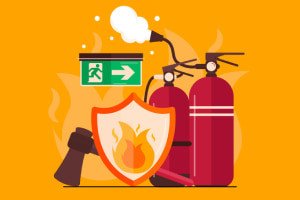
Fires are sorted into classes based on what is burning: ordinary materials like wood and paper, flammable liquids, electrical equipment, cooking oils, and more. Each class calls for a different extinguishing method, and using the wrong one can spread the fire or put you in danger. Water is right for burning paper and wood, but it can scatter a grease fire or conduct electricity. This is the single most useful thing the course teaches, because it changes a panicked guess into a correct decision.
Extinguishers are rated for specific classes, and the course walks through matching the tool to the fire. It also covers the fire triangle and the tetrahedron, which adds the chemical chain reaction to the fuel, heat, and oxygen picture and explains why certain suppression agents work. On top of that you learn how detection and alarm systems do their job, which is to buy you the early warning that makes everything else possible.
What You Will Learn
This is a practical, response-focused course, and its outcomes are the kind you can act on immediately. The main outcomes include:
- Explain the fire triangle and tetrahedron: understand what fire needs and what breaks the reaction.
- Identify hazards and controls: spot fire risks and learn the methods that keep them in check.
- Understand detection and alarms: know how alarm systems warn you and why early warning matters.
- Apply prevention principles: manage fuel, oxygen, and heat to stop fires before they start.
- Match suppression to the fire: learn which suppression systems and agents fit which situations.
- Distinguish fire classes: tell fire types apart and choose the correct extinguishing technique.
- Run an evacuation: know emergency response and evacuation steps that get people out safely.
Taken together, these outcomes give you a fast, reliable decision path: recognize the class, pick the right tool or get out, and account for everyone. That path is what keeps an ordinary person effective in the first crucial minute of a fire.
What the Course Covers
- Fire dynamics: the triangle, the tetrahedron, and how fire behaves.
- Hazards and prevention: identifying risks and controlling fuel, oxygen, and heat.
- Detection and alarms: how warning systems function and why they save lives.
- Suppression systems: the agents and systems used to put fires out.
- Fire classes and extinguishers: matching the extinguisher and technique to the fire.
- Emergency response: evacuation procedures and the role of awareness in preventing loss.
Where It Fits in Your Prep
This is the course to pair directly with your gear. After finishing it, check every extinguisher in your home for its class rating and its charge, label where each one lives, and make sure the whole family knows which is which. Test your smoke alarms, set a meeting point outside, and practice a two-minute exit. The course supplies the knowledge, and this quick drill turns it into a plan everyone can follow.
It slots in neatly beside the beginner fire safety course on the Free Shelf. Where that one leans into prevention and the science of fire, this one is about correct response in the moment. Do both and you cover the full arc: stop the fire when you can, respond correctly when you cannot, and get everyone out either way.
What This Course Is and Is Not
This is an intermediate awareness course, short by design and focused on practical response. It is educational training, not a hands-on certification, so it will not qualify you as a fire warden or replace an in-person extinguisher drill. It suits anyone who wants to move past guessing and actually understand the fire tools and alarms around them, whether at home or at work.
The lessons are free to finish. When you complete the course, a certificate is available that you can add to your resume or LinkedIn, and a credential like this can help you make the case for a job or a raise. Buying the certificate is optional and is never required to finish the lessons.
Final Thoughts
Grabbing the nearest extinguisher and hoping is not a plan, it is a coin flip. A couple of focused hours replaces that coin flip with a clear, correct response you can trust, using tools you probably already own. For the small time it asks, this is some of the highest-value fire knowledge a prepared household can pick up, and it is completely free.
Start the free course and earn your certificate.
Looking for more like this? Browse the Free Shelf, our growing shelf of free Alison courses for preppers.
Some links are affiliate links, and they never change your price. Details: /disclaimer