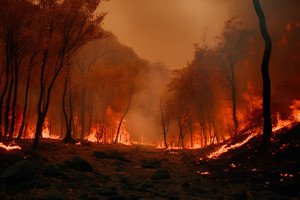
Wildfire used to feel like a problem for a few dry corners of the map. It does not feel that way anymore. Longer dry seasons and more homes built up against wild land have put millions of families within reach of a fire that starts miles away. This free online wildfire awareness and risk assessment course from Alison is an advanced, focused look at that exact threat, and it asks you to score 80 percent or higher to pass, so the certificate actually means you learned the material.
Why This Matters for Preppers
Wildfire is a preparedness problem unlike any other, because the danger can arrive without the fire ever touching your street. Wind carries embers far ahead of the flames, and those embers are what ignite most homes in a wildfire. A family that understands this does not wait to see flames on the ridge. They prepare the property, watch the conditions, and know their triggers for leaving early, which is almost always the safest choice.
The self-reliance angle is strong. Much of wildfire safety is work you do yourself, long before any warning: clearing dry fuel away from the house, managing the landscaping close to the walls, and understanding how terrain and wind will push a fire. This course teaches the risk assessment behind those choices, so your weekend yard work becomes deliberate protection instead of guesswork. That is self-reliance in its most practical form.
There is a real budget dimension as well. The steps that make a home more defensible are mostly time and effort, not big purchases, and knowing which ones matter keeps you from wasting money on measures that do little. Professional wildfire risk consulting is expensive, and this course hands you the core framework for free, so you can assess your own property with informed eyes.
It also strengthens a whole neighborhood. Wildfire is a shared risk, because one unprepared property endangers the ones around it. A resident who understands the danger and can explain evacuation planning and defensible space becomes a genuine asset to the block, and that shared readiness protects everyone.
How Wildfires Behave
Wildfire behavior comes down to three factors: fuel, weather, and terrain. Fuel is the dry vegetation and anything else that can burn. Weather, especially wind, humidity, and heat, decides how fast and how fiercely a fire moves. Terrain matters because fire climbs slopes quickly, so a home above a brushy hillside faces more risk than the same home on flat ground. Read those three together and you can understand why a fire moves the way it does.
The course applies this to both wild land and the places where neighborhoods meet open country, which is where most wildfire home losses happen. It covers fire ecology, weather patterns, and the risk assessment methods used to judge a specific property, then moves into emergency planning and community awareness. The throughline is simple and powerful: you cannot control the fire, but you can dramatically change how exposed you are to it.
What You Will Learn
This is an advanced course, and its outcomes are built around judging and reducing real wildfire risk. The main areas include:
- Understand wildfire causes: learn what starts wildfires and the conditions that let them grow.
- Read fire behavior: see how fuel, weather, and terrain drive how a fire moves.
- Assess property risk: apply risk assessment methods to both wild land and home settings.
- Recognize environmental factors: understand the ecology and weather patterns behind wildfire seasons.
- Plan evacuation: build the early-leaving plan that keeps a family out of harm's way.
- Communicate risk: share fire safety and awareness clearly with a household and a community.
Together these skills let you look at your own home and honestly rate its exposure, then take the specific steps that lower it. That ability to assess and act is the whole point, and it is what separates a prepared property from a vulnerable one.
What the Course Covers
- Wildfire fundamentals: the causes and conditions behind wildfire ignition and growth.
- Fire ecology and weather: the environmental factors that shape a fire season.
- Fire behavior: how fuel, weather, and terrain determine a fire's path and speed.
- Risk assessment: methods for judging danger in urban and wild land settings.
- Emergency planning: evacuation planning and preparation for at-risk households.
- Community awareness: strategies for spreading fire safety knowledge locally.
Where It Fits in Your Prep
If you live anywhere near grassland, brush, or forest, this course belongs near the top of your list. Use it to run a real assessment of your property, then act on it: clear dry fuel and debris from around the house, keep gutters and roof clean, mind the landscaping close to the walls, and set a clear trigger for when you will leave. Build a grab-and-go bag and a family plan so an early departure is smooth, not frantic.
It pairs naturally with the broader fire safety courses on the Free Shelf and with your general evacuation and go-bag planning. Where the other fire courses focus on the home and workplace, this one handles the landscape-scale threat, which is a distinct and growing risk that deserves its own attention in any serious plan.
What This Course Is and Is Not
This is an advanced awareness and risk-assessment course, not a wild land firefighting qualification. It teaches you to judge and reduce your exposure, not to suppress an active wildfire, which is dangerous work for trained crews only. It suits homeowners in fire-prone areas, community organizers, and anyone who wants to move from vague worry to a clear, defensible plan. Always follow official evacuation orders without delay.
The lessons are free to finish. When you complete the course, a certificate is available that you can add to your resume or LinkedIn, and a credential like this can help you make the case for a job or a raise. Buying the certificate is optional and is never required to finish the lessons.
Final Thoughts
You cannot stop a wildfire, but you have far more say over your own risk than most people realize. The homes that survive are usually the ones where someone did the quiet, deliberate work of understanding the threat and preparing for it. A focused course like this hands you that understanding, and for a family living near the wild edge, it is some of the most important free knowledge you can gain.
Start the free course and earn your certificate.
Looking for more like this? Browse the Free Shelf, our growing shelf of free Alison courses for preppers.
Some links are affiliate links, and they never change your price. Details: /disclaimer