The ability to join metal opens up a world of repairs and fabrication that most people never attempt. A broken tool, a cracked bracket, a custom mount: welding fixes and builds things nothing else can. This free Alison course, Basics of Welding and Joining Technologies, teaches the techniques and the science behind them in about 1.5 to 3 hours. It costs nothing, and it is the knowledge foundation behind a powerful, self-reliant skill.
Why This Matters for Preppers
Metal is everywhere in the tools, equipment, and structures a prepared household relies on, and metal breaks. Being able to join and repair it means you can fix things that would otherwise be scrap, fabricate parts that are hard to find, and reinforce gear to last. That capability is a serious step up in self-reliance.
The value is real, because metal fabrication and repair are expensive to hire out and often slow to arrange. Understanding welding lets you take on repairs yourself once you have the proper equipment and training, and even before that, it helps you judge and communicate about work you do hire. Fewer things become trash, and more things get fixed.
This course focuses on the fundamentals and the science, which is the right place to start. Welding is a skill where understanding what is happening, the joint, the heat, the metal, makes you safer and better. Building that knowledge base first is what turns hands-on practice later into real competence rather than dangerous guesswork.
How Welding Works
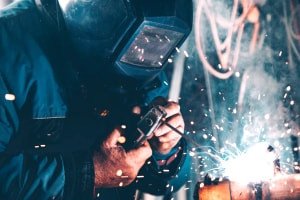
Welding joins metals by melting them together at the joint, often adding filler material, so they fuse into one piece as they cool. The course defines welding and joining, explains their role in manufacturing, and teaches the science behind the processes. Understanding that science is what separates a strong weld from one that looks fine and fails under load.
From there it covers the different welding techniques and their sub-types, the classification of welded joints, and the types of welds themselves. It also explains metal transfer modes, the different ways molten metal crosses to the joint, and discusses the common challenges welders face. Knowing the options is what lets you match a method to a job.
This is knowledge-first learning, and that is exactly right for welding. A firm grasp of joints, techniques, and the physics involved is the foundation you build hands-on skill on later, safely and effectively.
Knowing the techniques also helps you make smart choices before you ever spend a dollar on gear. Different processes suit different jobs and budgets, and understanding how they compare, what they weld well, what they cost to set up, and how tricky each is to learn, lets you pick the right starting point instead of buying the wrong machine. That kind of informed decision is worth a great deal on its own, and it is exactly what a foundational course like this gives you.
What You Will Learn
By the end you will understand the fundamentals of joining metal. You will be able to:
- Define welding and joining and their role in manufacturing.
- Classify welded joints and the types of welds.
- Outline welding techniques and their sub-types.
- Explain the science behind the welding process.
- Recall metal transfer modes and how they differ.
- Discuss common challenges welders work to overcome.
Together those skills give you the conceptual foundation to understand welding and prepare for safe, hands-on training.
What the Course Covers
- Welding fundamentals: definitions and the role in manufacturing.
- Joint and weld types: classifying joints and welds.
- Techniques: the main welding methods and sub-types.
- The science: the physics behind the processes.
- Metal transfer modes: how molten metal crosses the joint.
- Challenges: the common problems welders face.
Where It Fits in Your Prep
This course sits in the Fix-It Homestead track alongside carpentry, plumbing, and masonry, adding metalwork to your building and repair toolkit. Welding complements those trades well: many projects combine wood, masonry, and metal, and being able to join steel expands what you can fix and fabricate. It is a natural fit for a well-rounded, hands-on prepper.
It is pitched at an intermediate level and is knowledge-focused, so it suits anyone curious about welding or preparing to learn it hands-on. It is a strong first step before investing in equipment or in-person training, because it teaches you what welding actually involves and why the safety rules exist.
For a self-reliant household, the payoff of eventually welding is broad. It lets you repair trailers, gates, brackets, tools, and equipment; reinforce things that take a beating; and fabricate parts that are hard to source. Few repair skills open up as many possibilities with metal. Starting with the knowledge, as this course lets you do for free, is the sensible on-ramp to that capability.
An important word on safety and scope. This is a theory-focused course; it teaches the fundamentals but does not itself make you a competent or safe welder, which requires proper equipment, ventilation, and supervised hands-on practice. Real welding involves intense heat, bright arcs that can damage eyes, harmful fumes, and fire risk, so it demands the right protective gear, a safe workspace, and proper training before you strike an arc. Treat this as the essential first step, not the whole journey.
The lessons are free to complete. When you finish, a CPD-accredited certificate is available that you can add to your resume or LinkedIn, and a credential like this can help you enter the trade, support further training, or make the case for a raise. Buying the certificate is optional and never required to finish the lessons.
A few hours here leave you understanding one of the most capable repair-and-build skills there is. For a household that would rather fix and fabricate than throw away, that foundation is well worth having, and it costs you nothing but a little time.
Start the free course and earn your certificate.
Looking for more? Browse the rest of the Free Shelf: free Alison courses for preppers.
Some links are affiliate links, and they never change your price. Details: /disclaimer