By Diane, November 21, 2026
Part of our American Preparedness Statistics 2027 report.
These Names Do Not Mean the Same Thing
People toss around safe room, storm shelter, and bunker as if they describe the same box in the ground. They do not. Each one can point to a different protection strategy, built for a different hazard, a different amount of warning time, a different number of people, and a different length of stay.
A residential safe room designed to protect people from tornado winds and flying debris is solving one specific life-safety problem. A community storm shelter serves a crowd and needs its own design and operating plan. A bunker may be marketed or built for a wider range of threats or a longer stay, but the word itself tells you nothing about a tested level of protection.
So the question that matters is not what a structure is called. It is what hazard it was designed and verified to withstand, how it is installed, where it sits, how people get into and out of it, and how long it can safely keep them. A safe room is a tool for a particular problem, not a universal answer to being prepared.
What Is a Safe Room?
A safe room is a hardened space built specifically to provide a high level of life-safety protection during a defined hazard. FEMA’s residential safe-room guidance focuses on extreme-wind events such as tornadoes and hurricanes. The design has to handle wind pressure, windborne debris impacts, structural connections, anchoring, doors, and other details that an ordinary room is simply not built to take.
A safe room can be built inside a home, attached to it, or set up as a separate structure nearby, above ground or below ground depending on the design and the site. FEMA P-320 covers residential safe rooms; FEMA P-361 covers both residential and community safe-room planning, design, and operation.
- State the intended hazard clearly. A tornado safe room is not automatically a flood shelter, wildfire refuge, chemical shelter, or long-term living space.
- Performance depends on the whole assembly. Walls, roof, door, connections, foundation, and anchoring, not just thick walls or a heavy door.
- Access matters. Everyone has to reach the room quickly and use it safely, including children, older adults, and people with mobility limitations.
- Plan the livable details. Ventilation, lighting, communications, occupancy, and emergency supplies all belong in the design and the operating plan.
What Is a Storm Shelter?
Storm shelter is a broader term, but in building standards it has a specific meaning: a structure designed to the ICC/NSSA 500 Standard for the Design and Construction of Storm Shelters. That standard sets requirements for structural design, impact resistance, occupant density, access and egress, accessibility, signage, fire safety, and other life-safety features.
Storm shelters can be residential or community facilities. A residential storm shelter serves the people of one dwelling and is limited by the standard’s residential occupancy definition. A community shelter is built for a larger or different group and has to account for public access, management, and operation.
A community shelter is not just a bigger residential safe room. Its location, capacity, accessibility, operating procedures, staffing, maintenance, and public-access arrangements are all part of the protection system.
What Is a Bunker?
Bunker, on its own, is not a reliable technical description of a tested building standard. It usually refers to an underground or hardened structure meant to protect against certain threats, sometimes with the promise of an extended stay. But the word does not tell a buyer whether the structure was engineered for tornado wind loads, flood forces, fire, blast, radiation, chemical contaminants, or anything else in particular.
A bunker marketed as a shelter may have features that are genuinely useful for storage or temporary refuge, but you have to examine the claims one at a time. Ask for the engineering basis, the testing documentation, the applicable standards, the installation details, the ventilation design, the drainage plan, the safe exits, and the stated occupancy limits. A marketing term is not proof of performance.
At a Glance: What Each Term Tells You
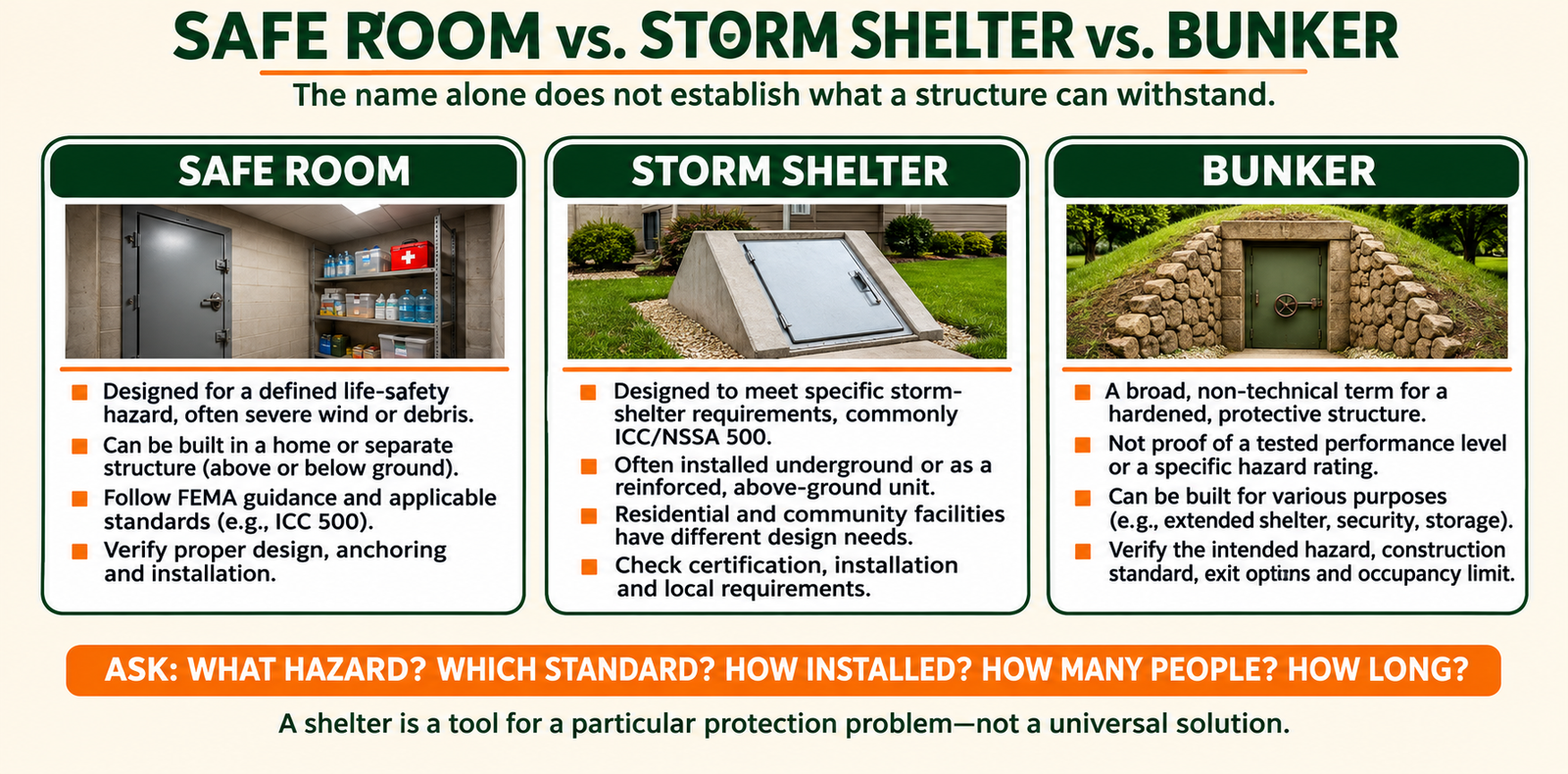
The names are a starting point, not a substitute for documentation. The same physical structure might be described one way by a seller, another way by a manufacturer, and a third way by a code official or emergency manager.
- Safe room: a space designed for a defined life-safety hazard, often extreme wind and debris, following FEMA guidance and applicable standards.
- Storm shelter: a shelter built to meet the applicable storm-shelter requirements, commonly ICC/NSSA 500, for its intended residential or community use.
- Bunker: a broad descriptive or marketing term. Verify the actual hazard performance, standards, occupancy, and duration rather than trusting the name.
Match the Protection to the Hazard
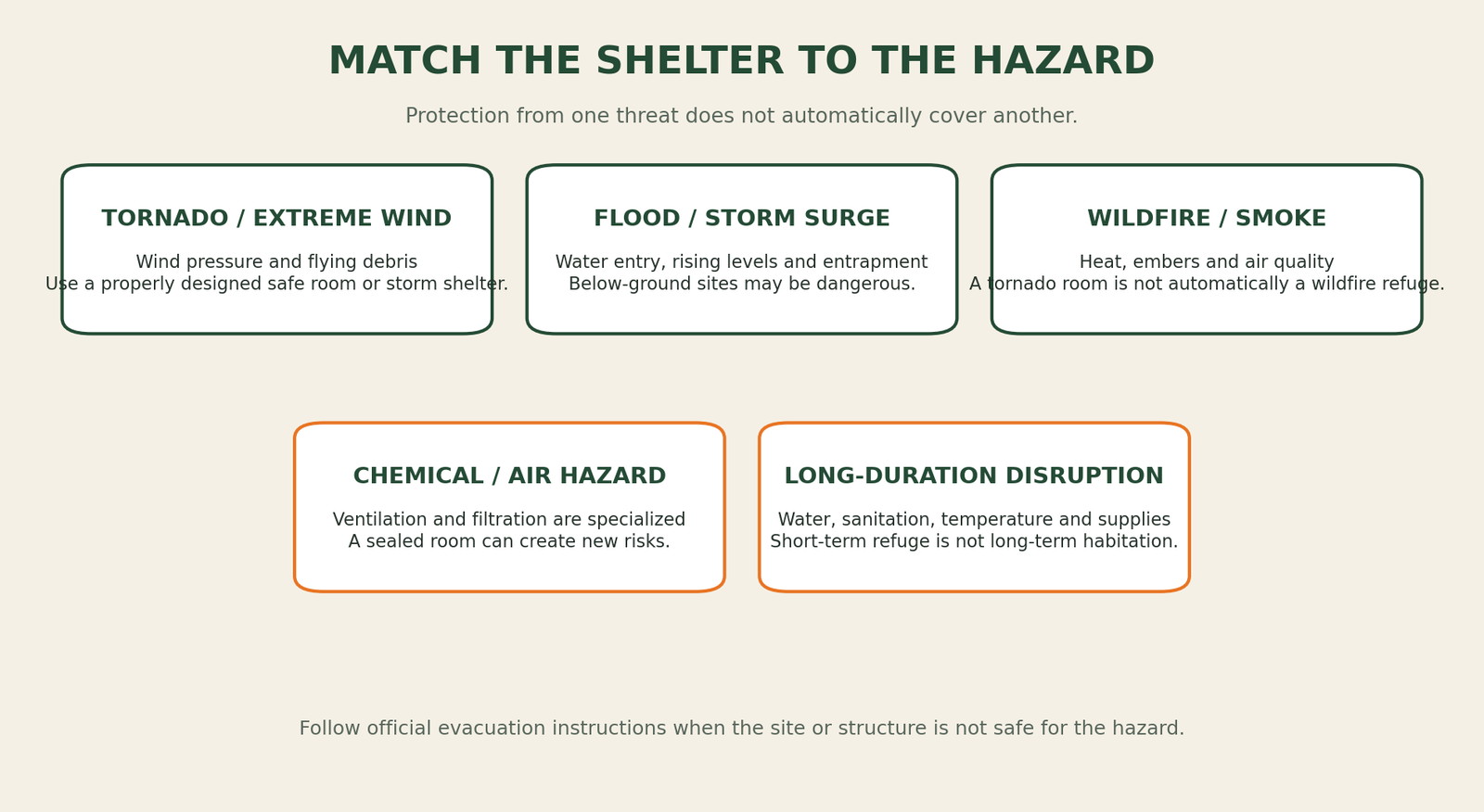
A structure built for one hazard may offer little or no protection against another. This is the heart of the matter, and it is worth settling before you spend money or decide where your household will shelter.
Tornadoes and Extreme Wind
For tornado protection, the main threats are extreme wind pressure and windborne debris. A properly designed and installed safe room or storm shelter is meant to give occupants a protected space during the event. FEMA’s guidance leans hard on design, construction oversight, anchoring, doors, and the full load path that carries forces down into the foundation and the soil beneath it.
A basement or interior room may be the best available refuge in a home without a purpose-built safe room, but do not call it a certified safe room unless it was designed and verified against the relevant criteria. Ordinary code-built construction does not necessarily give you the same level of protection.
Hurricanes
Hurricanes bring extreme wind, windborne debris, storm surge, inland flooding, and long utility outages. A safe room built for wind does not make a flood-prone location safe. A below-ground shelter can be especially dangerous if floodwater, storm surge, or groundwater can get in and trap the people inside.
A hurricane plan may call for evacuating well before conditions turn. A safe room is not a reason to stay when authorities issue evacuation orders, or when the site is exposed to flooding or other hazards the room was never designed to handle.
Flooding
Floodwater can fill a below-ground structure fast, block the way out, and create drowning or entrapment hazards. Site selection is everything here. FEMA guidance restricts safe-room placement in certain high-risk flood areas, and floodways are not appropriate locations for residential safe rooms under FEMA criteria. Check the property’s flood risk before you even consider an underground structure.
Do not assume that underground automatically means safer. For some hazards, below ground is an advantage. For flooding, it can be a serious liability.
Wildfire, Smoke, and Other Hazards
A tornado safe room should not be treated as a wildfire shelter, smoke refuge, chemical shelter, or blast shelter by default. Those hazards call for different performance criteria. Wildfire protection involves the building, the surrounding vegetation, ember exposure, radiant heat, smoke, and a way out. Chemical or air-contamination protection needs a properly engineered ventilation and filtration strategy. A room sealed up without a safe air-management plan can become its own danger.
If a product claims to protect against several hazards, ask for independent evidence for each one. Do not read broad protection into a single test or certification.
The Details That Determine Whether a Safe Room Works
Structural Design and a Continuous Load Path
Wind loads do not stop at the wall surface. The forces travel through the roof, the walls, the connections, the anchors, the foundation, and the soil holding it all up. A weak link anywhere can undo the whole assembly. FEMA’s foundation and anchoring guidance explains why a prefabricated unit has to be properly attached to a foundation designed for the required loads.
Do not assume an existing concrete slab is adequate just because it is thick or looks solid. Its thickness, reinforcing, condition, joints, and anchoring capacity may need a professional evaluation, and some installations require a new or strengthened foundation and a special inspection.
Door and Opening Protection
The door assembly is a critical part of a safe room. It has to be designed and tested for the applicable impact and pressure loads and installed exactly to its approved details. A heavy steel door is not automatically a compliant safe-room door. Ask for the specific testing or certification documentation, and make sure the frame, hinges, hardware, and anchoring match the tested assembly.
Location, Drainage, and Flood Exposure
The best structural design in the world is still unsafe on the wrong site. Review flood maps, drainage, groundwater, soil conditions, access routes, utility locations, and septic systems, and think through any way water could get into the shelter. Underground installations deserve particular scrutiny for groundwater, surface runoff, storm surge, and a safe way out.
Ventilation, Occupancy, and Time Inside
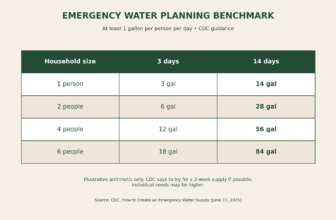
A room designed for a short tornado event is not necessarily designed for an overnight stay or days of sheltering. The number of occupants affects usable floor area, ventilation, access, sanitation, and your ability to move inside the space. If a shelter is meant for a longer stretch, its design has to address air, water, temperature, lighting, communications, sanitation, supplies, and a safe emergency exit.
Do not seal vents, modify doors, or add filtration equipment without understanding how those changes affect the engineered system. An alteration can quietly ruin the performance or create a dangerous condition.
Accessibility and Safe Egress
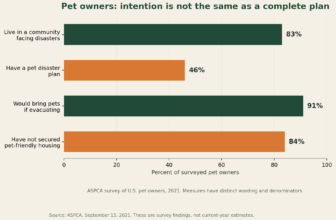
A shelter only protects people who can actually reach it and leave it. Stairs, narrow doors, steep ladders, heavy doors, and tight interior dimensions can make an underground shelter unusable for some people. Account for children, older adults, people with disabilities, pets, and anyone who may need a hand.
Think through how people will get in during a warning, whether the door can be operated from inside, what happens if debris blocks the main entrance, and whether emergency responders can find or reach the structure.
Choosing Between an Interior Safe Room, an Above-Ground Shelter, and an Underground Shelter
There is no universally best location. The right choice depends on the hazard, the property, the building, the occupants, and the site.
- An interior safe room can be reached quickly from inside the home and may keep people out of the outdoor wind and debris while they get to it. It needs a suitable location and engineered construction.
- An above-ground shelter may be easier for some people to reach than an underground unit, but it still has to be designed, anchored, and installed for the applicable loads and site conditions.
- An underground shelter can protect against windborne debris through the surrounding soil, but it may be a poor fit where flooding, high groundwater, poor drainage, difficult access, or limited egress are concerns.
- A community storm shelter may be the practical option for households that cannot install their own, but transportation, opening hours, capacity, and accessibility all need to be sorted out before a storm.
Questions to Ask Before Buying or Building
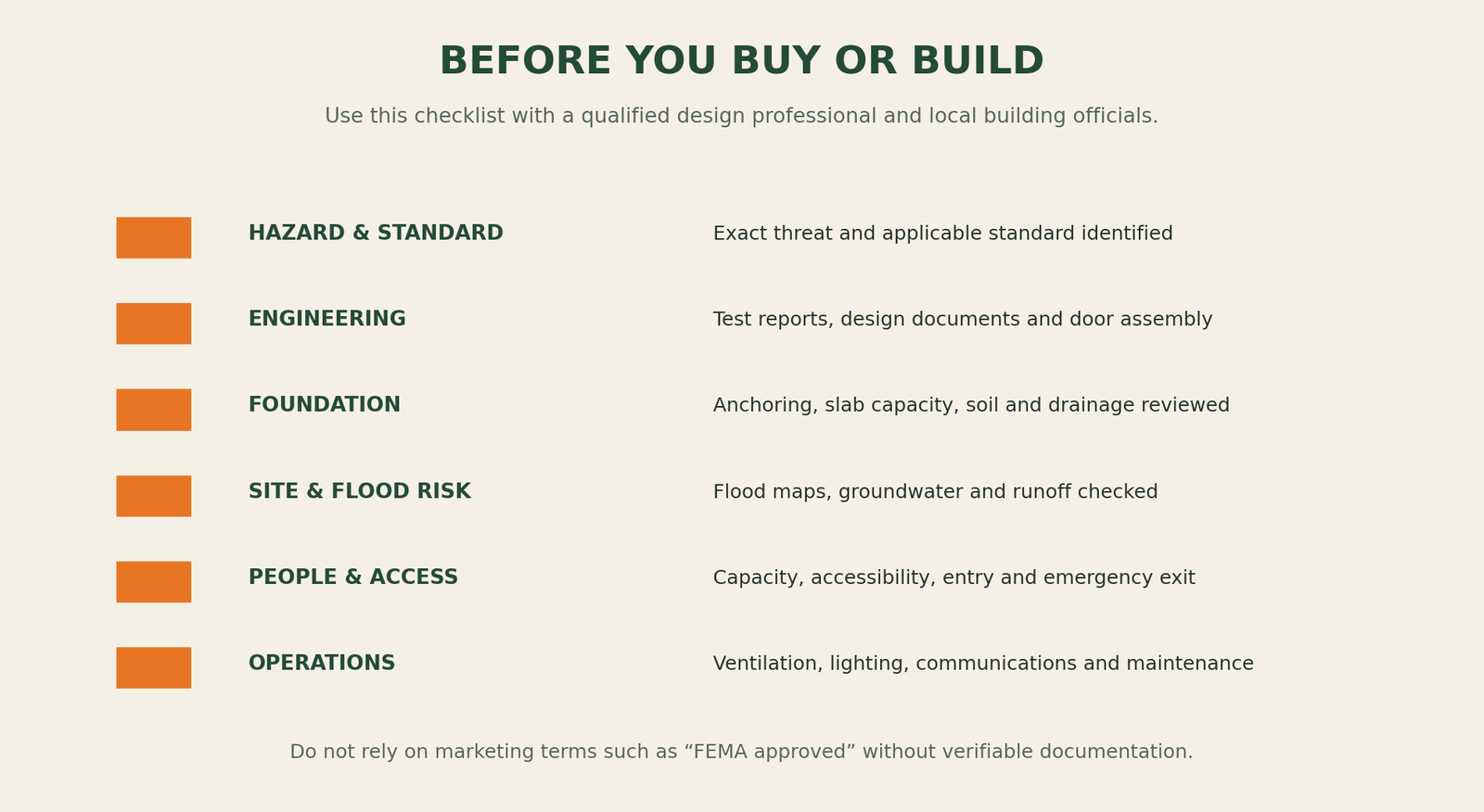
- What exact hazard is this structure designed to protect against?
- Which standard and edition does it meet: FEMA P-320, FEMA P-361, ICC/NSSA 500, or another clearly identified standard?
- Can the manufacturer provide independent test reports, certification labels, and engineering documents for the complete assembly?
- What foundation is required, and who verifies that the existing slab or soil can support it?
- How is the structure anchored against uplift, sliding, and overturning?
- Is the door assembly tested and labeled for the claimed use?
- What flood, groundwater, drainage, and soil conditions make this installation unsuitable?
- How many occupants can safely use it, and how much usable floor area is there?
- Can every intended occupant reach and operate it quickly, including people with mobility limitations?
- What ventilation, lighting, communications, and emergency egress are provided?
- What permits, inspections, and professional sign-offs are required locally?
- What maintenance, inspection, and replacement schedule applies after installation?
Do Not Let the Word Bunker Replace Due Diligence
A seller may reach for terms like bomb shelter, storm bunker, tornado bunker, or survival shelter. Those labels may describe the market they are aiming at, but they do not prove the structure meets any particular performance standard. Ask for the documents behind every claim, and have an independent design professional review the proposed installation.
Be wary of claims that a product is FEMA approved or FEMA certified. FEMA publishes guidance and criteria; it does not generally certify individual private contractors or endorse specific commercial products. If a seller claims federal approval, ask exactly what program, document, test, or certification they mean, and verify it directly.
A Safe Room Is One Part of a Larger Preparedness Plan
Even a properly designed safe room does not erase the need for alerts, evacuation decisions, household communication, supplies, and a plan for the hazards the room was never built to handle. The room may protect people during a short burst of extreme wind, but it does not hand you water, food, sanitation, medical care, or a safe place to stay once the event is over.
Decide in advance which hazards call for sheltering and which call for evacuation. Find the nearest suitable community shelter, know how to reach it, and know how official warnings will get to your household. And if an evacuation order applies, do not stay behind just because you invested in a shelter.
The Bottom Line: Buy Protection, Not a Label
Safe rooms, storm shelters, and bunkers are not interchangeable. A safe room or storm shelter built to recognized criteria can provide real life-safety protection for the hazard it was designed around. A bunker may serve a different purpose, but its name alone tells you very little about tested performance.
Before you build or buy, define the hazard, verify the standard, review the site, check the foundation and anchoring, confirm accessibility and egress, and understand the limits of the structure. A good shelter decision starts with an honest look at the risk, not with the most impressive product description.
More From the Preparedness Report
- Emergency Communications: Alerts, Radios and Backup Contact Plans
- How to Prepare for a Two-Week Power Outage
- How to Prepare Your Pets for a Disaster
Related tool: Plan the supplies that go with any shelter using our Emergency Kit Builder.
Sources and Further Reading
- FEMA, Safe Rooms for Tornadoes and Hurricanes: Guidance for Community and Residential Safe Rooms, FEMA P-361.
- FEMA, Taking Shelter from the Storm: Building a Safe Room for Your Home or Small Business, FEMA P-320.
- FEMA, Foundation and Anchoring Criteria for Safe Rooms.
- 2023 ANSI/ICC 500, Standard for the Design and Construction of Storm Shelters.
- U.S. Department of Energy, Pacific Northwest National Laboratory, Safe Rooms and Storm Shelters.
- FEMA, Flood Map Service Center.
- NOAA and National Weather Service, Tornado Safety.