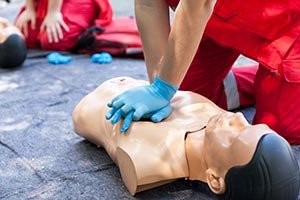
Most emergencies are first handled not by professionals but by whoever happens to be there, and this free Alison course trains exactly that person. High Performance CPR, Emergencies and First Aid for Lay Responders runs about 1.5 to 3 hours and covers CPR fundamentals, cardiac emergencies, AED use, choking, and treating common injuries and illnesses. It is built for ordinary people who want to be ready to help.
Why This Matters for Preppers
The term lay responder means someone without professional medical training who steps up in an emergency, and that is most of us. This course is designed for that role, teaching the skills a bystander needs in the minutes before EMS arrives, which is often when a life is saved or lost.
For a prepper, being a capable lay responder is core preparedness. In a disruption, the professional response may be slow or absent, and the ability to perform CPR, use an AED, and manage an injury could fall entirely to you. This course prepares you for that responsibility.
It also covers the legal and ethical side, including how CPR laws and a responder’s duties work in the United States. Understanding your role and protections helps you act with confidence rather than hesitating out of worry about doing something wrong.
And it teaches you to prioritize. When several things are wrong at once, knowing what to address first is a skill in itself, and it is exactly the kind of clear thinking that keeps a chaotic scene from overwhelming you.
There is a community dimension too. Neighborhoods where several people can respond are far more resilient than those depending on a lone helper, and skills like these spread easily once one person leads. Becoming a capable lay responder often nudges the people around you to get trained as well.
It also helps to remember how ordinary the need is. Most people who perform CPR or stop serious bleeding are not professionals, they are the parent, coworker, or passerby who happened to be trained. Every capable adult who learns these skills widens the odds that someone nearby will know what to do when it counts, which is exactly the kind of quiet, distributed resilience a community relies on when professional help is stretched thin.
How a Lay Responder Acts
The course builds the responder’s mindset: recognize the emergency, keep yourself safe, prioritize care, and act within your abilities until help arrives. It covers CPR technique, when to reach for an AED, and how to handle choking and common injuries.
Because it is aimed at non-professionals, it keeps the guidance practical and focused on what a bystander can realistically do. That focus is what makes it usable when you are the only help available.
As with any CPR training, the strongest results come from pairing this knowledge with hands-on practice. The course teaches you the concepts and the sequence; practicing compressions and AED steps in person is what locks the skills into your hands.
It also helps to think through your likely scenarios in advance. Picture where an emergency might happen in your daily life, and mentally walk through your response, so that if it ever occurs, you are recalling a plan rather than inventing one under stress.
After finishing, turn the knowledge into readiness: put together a solid first-aid kit, keep a short reference card with it, and talk your household through who does what in an emergency. Then book an in-person session when you can, because rehearsing compressions and AED steps with your hands is what makes them dependable under stress.
What You Will Learn
The course prepares you for the responder role, from technique to the rules that govern it. Here is what you will learn:
- The importance and purpose of CPR
- How CPR laws work at the international, national, and local level in the USA
- The groups of cardiac emergencies and how to recognize them
- A responder’s duties and responsibilities under the law
- Disease control, protective equipment, and hand hygiene
- How to prioritize injuries and provide care
- When to use an AED and the standards for a first-aid kit
- How to respond to choking, sudden illness, fractures, and dislocations
Together, these lessons turn a willing bystander into a capable one. That readiness is exactly what a prepared household and a strong community rely on when professional help is minutes or hours away.
What the Course Covers
- CPR fundamentals: the purpose of CPR and the technique, plus the laws and duties that apply to a responder.
- Cardiac emergencies: the types of cardiac emergencies and how to recognize them.
- Using an AED: when a defibrillator is needed and the situations that call for it.
- Injury care and prioritization: how to prioritize and treat injuries, fractures, and dislocations.
- Choking and sudden illness: the types of choking emergencies and how to respond to sudden or environmental illness.
Where It Fits in Your Prep
This course is a natural companion to a general CPR and first-aid course, adding the responder mindset and the legal context around helping. For anyone who wants to be the person who steps up, it is a strong fit.
It works well alongside a stocked first-aid kit and clear household emergency plans. The training tells you what to do, and the plan tells everyone their role, so a real emergency unfolds with less panic and more purpose.
Revisit it periodically so the sequence stays sharp. Confidence as a responder comes from familiarity, and a quick refresher now and then keeps you ready to act without hesitation.
It is also a natural course to take alongside family or neighbors, so your whole circle levels up together. A community with several capable responders is far more resilient than one leaning on a single person.
This is educational first-aid knowledge for non-professionals, not a professional qualification, and an online course is not the same as hands-on certification. It is never a substitute for professional medical care or for calling emergency services when you can. As preparation for the lay-responder role, backed by real practice, it is genuinely useful for almost anyone.
The lessons are free to finish. When you complete the course, a certificate is available that you can add to your resume or LinkedIn, and a credential like this can help you make the case for a job or a raise. Buying the certificate is optional and never required to finish the lessons.
The everyday heroes in most emergencies are ordinary people who happened to know what to do. This free course helps you become one of them. Learn the skills, practice them, and be ready to step up when it matters.
Start the free course and earn your certificate
Looking for more free training like this? Browse the full lineup on our Free Shelf, our hand-picked collection of free Alison courses for preppers.
Some links are affiliate links, and they never change your price. Details: /disclaimer.