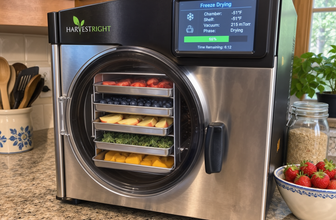
A Harvest Right home freeze dryer preserves food by freezing it solid, pulling a deep vacuum in a sealed chamber, and gently warming the trays so ice turns straight into vapor. Running our own machine shows that making freeze-dried food at home gives direct control over ingredients, portion sizes, and salt levels. At Prepping Bargains, we run a Harvest Right small freeze dryer alongside a large Cuisinart dehydrator and store commercial buckets from Augason Farms, ReadyWise, and Thrivalist, which shows where the home unit earns its space and where buying pre-packaged cans makes more sense.
How a Harvest Right Home Freeze Dryer Processes Meals and Produce
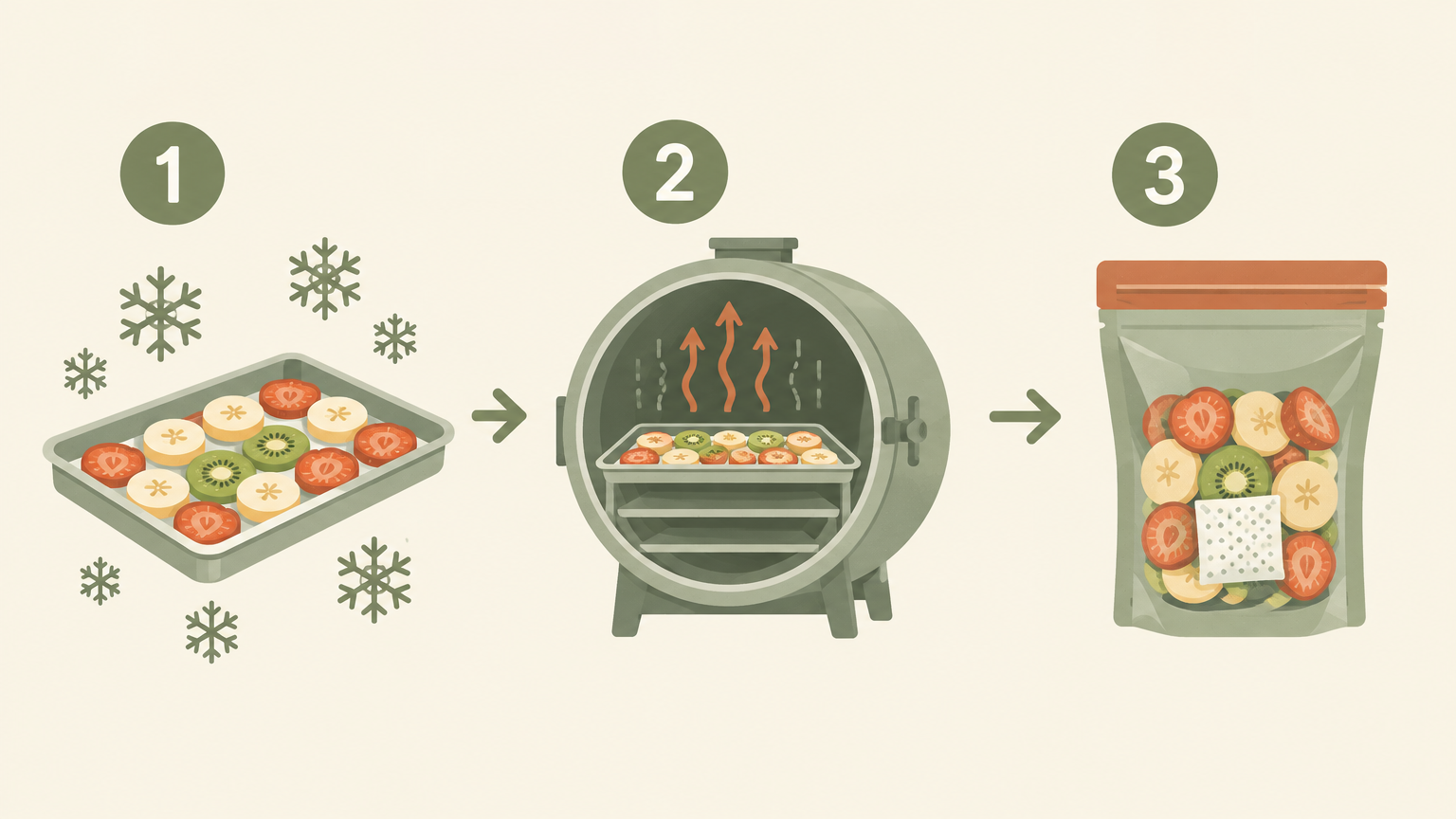
Every batch runs through three automatic stages inside a stainless steel drum. First, the unit chills the interior to freeze the food completely solid. Next, the vacuum pump pulls the air out of the drum until the pressure drops low enough for sublimation to happen. Finally, the shelf heaters warm the trays slightly so the frozen water leaves the food as vapor and refreezes on the cold inner walls of the drum.
A typical batch takes 20 to 40 hours depending on how much water the food holds and how thick you slice it. Dense meats, sliced potatoes, and juicy berries sit on the longer end of that range. Once the sensors detect that moisture removal has stopped, the machine holds the food in a cold state until you open the drain valve, release the vacuum, and pull the trays out. After every batch, you let the ice ring inside the drum melt and drain out before starting the next load.
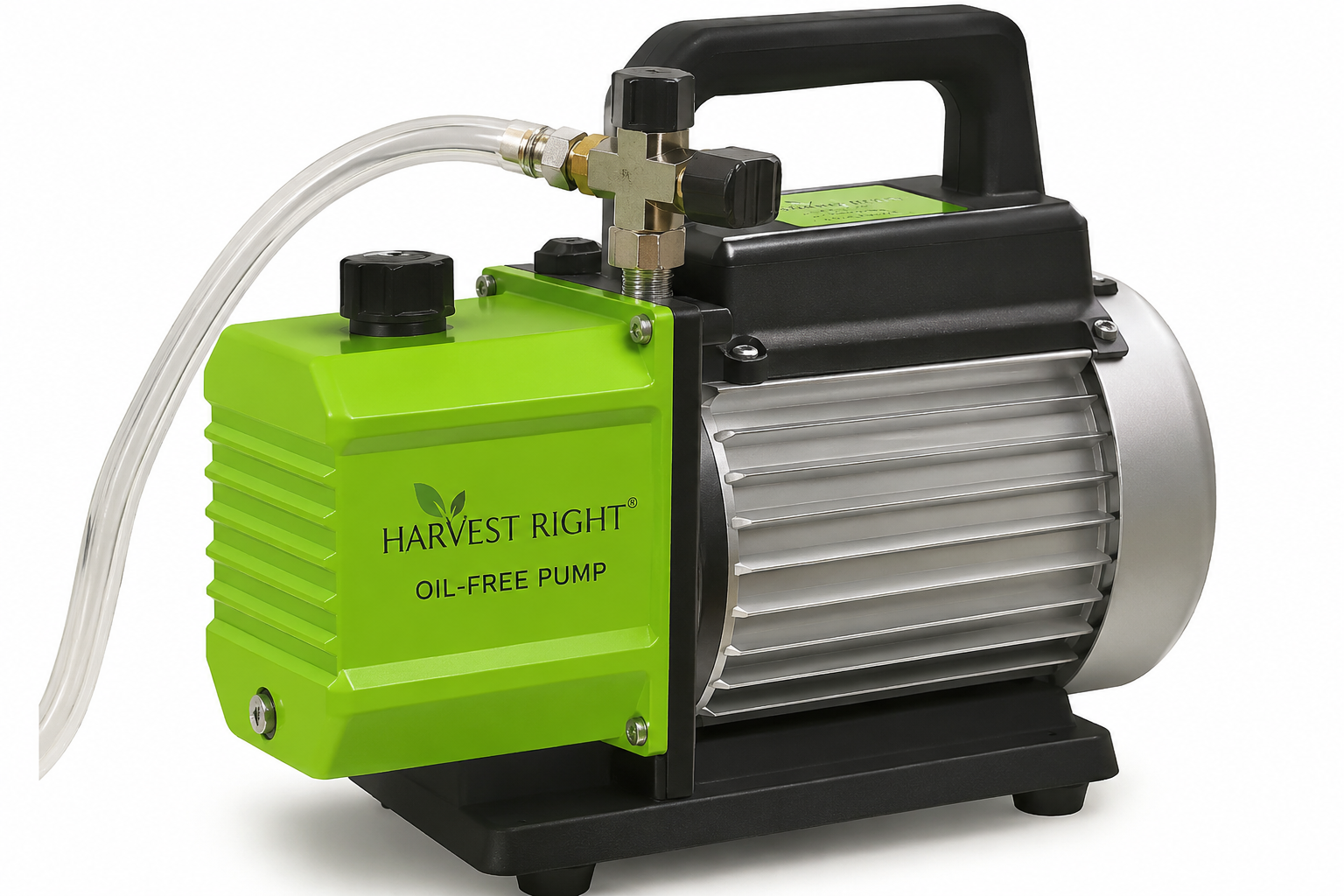
You need a dedicated spot for the unit and a work surface nearby for bagging. The vacuum pump sits beside the machine and puts out steady heat and noise while running, so a garage, utility room, or basement works better than a kitchen counter. Standard oil pumps require regular oil changes and filtering every few batches, while oil-free scroll pumps cost more upfront and skip the oil maintenance.
| Preservation Method | Typical Shelf Life | Texture After Rehydration | Best Everyday Use |
|---|---|---|---|
| Home Freeze Dryer (Harvest Right) | Sealed in appropriate packaging | Close to fresh cooked or raw texture | Garden harvests, meat, dairy, full meals |
| Food Dehydrator (Cuisinart) | Stored in airtight jars | Chewy or leathery | Fruit leather, jerky, herbs, soup greens |
| Commercial Freeze-Dried Cans | Vacuum-sealed for long-term storage | Consistent, ready out of the can | Fast pantry building with zero prep time |
Vegetables and Fruit
Produce is where most home freeze dryer owners start because grocery store sales and backyard gardens produce more than a family can eat in a week. Fresh produce loses very little volume when freeze-dried, and a tray of strawberries or squash weighs only a fraction of what it did going in. Prep time stays low as long as you cut items to a uniform thickness so the center of every piece finishes at the same time.
Vegetables
Root vegetables, greens, and summer crops all dry cleanly when sliced to a quarter inch or half inch thick. Cut green beans, sliced yellow squash, diced potatoes, and cut leaf spinach rehydrate quickly in hot water or straight inside a simmering soup pot. Starchy vegetables like potatoes and corn benefit from a quick blanch in boiling water followed by an ice bath before going onto the trays, which stops enzymes from dulling the flavor during long storage.
Peas, corn kernels, and diced carrots can be spread in a single even layer without overlapping. Spinach and other leafy greens shrink slightly during freezing and pack down easily once dry, so you can fit a large harvest into a single quart Mylar bag. Always check the thickest potato cube or squash slice by snapping it in half when the cycle ends; if the center feels cool or slightly damp, put the trays back in for extra dry time.
Fruit
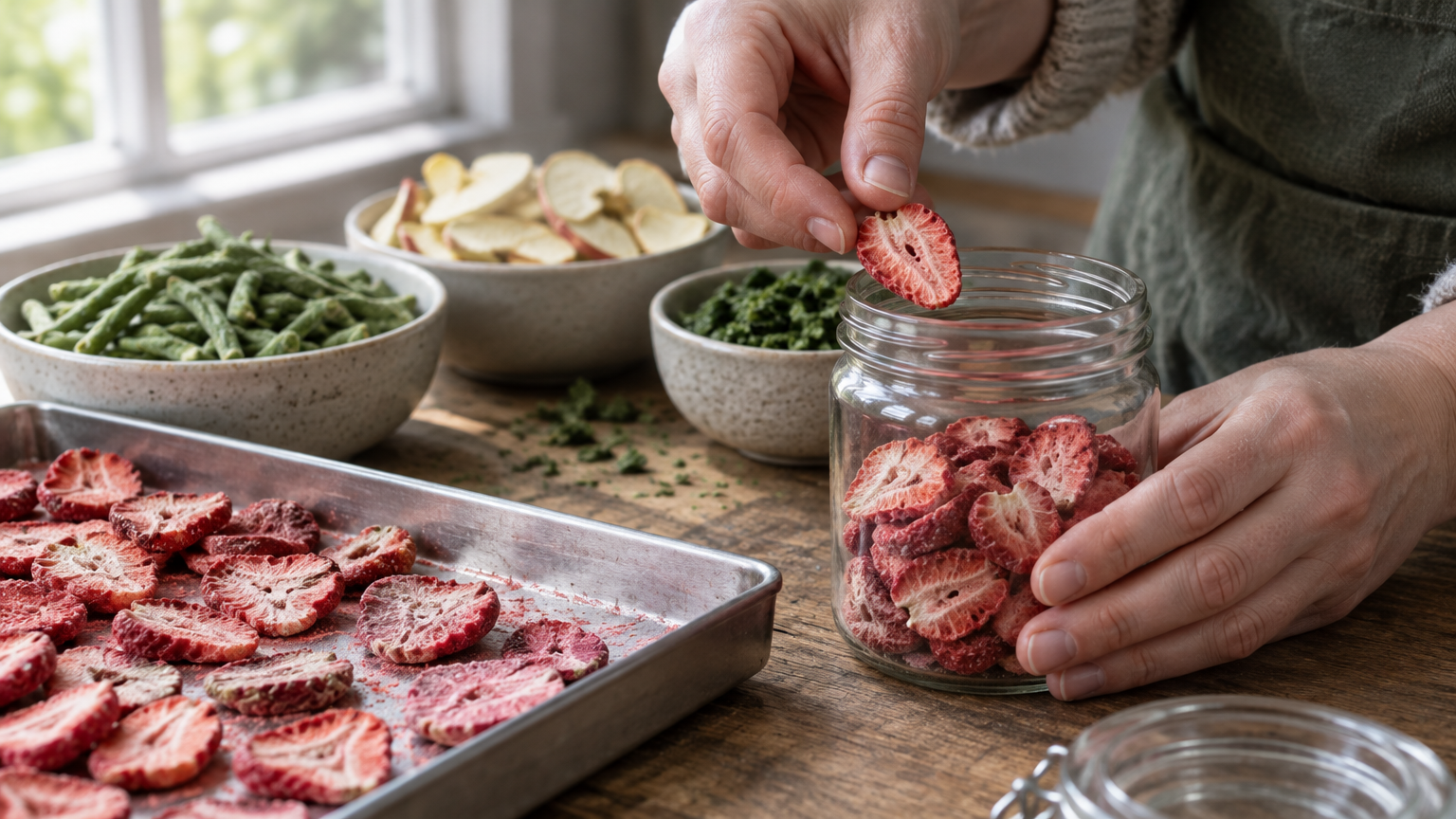
Apples, bananas, black mission figs, and strawberries freeze dry into crisp, light snacks that kids and adults eat straight from the jar. High-sugar fruits hold onto moisture longer than vegetables, so slicing apples into thin chips and bananas into quarter-inch coins keeps batch times reasonable. Berries with tough skins, such as blueberries, cranberries, and grapes, need to be sliced in half or pierced with a fork before freezing so steam can escape instead of bursting the skins.
Citrus slices, pineapple chunks, and peaches also work well, though sticky high-sugar fruits can leave residue on the trays. Lining the stainless trays with parchment paper or fitted silicone mats stops fruit from welding itself to the metal. Eat freeze-dried fruit dry for trail snacks, or soak it in warm water for five minutes before baking it into muffins and cobblers.
Meat, Dairy, and Full Meals
Proteins and dairy are expensive to buy in pre-packaged emergency cans, which makes running your own batches appealing if you catch meat on sale. You can freeze dry raw or cooked meat, though pre-cooking ground beef, chicken breast, sausage, and turkey breast saves time later because you only need boiling water to make the meal ready to eat. Trim away visible fat before loading the trays and drain cooked ground meat thoroughly, since fat does not freeze dry and will turn rancid inside a sealed bag over time.
Dairy products like shredded Monterey Jack cheese, crumbled feta, goat cheese, and scrambled eggs freeze dry reliably and store for years. Whole eggs can be whisked raw with a pinch of salt, poured onto lined trays, and powdered after drying, or scrambled and cooked first for faster camp breakfasts. Avoid pure butter, heavy cream, peanut butter, honey, and chocolate syrup, because high fat and pure sugar prevent sublimation and gum up the chamber.
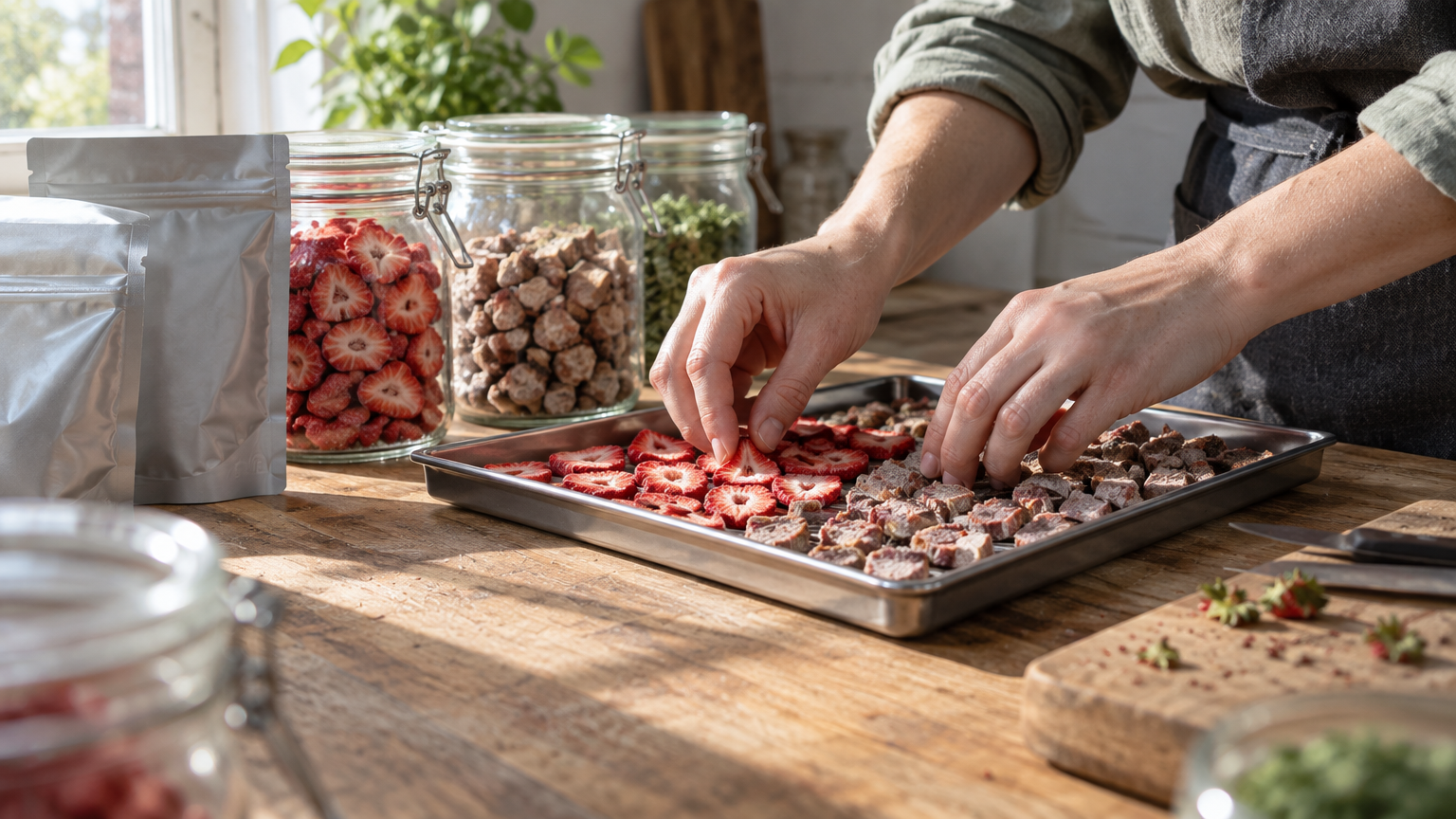
Full cooked meals like chili, beef stew, pasta sauces, and rice dishes freeze dry on the trays just as well as single ingredients. Portion them into dinner-sized servings after drying so you only open what your household will eat that night. Keep the moisture barrier tight by using 5-mil or 7-mil Mylar bags paired with the correct size oxygen absorber, then heat-seal each bag immediately before humidity creeps back in.
Buying a Machine vs. Buying Freeze-Dried Food
Running a freeze dryer changes where your grocery money goes, moving the expense from packaged tins to fresh ingredients, foil pouches, oxygen scavengers, and the power bill. If you grow produce, harvest wild game, or regularly prepare extra portions of home-cooked meals, your per-meal costs decrease rapidly after covering the initial equipment purchase. If your living quarters are tight or your schedule is full, ready-made cans supply long-term storage without requiring you to run a vacuum pump for thirty hours every run.
Comparing $30 to $60 cans of freeze-dried beef, chicken, and vegetables against the price of a Harvest Right unit makes the decision concrete. If you only want a two-week or one-month emergency supply, buying vacuum-sealed cans costs less than buying a machine and takes zero weekend hours. We also buy freeze-dried steaks, pork chops, and specialty meats from Freeze Dry Wholesalers using code DIANEDUNN. You can plug your own batch numbers into our Freeze Dryer Cost Calculator to see how long a machine takes to pay for itself.
Running your own freeze dryer makes sense once you plan to put dozens of batches through it every year. Buying meat on manager special, preserving seasonal garden produce, and drying homemade meals lets you control sodium, seasonings, and portion sizes in ways bucket kits never allow. Keeping spare vacuum pump oil, spare seal gaskets, and heavy Mylar bags on hand also prevents delays when a garden harvest comes in all at once.
Frequently Asked Questions
Is a Harvest Right Freeze Dryer a good option for you?
A Harvest Right freeze dryer suits households that have an open spot for the machine, plan to process steady loads of garden harvests, bulk meat, or leftovers, and want food preserved without commercial additives. For anyone building a modest emergency reserve, buying pre-packaged cans from vendors like Augason Farms or ReadyWise requires a lower upfront investment.
How long does freeze-dried food last at home?
Completely dried items sealed in sturdy Mylar pouches with unused oxygen absorbers and kept in a dark, cool space maintain their quality for decades. When stored in airtight glass jars for frequent kitchen use, freeze-dried foods stay crisp for twelve to twenty-four months with ordinary access.
If you have questions about food storage or comparing daily prepper deals, reach out to us through our contact page.