The best self-defense is never needing to fight at all, but knowing you could protect yourself changes how you carry yourself and how calmly you handle a tense moment. This free online self-defense course from Alison teaches practical defensive techniques in about 1.5 to 3 hours at an intermediate level, drawing on Wing Chun and other close-quarters methods aimed at protecting yourself from a larger opponent and getting away safely. For a prepper, personal safety is part of preparedness, and this is a calm, practical place to build it.
Why This Matters for Preppers
Preparedness is about protecting the people you care about, and personal safety is a real part of that picture. Most of it is awareness and avoidance, staying alert, reading a situation, and removing yourself before anything happens. But knowing you have defensive options if you are ever cornered adds a layer of calm confidence, and that steadiness itself makes you less likely to be targeted and better able to think clearly under stress.
The self-reliance angle is straightforward: the ability to protect yourself is one you carry everywhere, with no gear required. This course focuses on defensive techniques designed to work against a bigger, stronger attacker, including how to break free from a chokehold and create the opening you need to escape. It also addresses techniques that specifically help women defend themselves. That is practical, portable self-reliance in its most personal form.
There is a budget angle too. In-person self-defense and martial-arts classes can be a significant ongoing expense, and this course delivers a solid foundation of technique for free. It is a low-cost way to start building the skill, understand the movements, and decide whether to pursue in-person training later. For a household watching its spending, that is a genuinely useful trade of time for capability.
And personal-safety knowledge lets you look out for others. Understanding awareness and basic defense means you can help family members, especially those who feel vulnerable, feel and be safer. In a prepared household or community, that shared sense of security and the confidence that comes with it is quietly valuable.
How Self-Defense Really Works
Effective self-defense rests on a simple priority order: awareness first, avoidance second, escape third, and physical defense only as a last resort. The goal is never to win a fight, it is to protect yourself and get to safety. When physical defense is unavoidable, technique matters far more than size or strength, which is exactly why trained methods let a smaller person defend against a larger one. The aim of every technique is to create a chance to break away.
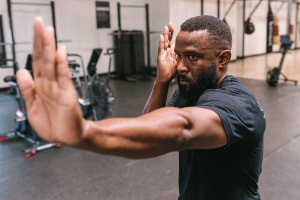
This course teaches that technical side. It draws on Wing Chun, a close-range martial art built around efficient, practical movements, covering defensive hand techniques, ways to break a chokehold, and the strikes and kicks used to create distance. The emphasis throughout is on defending against a larger opponent and opening a path to escape. It is the physical toolkit that backs up the awareness and avoidance that should always come first.
What You Will Learn
This is a practical, technique-focused self-defense course. The main outcomes include:
- Understand defensive techniques: learn core hand movements used to block and redirect.
- Break free of holds: learn traditional and modern ways to escape a chokehold.
- Create distance: understand the kicks and strikes that open a path to escape.
- Defend against a larger opponent: use technique rather than size to protect yourself.
- Learn women's self-defense: understand techniques that specifically help women.
- Counter an attack: learn combinations and how to respond to an aggressor.
Together these skills give you a foundation of defensive technique to fall back on if avoidance ever fails. Paired with awareness and good judgment, that capability is a real and reassuring part of personal preparedness.
What the Course Covers
- Defensive fundamentals: the core hand techniques of close-range defense.
- Escaping holds: breaking chokeholds and grabs.
- Strikes and kicks: creating the distance needed to get away.
- Defending against larger attackers: technique over strength.
- Women's self-defense: techniques suited to defending against a bigger opponent.
- Countering attacks: combinations and responses.
Where It Fits in Your Prep
Personal safety sits alongside the rest of your readiness as the most portable skill you own. Pair this course with the habits that matter most: staying aware of your surroundings, trusting your instincts, avoiding risky situations, and always choosing escape over confrontation. The techniques here are the backstop for when those first lines fail, not a substitute for them.
It fits within the Ready-for-Anything track alongside the resilience and crisis-management courses on the Free Shelf, since staying calm and thinking clearly is central to personal safety too. For real capability, treat this course as a knowledge foundation and, if you can, follow it with hands-on practice, ideally with a qualified instructor, where you can drill the movements safely.
What This Course Is and Is Not
This is an intermediate, technique-focused course, and it is important to be clear: watching techniques is a starting point, not a substitute for supervised, hands-on practice, which is how self-defense skills actually become reliable. Real safety always starts with awareness and avoidance, not fighting. This course suits anyone who wants to build defensive knowledge and confidence, especially to protect against a larger attacker, and it pairs best with in-person training and good situational habits.
The lessons are free to finish. When you complete the course, a certificate is available that you can add to your resume or LinkedIn, and a credential like this can help you make the case for a job or a raise. Buying the certificate is optional and is never required to finish the lessons.
Final Thoughts
The quiet confidence of knowing you could protect yourself, and the awareness to avoid needing to, is a real part of feeling prepared. This course gives you a practical foundation in defensive technique, best paired with alertness, good judgment, and hands-on practice. For a prepared household, personal safety is worth building, and this is a free, sensible place to start.
Start the free course and earn your certificate.
Looking for more like this? Browse the Free Shelf, our growing shelf of free Alison courses for preppers.
Some links are affiliate links, and they never change your price. Details: /disclaimer