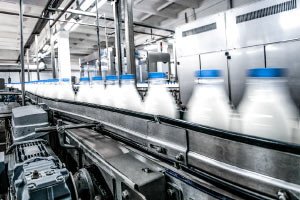
If you are serious about making food last, it helps to understand the science underneath the recipes. This free Alison diploma, about 10 to 15 hours with video, goes deep on food processing and preservation: heat and cold methods, dehydration, physical techniques, additives, quality factors, and how storage temperature drives spoilage. It is a real study, and it costs nothing to finish.
Why This Matters for Preppers
Home preservation, canning, drying, curing, and cold storage, all rest on the same principles this diploma teaches. When you understand why heat, cold, moisture removal, and temperature control preserve food, you can adapt methods safely instead of following recipes on faith.
That understanding is what separates guessing from knowing. Grasping how storage temperature affects microbial growth tells you why your root cellar, freezer, and pantry each behave the way they do, and how to keep food safe in each. For a prepper who wants to preserve a harvest or a bulk buy with confidence, this is the theory that makes the practice reliable.
This depth pays off precisely when the stakes are high. Home preservation done wrong is not just wasted food, it can be dangerous, and the confidence to preserve safely comes from understanding the mechanisms rather than trusting a recipe on faith. A diploma-level grounding gives you that understanding, so you can judge a method, spot a shortcut that is not safe, and adapt when conditions differ.
A grounding this thorough also future-proofs your skills. Trends in home preservation come and go, but the underlying science of heat, cold, moisture, and microbial growth does not change. Learn the principles once and you can evaluate any new method or gadget on its merits rather than on marketing.
How the Science Applies To Home Preservation
The preservation methods in this diploma are the same ones behind your canning jars, dehydrator, and freezer, just explained at the level of why they work. Heat destroys the microbes that spoil food, which is what canning relies on. Removing moisture through dehydration leaves nothing for microbes to grow in. Cold slows their activity, which is why freezer and cellar temperatures matter so much.
Understanding these mechanisms lets you judge whether a method is truly safe rather than trusting it blindly, and it helps you adapt when your equipment or ingredients differ from a recipe. For anyone preserving a harvest or a bulk purchase, that grounding turns preservation from a leap of faith into a set of decisions you can defend.
The way to get value from a course this deep is to connect each principle to something you actually do. When it explains heat processing, think of your canner; when it covers dehydration, think of your dryer or your smoker; when it discusses storage temperature and microbial growth, think of your freezer and cellar. Anchoring the theory to your own equipment turns abstract science into decisions you can make with confidence.
What You Will Learn
As a diploma, it goes well beyond surface tips into the science of how food is processed and preserved. Here is the ground it covers:
- The basic principles and methods of food processing and preservation
- How heat, cold removal, dehydration, and physical methods preserve food
- The types of natural, man-made, and artificial additives
- What food quality means and the factors that determine it
- The purpose of food safety regulatory bodies
- How storage temperature affects the rate of microbial growth
Taken together, these topics give you the reasoning behind every jar, bag, and bucket in your storage. You stop following preservation steps on faith and start understanding why each one works, which is exactly the confidence that lets you preserve a wide range of foods safely.
What the Course Covers
- Preservation principles: the core methods and the science of why each one keeps food safe to eat.
- Processing techniques: heat, cold, dehydration, and physical methods, and where each fits.
- Additives: the natural, man-made, and artificial additives and what they do.
- Food quality: how quality is defined and the factors that raise or lower it.
- Storage and spoilage: how temperature drives microbial growth and how to slow it.
Where It Fits in Your Prep
Preservation is one of the oldest and most important self-reliance skills, and this diploma gives you the deep grounding behind it. If you preserve a garden harvest, put up a bulk purchase, or want to build serious long-term food stores, the science here is what makes your methods reliable rather than hopeful.
Because it is an advanced, video-rich course of 10 to 15 hours, it rewards learners who are ready to invest real time. Newer cooks may want to start with a shorter food safety course and come back to this once the basics feel solid. For the committed, it is a genuine education in making food last.
This is an advanced diploma, so it is more technical and industry-oriented than a home-canning tutorial, with a heavy focus on dairy and food process technology. It will not walk you through a specific pressure-canning recipe, but it will give you the science that makes your own methods safer and smarter. It fits committed learners; casual cooks may prefer a shorter food safety course first. It is a strong companion to hands-on canning, drying, and curing practice.
The lessons are free to finish. When you complete the course, a diploma is available that you can add to your resume or LinkedIn, and a credential like this can help you make the case for a job or a raise. Buying the diploma is optional and never required to finish the lessons.
Preserving food well is one of the oldest self-reliance skills there is, and this free diploma gives you the science behind it. Put in the hours and you will preserve with understanding rather than hope. That confidence is worth the study. Preserve with understanding, and very little of what you grow or buy goes to waste.
Start the free course and work toward your diploma
Looking for more free training like this? Browse the full lineup on our Free Shelf, our hand-picked collection of free Alison courses for preppers.
Some links are affiliate links, and they never change your price. Details: /disclaimer.