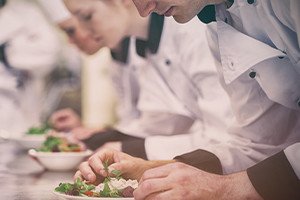
Good cooking is less about fancy gear and more about a handful of skills used well. This free Alison course, Culinary Skills and Techniques, runs about 3 to 4 hours and covers kitchen management, food safety law, allergens, basic nutrition, and a few building-block recipes. It is a broad, practical primer for anyone who wants to run a calmer, safer, more capable kitchen.
Why This Matters for Preppers
A self-reliant kitchen is really a small operation, and it runs better when someone understands how the pieces fit: how to manage the space, keep food safe, and cook a few dishes from scratch without a printed recipe for every step.
This course also spends time on the parts home cooks skip, like food safety requirements and allergen hazards. When you may be feeding a group from limited supplies, those details are not red tape, they are how you avoid making someone sick when a doctor is not easy to reach.
There is also a confidence dividend. Cooks who understand the why behind their food waste less, improvise more, and stay calm when a plan falls apart. In a stressful stretch, being the person who can turn a random assortment of ingredients into a warm, safe meal is genuinely valuable, both practically and for morale.
A broad course like this also helps you spend your future learning time wisely. Once you have seen the whole landscape of cooking, from safety to technique to nutrition, you can tell which skills will actually move the needle for you and which you can safely skip for now. That clarity saves hours down the road.
How To Use What It Teaches
Think of this course as a tour of the whole kitchen rather than one recipe. You spend a little time on management, a little on safety, a little on nutrition, and a little on actual cooking, and the value is in how those pieces connect. Good kitchen management keeps your workflow calm, food safety knowledge keeps the meal from making anyone sick, and the sample recipes give you something concrete to practice.
Work through it once for the overview, then come back to the sections you need most. The recipes, like risotto and a simple sauce, are worth cooking a couple of times until the technique feels natural, because those techniques transfer to dozens of other dishes.
The smart way to use a broad course like this is to treat each section as a doorway. Skim the whole thing for the overview, then go deep on the parts that match your gaps. If food safety is shaky, live in that section; if you freeze at the cutting board, focus on technique and the sample recipes. Cook the example dishes more than once, because the second and third attempts are where the technique actually sinks in.
What You Will Learn
The course ranges across the whole business of cooking, from the person at the stove to the food safety rules that govern a kitchen. Here is the ground it covers:
- The difference between a chef and a cook, and the qualities of a good one
- How to manage a kitchen effectively
- What gastronomy means and its core concepts
- The legal food safety requirements every kitchen should follow
- How to compare physical, chemical, and allergenic hazards
- The basics of food allergens and common allergenic foods
- How to build a few core dishes, from risotto to a simple sauce
Together, these topics give you the vocabulary and judgment of someone who understands a kitchen, not just someone who follows recipes. You come away able to organize your cooking, keep it safe, and produce a few solid dishes, which is exactly the well-rounded base every other food skill builds on.
What the Course Covers
- Kitchen management: how to organize the space and workflow so cooking stays calm under pressure.
- Food safety and the law: the requirements that keep a kitchen safe and the hazards to watch for.
- Allergens: the common allergenic foods and why clear labeling and handling matter.
- Nutrition basics: how to keep meals nourishing, not just filling.
- Core recipes: step-by-step work through dishes like saffron risotto, tomato sauce, and a chocolate cake.
Where It Fits in Your Prep
A prepared household is, in a sense, running a small food operation, and this course teaches the management and safety thinking that keeps such an operation from falling apart. It connects the dots between organization, hygiene, nutrition, and actual cooking, which is exactly the systems view that separates a stocked pantry from a kitchen that reliably feeds people.
Because it is broad rather than deep, it works best as a foundation you build on with more specific courses later. Take it early in your learning, use it to find your weak spots, and let it point you toward the food safety, baking, or preservation skills worth pursuing next.
This is a beginner course that trades depth for breadth, giving you a little of everything rather than mastery of one cuisine. It will not make you a trained chef, and it is not a knife-skills bootcamp. It is best for a home cook who wants a well-rounded foundation and a clearer sense of how a real kitchen operates. Experienced cooks may skim; beginners will find plenty to use. Think of it as the map before you pick which roads to travel.
The lessons are free to finish. When you complete the course, a certificate is available that you can add to your resume or LinkedIn, and a credential like this can help you make the case for a job or a raise. Buying the certificate is optional and never required to finish the lessons.
The cooks who thrive when supplies are tight are rarely the flashiest, they are the ones with solid fundamentals and steady habits. This free course helps you build both. Learn the basics well, and almost any recipe becomes doable. Solid fundamentals are what make every other kitchen skill easier to learn.
Start the free course and earn your certificate
Looking for more free training like this? Browse the full lineup on our Free Shelf, our hand-picked collection of free Alison courses for preppers.
Some links are affiliate links, and they never change your price. Details: /disclaimer.