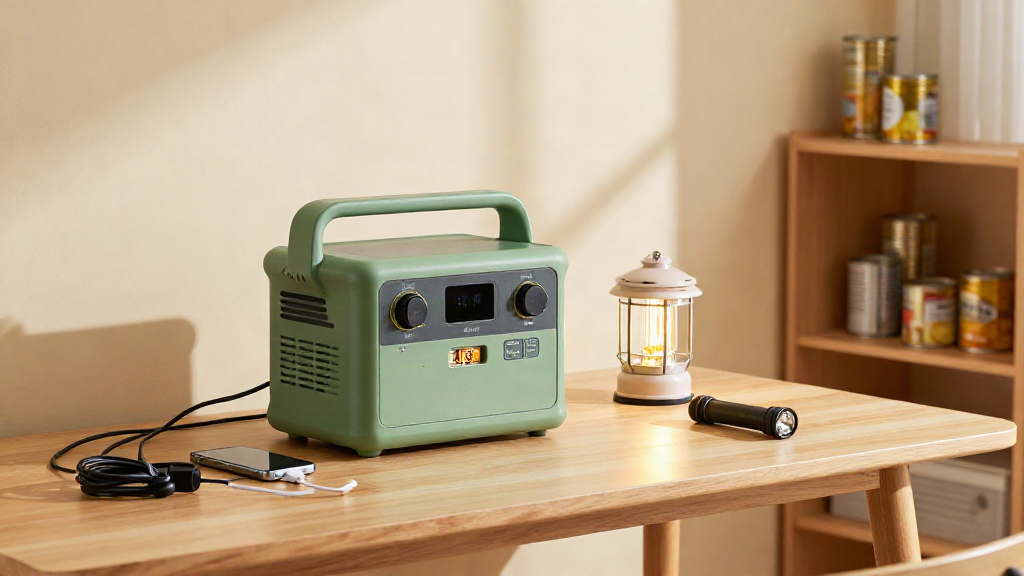
Power goes out. You don’t need a garage full of premium solar gear to get through it. You need the right amount of backup power for the things your family actually uses, bought at a price that doesn’t sting. This guide walks you through sizing it, then points you to the best budget backup power for a home blackout kit by use case – lights and phones, the fridge, and small tools.
How Much Backup Power Do You Actually Need?
Most people overshoot. They buy far more capacity than a few hours of outage ever demand, and they pay for it. The trick is to work backward from what you want to keep running, not from the biggest number on a spec sheet.
Step 1: List What You Want to Keep Running
Walk through your home and write down the short list. For most families it looks something like this:
Phones and a tablet, so you can stay reachable and keep the kids calm.
A few lights – not every light, just the room you gather in.
The fridge, if the outage stretches past a few hours.
A CPAP machine, a medical device, or a small fan.
A router or modem, if you work from home or want updates.
That’s it. You are not powering the whole house. You are powering peace of mind for the basics.
Step 2: Match Capacity to Run Time
Backup power is measured in watt-hours (Wh) – roughly, how much energy the battery holds. A simple way to estimate: multiply the watts something draws by the hours you want it to run, then add up your list.
A phone charger draws about 10 watts. Six hours of charging is around 60 Wh. A modern LED bulb sips about 10 watts, so four bulbs for eight hours is roughly 320 Wh. A fridge is the big one – it runs intermittently, and a typical fridge can pull 1,000 to 1,500 Wh over a full day.
You don’t need to be precise. A rough total tells you which tier to shop in and keeps you from paying for capacity you’ll never use. That is the heart of budget backup power for home: right-sized, not oversized.
Budget Backup Power Picks by Use Case
Here is how the tiers break down, and what each one buys you.
Lights and Phones: The Small Power Station
For a lights-and-phones kit, a compact station in the 250 to 500 Wh range covers an overnight outage with room to spare. These units are light enough to carry from room to room, usually include USB ports and a couple of AC outlets, and often come with a built-in light.
What to look for at this tier: USB-C fast charging for phones, at least two AC outlets, and a clear display showing how much charge is left. This is the single best first purchase for most households – it’s the smallest spend that solves the most common problem.
Budget tip: a plain USB power bank and a few battery lanterns cost less than a station and will get you through a short outage. If that’s all you need, start there and upgrade later.
Fridge and Freezer: The Mid-Size Station
If you want to protect a fridge or freezer through a longer outage, you’re shopping in the 1,000 to 1,500 Wh range or pairing a deep-cycle battery with an inverter. This is where the spend goes up, so it pays to know your goal.
One practical, money-saving approach: you don’t have to run the fridge continuously. Keep it closed, and run it in short bursts to hold the temperature. A mid-size station used this way stretches much further than people expect.
What to look for at this tier: a pure sine wave output (safer for fridges and electronics), a higher continuous wattage rating, and pass-through charging so the unit stays topped up while plugged in. Compare the surge rating, not just the running watts – motors spike when they start.
Small Tools, Fans, and Devices: The Flexible Middle
The same mid-size station that backs up a fridge also runs a box fan, a space heater on low, a drill charger, or a CPAP machine. If your list is mostly small loads with one heavier device, this tier does double duty and saves you from buying twice.
The Budget Category Most People Overlook
Before you buy a big station, look at the simplest option: batteries.
Rechargeable LED lanterns, headlamps, and a decent pack of AA and AAA batteries cover lights for days at a fraction of the cost. A 12-volt deep-cycle battery paired with a small inverter can power modest loads for a long time at a low upfront price – you just give up the portability and the tidy all-in-one package.
For a truly budget-focused kit, the smart play is often a small station for phones and lights, plus a shelf of batteries and battery lanterns for everything else. You get coverage without the premium sticker.
Smart Timing: Buy Power Gear at Today’s Prices
Here’s where a bargain-hunter’s instinct pays off. Power gear doesn’t get cheaper when you desperately need it – it gets harder to find, and prices climb before storm season and cold snaps when everyone shops at once.
Three timing rules that work:
Buy in the shoulder seasons. Late spring and early fall are quieter for power gear, and sales are more common than in the rush before winter storms.
Watch for verified deals, not panic pricing. Track the price for a few weeks so you know the real low. A “sale” that matches the everyday price is not a deal.
Buy capacity before you need it. Stocking a station now, at a price you can verify, beats paying a premium during an outage – when shipping slows and shelves empty.
None of this requires fear. It’s just buying at the right time instead of the wrong one.
A Simple Starter Plan
If you’re building your kit from zero, here’s the order that gives you the most coverage for the least money:
Step one: battery lanterns, headlamps, and a fresh pack of batteries. Cheap, instant coverage.
Step two: a USB power bank for phones. Small spend, big peace of mind.
Step three: a 250 to 500 Wh station for lights and charging through an overnight outage.
Step four: Add a mid-size station only if your list includes a fridge or a medical device.
Build it a piece at a time as deals come up. You will end up with a kit sized to your home, bought at prices you can verify, and never pay for capacity you don’t use.
The Bottom Line
Budget backup power for your home isn’t about chasing the biggest battery. It’s about matching capacity to your real list, choosing the right tier for lights, fridge, and tools, and buying before the rush. Start small, verify your deals, and let your kit grow with your budget – calmly, and one sensible purchase at a time.
Best wishes with your backup power decisions. This is a great time for deals and bargains, so I hope you can get the most power for the least cost.
Jason