Start Your Pantry Without Overspending
If you have ever priced a pre-made emergency food kit, you know the feeling. The total looks less like groceries and more like a car payment, and you close the tab without buying anything. Here is the good news: you do not need a kit, and you do not need to spend a lot at once. A real starter pantry is built one deal at a time, out of the same staples you already eat.
This guide walks you through what to buy first, in what order, and where to find prices you can actually verify. No fear, no doom, no thousand-dollar bundle.
What a starter pantry really needs (and what you can skip)
A beginner pantry is not a bunker. It is a shelf that keeps your family fed for about two weeks if a paycheck is tight, the store is closed, or the power goes out. Keep that goal in mind and the shopping list gets a lot shorter.
Start with the basics:
- Drinking water (one gallon per person per day, plus a little extra)
- Rice, dry beans, and oats, the cheapest calories on the shelf
- Canned vegetables, tomatoes, and fruit
- Canned or pouched protein: tuna, chicken, peanut butter
- Cooking oil, salt, and a few spices
- Shelf-stable or powdered milk
- A manual can opener and a basic first-aid kit
What you can skip for now: freeze-dried gourmet entrees, expensive gear, and anything you would not normally eat. If you do not like it on a normal Tuesday, do not stock a case of it. You will waste money and shelf space.
Build your two-week shelf, cheapest calories first
The trick to spending little is buying in order of cost per calorie. Rice, dry beans, oats, and flour stretch a dollar further than almost anything else in the store. Buy those first, in the biggest bags your storage allows, and your pantry gains weeks of food for the price of a few takeout meals.
A simple build order:
- Week one: rice, dry beans, oats, pasta, and cooking oil.
- Week two: canned vegetables, canned tomatoes, and canned or pouched protein.
- Week three: peanut butter, shelf-stable milk, salt, and spices.
- Week four: extras your family actually eats, plus a small buffer of water.
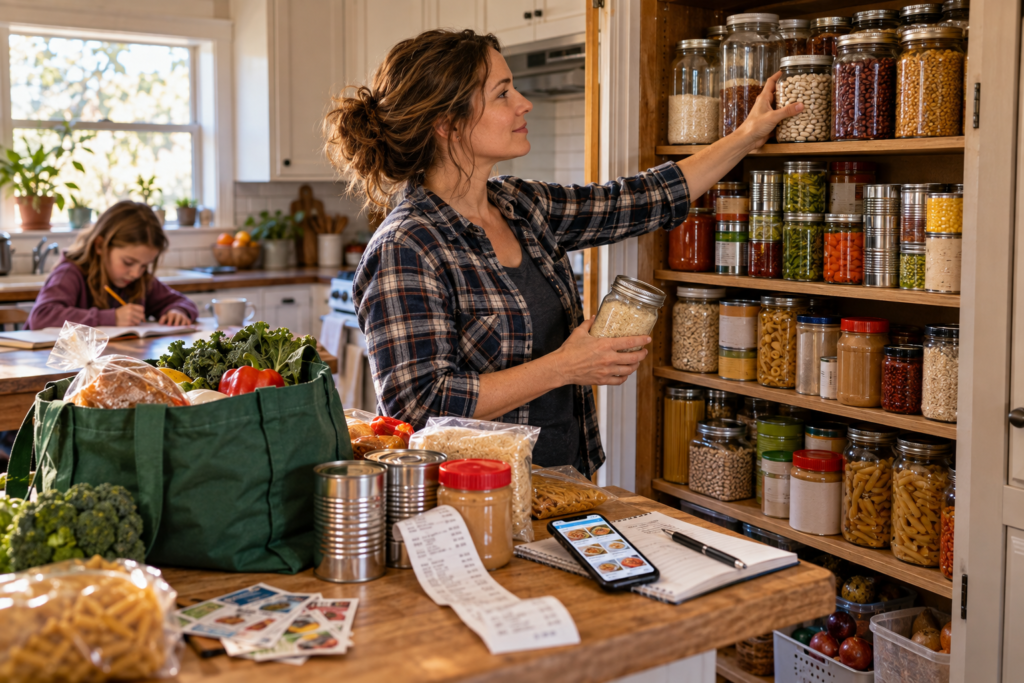
Buy a little more of whatever is on sale that week instead of chasing one big haul. When rice drops, buy two bags. When canned goods go two for one, add four cans. Done this way, a two-week shelf costs a fraction of a prepper bundle, and every item is something you already cook with.
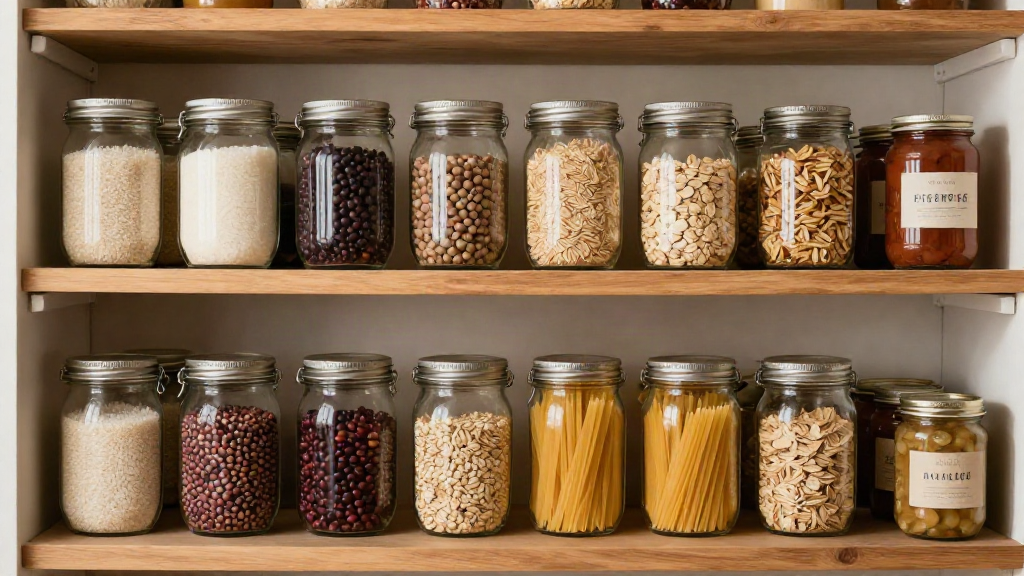
Store it right and it lasts. Keep dry goods in airtight containers, off the floor, in a cool, dark spot. Label the month you bought each item so you rotate oldest first. A cheap pantry that stays organized beats an expensive one that turns into a science experiment.
Where to find verified deals and free printables
Price is the whole game, so let someone else do the hunting. We track down preparedness deals, check that the price is genuinely low, and pass them on, so you are not scrolling ten sites to save three dollars. That’s what we do on this website. When a deal is not worth your money, we say so. We have a 72-hour checklist that you can go through and use to get started.
Two habits keep your costs down:
- Buy at today’s prices before they climb. Food costs drift up over time, so the beans you buy this month are cheaper than the beans you buy next year.
- Use free planning tools. A printable inventory sheet and a simple meal plan keep you from double-buying and from letting food expire in the back of the shelf.
Between the deals feed and the free printables, most beginners can start a working pantry for the price of a normal grocery run, then grow it a little each month.
Your first shopping list
If you want to start this week, take this list to the store:
- A 10 lb bag of rice
- A 5 lb bag of dry beans
- A large container of oats
- 2 jars of peanut butter
- 6 cans of vegetables and 4 cans of tomatoes
- 4 cans of tuna or chicken
- One bottle of cooking oil, salt, and a spice or two
- Water: as many gallons as your space allows
That is a two-week foundation for most families, and you can build on it every time you shop. You are not preparing for the end of the world. You are making sure a hard week stays just a hard week.
Ready for the next step? Start with this week’s verified deals, grab the free pantry printables, and add one more item every trip. Slow, steady, and cheap beats a scary bundle every time. Check out our new prepping online calculator tools to help with determining just how much you need. If you need a list or calculator tool or any other help, use the contact form to let us know. We have 100’s of assets we haven’t gotten loaded yet.
Best wishes with starting your prepping journey,
Diane