A kit should buy time, not replace a veterinarian.
A dog comes in from a walk leaving red pawprints across the floor. Sterile gauze and steady, gentle pressure can slow the bleeding. A clean, nonstick pad and a loose wrap can protect the paw on the way to the clinic, but a tight bandage can cut off circulation. Even a cut that stops bleeding may need veterinary treatment.
The useful supplies are the ones that make those first minutes safer: gauze, saline, bandage material, and a veterinarian’s phone number. Human painkillers and harsh disinfectants do not belong in the kit. Bleeding that persists despite pressure, a puncture wound, or a dog that will not bear weight warrants prompt veterinary care.
What the kit needs to do
A dog first aid kit has three jobs: protect the person helping, provide limited care, and make it easier to reach a veterinarian safely. It is not a substitute for an examination. Each item should have a clear purpose before or during that handoff.
Disposable gloves reduce contact with blood and other fluids. A towel can help restrain a frightened dog or create a barrier between the dog and the handler; even a gentle dog may bite when hurt. A muzzle should never be used on a dog that is vomiting, struggling to breathe, or has a facial injury.
For a minor surface scrape, sterile saline can rinse away debris, and a nonstick dressing can protect the area until it is assessed. Difficulty breathing, collapse, seizures, suspected poisoning, a deep wound, severe pain, or an inability to stand call for immediate veterinary advice, not more treatment from the kit. Human pain medicines and harsh wound cleaners can cause harm and should not be added as just-in-case supplies.
Keep the emergency clinic’s number and the dog’s medication list with the kit. That information helps the clinic prepare while the dog is on the way.
Wound care: clean, cover, check
A dog first aid kit needs supplies for temporary cleaning and covering, not for closing a wound or keeping it bandaged for days. For a cut that is more than superficial, the goal is to limit contamination and protect the area on the way to veterinary care.
- Disposable gloves reduce contact with blood and wound fluid. They do not replace handwashing, and a fresh pair is needed if the first becomes contaminated.
- Sterile saline gently rinses dirt from a wound. It cannot remove deeply lodged grit or make a bite wound safe to treat at home.
- Sterile gauze pads absorb blood and provide a clean surface for gentle pressure. If a pad soaks through, another can be placed on top rather than pulling away the first and disturbing a clot.
- Nonstick dressings cover the wound without adhering as readily as plain gauze. They still need checking and changing; they are not a seal for deep or puncture wounds.
- Gauze rolls hold a dressing in place and add light padding. Self-adherent wrap can secure the outer layer, but stretching it tight can restrict circulation, especially around a leg or paw.
- Medical tape fastens a bandage to itself; sticking it directly to fur or skin can cause pain or irritation. Blunt-tip scissors cut tape and wrap with less risk near a moving dog.
- Tweezers or a tick tool help remove a visible, superficial splinter or an attached tick. An embedded object should be left for a veterinarian rather than dug out.
A bandage needs frequent checks for slipping, swelling, cold toes, or increased pain. Any of these signs calls for loosening or removing it and seeking veterinary advice.
Handling and getting to help
Some kit items make an injured dog safer to handle and move, even though they do not fix the injury. A towel can provide a grip under a small dog, cushion a carrier, or help keep a frightened dog still. A spare leash helps maintain control during a transfer, while a flashlight makes it easier to see a paw, find dropped supplies, and reach the car safely after dark.
A cold pack wrapped in fabric can provide brief comfort for swelling during a trip to the veterinarian. Keep it off bare skin and open wounds; it is not a substitute for an examination. For a large dog that can stand but cannot walk reliably, a rescue sling may help support the dog during transport. Sudden paralysis or a suspected back injury calls for veterinary guidance before moving the dog.
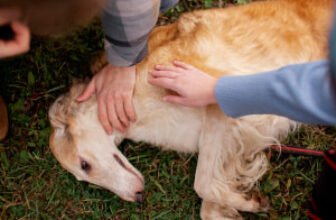
Even a familiar dog may bite when touched near an injury. A properly fitted muzzle can protect handlers, but never muzzle a dog that is vomiting or having trouble breathing. Avoid forcing restraint if it worsens distress; call a veterinarian for guidance.
Information belongs in the kit, too
A bandage is less useful when no one can find the emergency clinic’s number. Keep a printed contact card in a waterproof sleeve inside the kit, and save the same details on a phone for quick access. Include the regular veterinarian, the nearest open emergency hospital, and a pet poison-control service. In the United States, the ASPCA Animal Poison Control Center is available at 888-426-4435; consultation fees may apply.
Add a one-page medical summary: the dog’s name, approximate weight, chronic conditions, allergies, and a current medication list with doses and schedules. Note when any time-sensitive medication was last given. Date the page when it changes so an older copy is easy to spot; take it along if the dog needs urgent care.
Pack prescribed medication only with that dog’s veterinary instructions. Keep it in a readable, labeled container showing the drug, dose, and expiration date. Check dates when restocking the kit, and do not use leftover prescriptions from another pet or an earlier illness. If a regular medication is running low, arrange an emergency pet medication refill before the supply runs out rather than treating the first-aid kit as a backup pharmacy.
What stays out of the kit—and why
Do not give ibuprofen, naproxen, or acetaminophen without veterinary direction.
These drugs can cause stomach bleeding, kidney injury, or liver damage in dogs. A veterinarian can choose pain relief appropriate to the dog and its condition.
It is not a routine wound-care supply.
Peroxide can damage healing tissue. It should not be used to induce vomiting unless a veterinarian or animal poison service specifically directs it; vomiting can be dangerous after some exposures.
Avoid alcohol and harsh, undiluted antiseptics on open wounds.
They can sting and injure tissue, making a painful dog harder to handle. Leftover antibiotics and other medications also do not belong in the kit without dog-specific veterinary instructions.
Neither is a routine kit technique.
A poorly fitted splint can worsen an injury or restrict circulation; a tourniquet can cause serious tissue damage. Limit movement during transport, and use direct pressure for bleeding while seeking veterinary advice.
A cut paw: when to stop and go
-
Keep the dog still
Move the dog away from broken glass or rough ground. Handle the paw gently; a dog in pain may bite even when normally calm.
-
Apply pressure and assess
Hold clean gauze or a towel against the cut without repeatedly lifting it to look. If blood flows heavily, soaks through the cloth, or the dog seems weak, pale, or unsteady, call a veterinarian immediately and prepare to leave.
-
Clean only a minor cut
If bleeding stops promptly, the cut is shallow, and the dog can walk normally, rinse away visible dirt with clean water or saline. Cover it with a nonstick pad and a light wrap; the toes should remain warm, and the wrap should not squeeze the paw.
-
Watch the paw, not just the dressing
Limit walking and check the wrap regularly. A gaping wound, renewed bleeding, swelling, or refusal to bear weight needs veterinary assessment.
With heavy bleeding or signs of shock, maintain pressure, call the veterinarian or emergency clinic, and transport the dog. Rinsing and neatly wrapping the paw can wait. If an object is lodged in the wound, do not pull it out or press directly on it.
Make the kit usable in a hurry
A useful kit opens quickly and puts the right supplies within reach. Keep sterile dressings and gauze in one sealed pouch, separate from scissors, tweezers, and other tools that may be dirty after use. Put gloves near the top so they can be pulled on before handling an injured dog. A water-resistant case, or sealed inner bags, helps protect supplies from rain and spills.
Label the outside dog first aid kit and keep it in a consistent, accessible place. Every caregiver should know where it is, including anyone who looks after the dog away from home. A small contents list inside the lid makes it easier to spot gaps without unpacking everything.
Check the kit after each use and periodically between uses. Replace depleted supplies; discard dressings with torn or wet packaging, and check expiration dates on products that have them. When buying a premade kit, compare dog first aid kits for missing supplies rather than choosing by item count. A compact kit with usable gloves, wound coverings, handling supplies, and emergency information is more valuable than one padded with duplicates.
Check the kit before it is needed
Before putting the kit away, check whether a caregiver can handle a frightened dog safely, apply steady pressure to minor bleeding, cover a wound briefly, and help the dog reach a vehicle. A working veterinary number and an after-hours option should be easy to find inside the case.
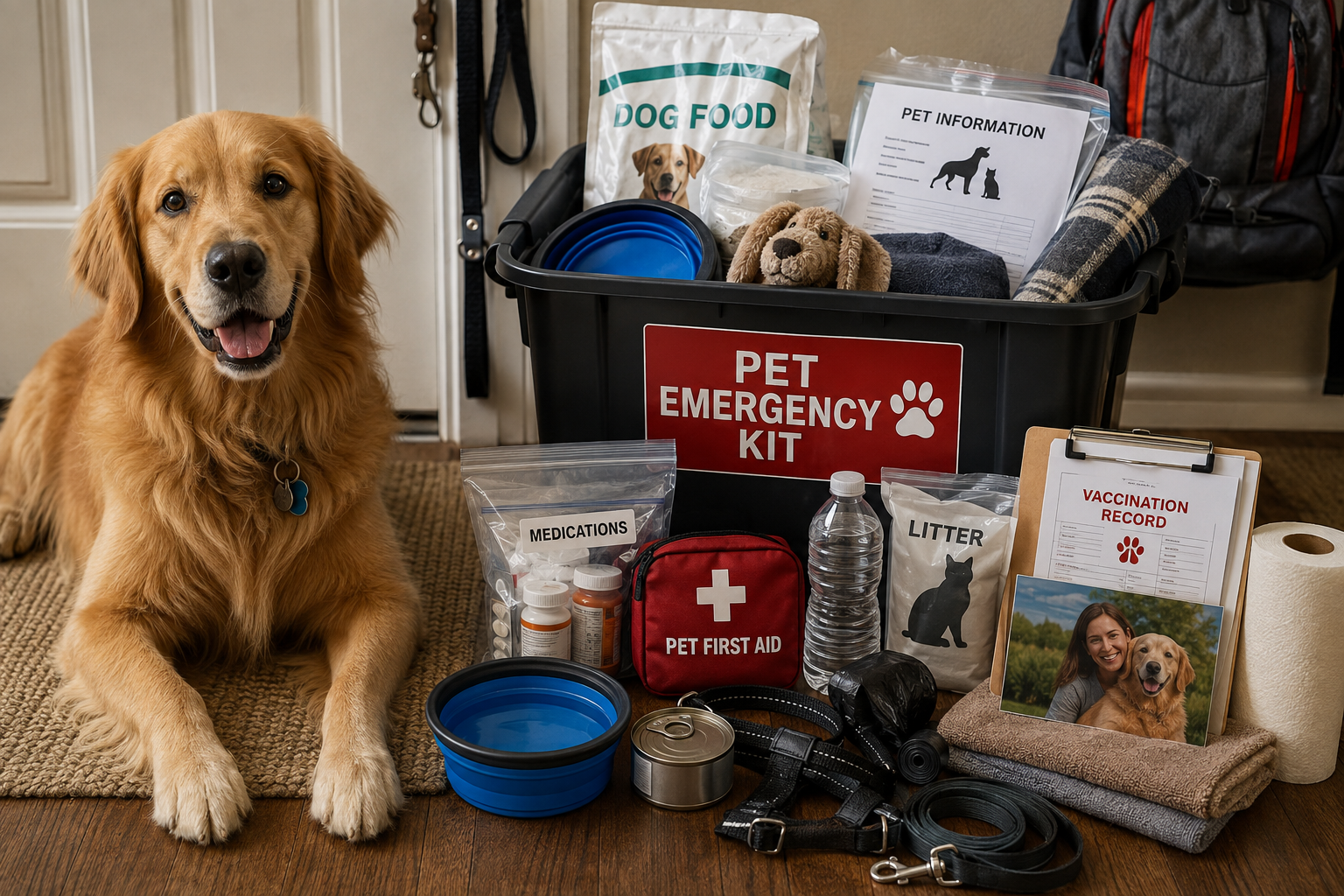
Replace missing essentials before adding specialty tools. Confirm that dressings are dry, wraps are usable, and contact details are current. Questions about medication, wound severity, or emergency care belong with a veterinarian. The first aid kit covers the minutes before professional help; food, water, and evacuation provisions belong on a separate pet emergency kit checklist, where they will not crowd out injury-care supplies.