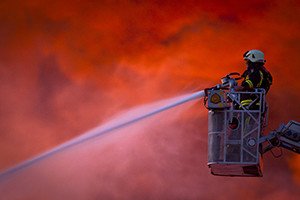
Most of us have watched a fire truck race past and never once thought about what the people inside actually know. This free online firefighter training course from Alison lets you look over their shoulder for about 3 to 4 hours, at a beginner level, and learn how fire behaves, how it is fought, and how a household can get out safely. You will not earn a badge from a screen, but you will understand fire the way trained responders do, and that understanding is quietly one of the most useful things a prepared family can carry.
Why This Matters for Preppers
Fire is the one emergency that can turn a normal evening into a total loss in the time it takes to find your shoes. It does not wait for the weather, the grid, or the economy. It happens in ordinary homes, on ordinary days, and it moves faster than almost anyone expects. Knowing how firefighters think about fire gives you a real edge, because their whole job is prevention first and response second.
There is a self-reliance angle here too. When you understand the fire triangle, the different classes of fire, and why some fires must never be fought with water, you stop guessing and start acting on knowledge. That is the difference between grabbing the right extinguisher and making a small fire much worse. For a household that already stores food, water, and power, fire readiness is the piece that protects everything else you have put away.
The budget angle is simple. Formal firefighter and fire safety instruction can cost real money, and this course is free to work through. You are trading a few evenings of attention for a foundation that would otherwise sit behind a paywall. For a family watching every dollar, that trade is hard to beat, and it costs you nothing to find out whether the subject grabs you.
Finally there is trust. When the neighborhood gathers after a scare, the calm person who can explain what happened and what to do next becomes the one everyone listens to. That role is earned with knowledge, not volume, and a course like this is where it starts.
How Fire Actually Works
Every fire needs three things at once: fuel, heat, and oxygen. Take any one of them away and the fire goes out. That simple idea, called the fire triangle, is the backbone of everything firefighters do. Smother a grease fire and you cut the oxygen. Cool a wood fire with water and you drop the heat. Shut a door and you starve the flames of fresh air and slow their spread.
Fires also come in types, and the type decides how you fight it. A cooking oil fire, an electrical fire, and a burning stack of firewood are three different problems, and using the wrong tool on the wrong one can be dangerous. The course walks through these categories in plain terms so you learn to size up a fire before you ever reach for anything. It also covers how fire safety standards are inspected, monitored, and reviewed, which is the quiet prevention work that keeps most fires from starting at all.
What You Will Learn
The course is built around clear, practical outcomes. By the end you will be able to explain the core ideas a first responder relies on and apply them to your own home. The main outcomes include:
- Define fire and the fire triangle: understand the fuel, heat, and oxygen relationship at the heart of every fire.
- Recognize the six fire types: learn to tell fires apart so you match the right response to each one.
- Understand firefighter duties: see the responsibilities, inspections, and reviews that make up the real job.
- Apply health and safety measures: learn the precautions that keep responders alive around fire.
- Summarize fire control systems: understand how detection and suppression systems are meant to work.
- Weigh risk assessment: learn what to look for when judging how dangerous a situation really is.
- Outline evacuation procedures: know the roles and steps that get people out of a building safely.
Put together, these skills give you a responder's mental checklist. You stop seeing a fire as pure chaos and start seeing fuel, air, heat, and a way out. That shift is exactly what keeps trained people calm when everyone else freezes.
What the Course Covers
- Fire fundamentals: the definition of fire and the fire triangle that governs it.
- Fire classification: the six fire types and why each demands a different approach.
- The firefighter role: duties, responsibilities, and the daily assessment that prevents surprises.
- Health and safety: the measures and safety arrangements that protect responders.
- Fire control systems: how detection, alarm, and suppression systems are designed to perform.
- Risk and evacuation: risk assessment considerations and the evacuation procedures that follow.
Where It Fits in Your Prep
Think of this course as the foundation of your home fire plan. Pair it with a real walk-through of your house: two ways out of every room, a working smoke alarm on every level, a clear meeting spot outside, and the right extinguisher within reach of the kitchen. The course gives you the reasoning, and your walk-through turns that reasoning into muscle memory for the whole family.
It sits comfortably next to your first aid and emergency planning. A household that can prevent a fire, get everyone out, and treat a minor injury has closed one of the biggest gaps in home readiness. If you want to go deeper afterward, this course is the natural on-ramp to the longer fire safety and fire safety training diplomas on the Free Shelf.
What This Course Is and Is Not
This is beginner-level knowledge, built for anyone who wants to understand fire and protect a household. It is educational training, not hands-on certification, and finishing it does not qualify you to fight structural fires or join a crew. Real firefighting demands supervised physical training, gear, and a team. Treat this as the knowledge that makes you safer and smarter at home, and as a genuine first look for anyone curious about the field.
The lessons are free to finish. When you complete the course, a certificate is available that you can add to your resume or LinkedIn, and a credential like this can help you make the case for a job or a raise. Buying the certificate is optional and is never required to finish the lessons.
Final Thoughts
That fire truck racing past carries people who trained to understand something most of us never study until it is too late. A few focused hours will not put you on the truck, but they will change how you see your own home, your own exits, and your own risks. For a prepared family, that is a small investment with a large payoff, and it is waiting for you for free.
Start the free course and earn your certificate.
Looking for more like this? Browse the Free Shelf, our growing shelf of free Alison courses for preppers.
Some links are affiliate links, and they never change your price. Details: /disclaimer