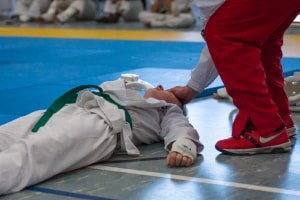
Contact training and competition come with bumps, sprains, and the occasional real emergency, and knowing how to respond keeps a training hall safe. This free Alison course, First Aid for Martial Arts, runs about 1.5 to 3 hours and covers assessing and treating the injuries that occur during martial arts, spotting the early signs of a life-threatening emergency, the AMPLE assessment method, and preventing injuries in the first place.
Why This Matters for Preppers
If you or your family train in a martial art or any contact sport, injuries are part of the territory, and knowing how to assess and treat them on the spot is genuinely useful. This course is built for exactly that active, physical setting.
The skills carry well beyond the dojo. Sprains, strains, impacts, and the ability to spot when a knock is actually something serious are relevant to any active household, and the AMPLE assessment method is a clear, portable tool for sizing up an injured person.
For a prepper, staying active and injury-aware is part of overall resilience. Understanding how to prevent injuries and respond to them keeps you and your training partners healthy, which matters when staying fit is part of the plan.
It also teaches the crucial skill of recognizing when an injury has crossed from minor to emergency. Knowing that line, and acting on it fast, is exactly what prevents a bad situation from becoming a tragedy in a physical setting.
The habit of assessing an injury calmly also keeps a training space healthier over time. When coaches and training partners can tell a minor knock from something that needs to stop the session, injuries get managed early instead of ignored, which keeps everyone training longer and more safely.
The confidence this builds also changes how a training space handles the inevitable knocks. When someone can calmly assess an injury and decide whether to pause, ice, or seek care, minor issues get managed before they become chronic, and genuine emergencies get the fast response they need. That steady presence benefits everyone on the mat.
How to Assess a Training Injury
The course teaches how to tell minor injuries from major ones, how to spot the early signs of a life-threatening emergency, and how to use the AMPLE method to assess an injured person quickly and systematically.
That structured assessment is the heart of it. In the heat of training, being able to calmly work through what happened and how serious it is keeps you from either overreacting to a bruise or missing something dangerous.
Reinforce it with hands-on practice, as with all first aid. The course teaches the assessment and the treatment priorities, and practicing them makes your response quick and confident when someone goes down on the mat.
Put the AMPLE method into practice on the minor injuries that come up in normal training, so the assessment is automatic when something serious happens. Rehearsing the emergency procedures with your training partners means the whole group knows what to do if someone goes down.
Practice the assessment on the everyday sprains and bruises of normal training so it is automatic under pressure, and walk your training partners through the emergency steps so the whole group is ready. Reinforce the treatment priorities with hands-on practice, and keep a stocked kit at the gym for the injuries this course prepares you for.
What You Will Learn
The course covers assessing and treating the injuries active training produces. Here is what you will learn:
- How to identify minor and major injuries during martial arts
- How to recognize the early signs of a life-threatening emergency
- How to assess an injury using the AMPLE method
- The procedures for life-threatening situations
- Injury prevention measures for training and competition
- The key first-aid treatment points in a martial arts setting
Together, these lessons make you a safer, more capable presence in any active setting. The ability to assess an injury and know when it is serious is useful far beyond the training hall.
What the Course Covers
- Minor vs major injuries: telling everyday training knocks from something serious.
- Spotting emergencies: recognizing the early signs of a life-threatening situation.
- The AMPLE method: a systematic way to assess an injured person quickly.
- Emergency procedures: the steps for handling life-threatening situations.
- Prevention: measures that reduce injuries during training and competition.
Where It Fits in Your Prep
This is a natural fit for anyone whose household includes martial artists or contact-sport athletes, and its assessment skills apply to any active, injury-prone setting. It is a useful, specialized addition to your first-aid knowledge.
It complements a general first-aid course, adding a focus on musculoskeletal and impact injuries. Together they cover both everyday emergencies and the specific bumps of an active life.
Reinforce it with practice, and share it with training partners. A group where several people can assess an injury is a safer group to train in.
Share it with the people you train with, since a group where several can assess and respond is far safer than one relying on a single trained person. Reinforce the physical skills with practice so they are ready when they count.
This is educational first-aid knowledge, and an online course is not the same as hands-on certification. It is never a substitute for professional medical care or for calling emergency services, which you should always do for a serious situation. Any injury that might be serious needs professional evaluation. Backed by real practice, it is genuinely useful for martial artists, coaches, and active families.
The lessons are free to finish. When you complete the course, a certificate is available that you can add to your resume or LinkedIn, and a credential like this can help you make the case for a job or a raise. Buying the certificate is optional and never required to finish the lessons.
Staying active is part of staying resilient, and knowing how to handle the injuries that come with it keeps training safe. This free course gives you those skills. Learn to assess, treat, and prevent, and train with more confidence.
Start the free course and earn your certificate
Looking for more free training like this? Browse the full lineup on our Free Shelf, our hand-picked collection of free Alison courses for preppers.
Some links are affiliate links, and they never change your price. Details: /disclaimer.