A scraped knee and a roadside bleed are not the same emergency, and no single first aid kit handles both well. The easiest way to get this right is to think in levels: a basic boo-boo kit for everyday scrapes, a home station for the moderate stuff, and a trauma bag for serious, life-threatening injuries. This guide walks through what each level holds, what it is for, what it costs, and how to pick the right one for your home, your car, and the people you look after.
Why Think in Levels
First aid needs vary more than most kits admit. A child’s scraped knee, a workplace accident, and a car crash all call for different supplies, and a single do-everything kit usually does none of them well. Sorting kits into three levels of capability, basic care, intermediate care, and advanced care, makes it simple to match the kit to the risk. Pick the level that fits where the kit will live and who will open it, and you avoid both under-packing and hauling around gear you will never use.
At a Glance: The Three Levels
| Kit Level | Typical Components | Injuries Addressed | Skill Level Needed | Typical Price Range (USD) |
|---|---|---|---|---|
| Beginner “Boo-Boo” Kit | Adhesive bandages, antiseptic wipes, antibiotic ointment, small gauze pads, adhesive tape, kid-friendly items (fun bandages), small scissors, tweezers, instant cold pack, basic pain reliever, instruction leaflet | Minor cuts, scrapes, blisters, small burns, splinters, minor insect bites | No formal training required; basic first-aid literacy helpful | $5–$25 |
| Home Station Kit | All boo-boo items plus larger sterile gauze, elastic bandages, non-adherent dressings, triangular bandage, CPR mask, basic splinting material, digital thermometer, antiseptic solution, disposable gloves (several pairs), burn dressing, eye wash, suture/steri-strip alternatives, basic medication kit, emergency blanket, multi-tool, more detailed instructions or manual | Moderate cuts, deeper lacerations until medical care, sprains, strains, moderate burns, eye irritants, basic stabilization of fractures, illness-related needs (fever, pain) | Basic first aid training recommended (first aid/CPR course) | $25–$150 |
| Trauma Bag (Advanced/Professional) | Large sterile trauma dressings (e.g., 10×30), hemostatic dressings, tourniquet, chest seals, nasopharyngeal airway, oxygen port or masks, advanced airway adjuncts, splinting materials, IV starter items (if trained), suturing kits (if provider-level), large shears, multi-size gloves, trauma sheeting, burn sheets, suction device (sometimes), detailed trauma first-aid/ALS supplies, high-capacity carrying case | Severe bleeding, compound fractures, penetrating chest wounds, major burns, airway compromise, shock stabilization, multi-system trauma pending EMS/transport | Advanced first aid, tactical/EMS/medical training required to use many items safely; basic items (tourniquet, pressure dressings) can be used by trained lay rescuers | $75–$1000+ (consumer-grade trauma bags commonly $75–$400; professional EMS bags higher) |
Level 1: The Boo-Boo Kit (Basic)
The boo-boo kit is the one you reach for a dozen times a month: fast relief for minor cuts, scrapes, small burns, and blisters. It is the right fit for homes with young kids, classrooms, backpacks, purses, and the glovebox. Small, light, and cheap, it handles the everyday stuff so your bigger kits stay sealed for real emergencies.
What is inside:
- Assorted adhesive bandages in several sizes
- Small sterile gauze pads and adhesive tape
- Antiseptic wipes and antibiotic ointment
- Hydrocortisone cream for itch and a small tube of burn gel
- Small scissors, tweezers, and splinter tools
- One or two pairs of disposable gloves
- A single-use instant cold pack
- A simple, age-appropriate oral pain reliever in its original packaging
- A basic instruction leaflet
When to use it: minor bleeding, blisters, small burns, insect bites, and scrapes. No training needed beyond knowing how to clean a wound. Price runs about $5 to $25. Best for parents, classrooms, and anyone who wants a grab-and-go kit for outings.
Level 2: The Home Station (Intermediate)
The home station is your base kit, the one that lives in a labeled box in the hall closet and covers the moderate injuries that do not quite need an ER but need more than a bandage. It builds on the boo-boo kit and adds what you need to manage a sprain, a deeper cut, or a burn, and to support someone until help arrives.
What is inside:
- Everything in the boo-boo kit, scaled up
- Larger sterile gauze, non-stick pads, and roller gauze for wrapping
- Elastic bandages for sprains, and triangular bandages for slings
- Reusable hot and cold packs
- Saline or wound wash, antiseptic solution, and burn gel
- Sturdy scissors, forceps, a thermometer, and a penlight
- Several pairs of gloves, face masks, and a CPR barrier mask
- Pain relievers, antihistamines, an oral glucose source, and any prescribed emergency meds for household members, such as an epinephrine auto-injector
- An emergency blanket, a multi-tool, a first aid manual, and an emergency contacts list
When to use it: extended care at home, managing sprains, moderate cuts or burns, and supporting someone until EMS arrives. Store it somewhere accessible and clearly labeled. Price runs about $25 to $150, and a basic first aid and CPR course makes it far more useful. Best for most households. For many families, a home station plus a small boo-boo kit for outings is all you need.
Level 3: The Trauma Bag (Advanced)
The trauma bag is built for the injuries you hope you never see: severe bleeding, penetrating chest wounds, airway trouble, and major trauma. It is the kit for first responders, search-and-rescue teams, high-risk worksites, and rural roads where help is far away. One honest caveat up front: a trauma bag only helps in trained hands. Many of its tools can do harm if used wrong, so the gear and the training go together.
What is inside:
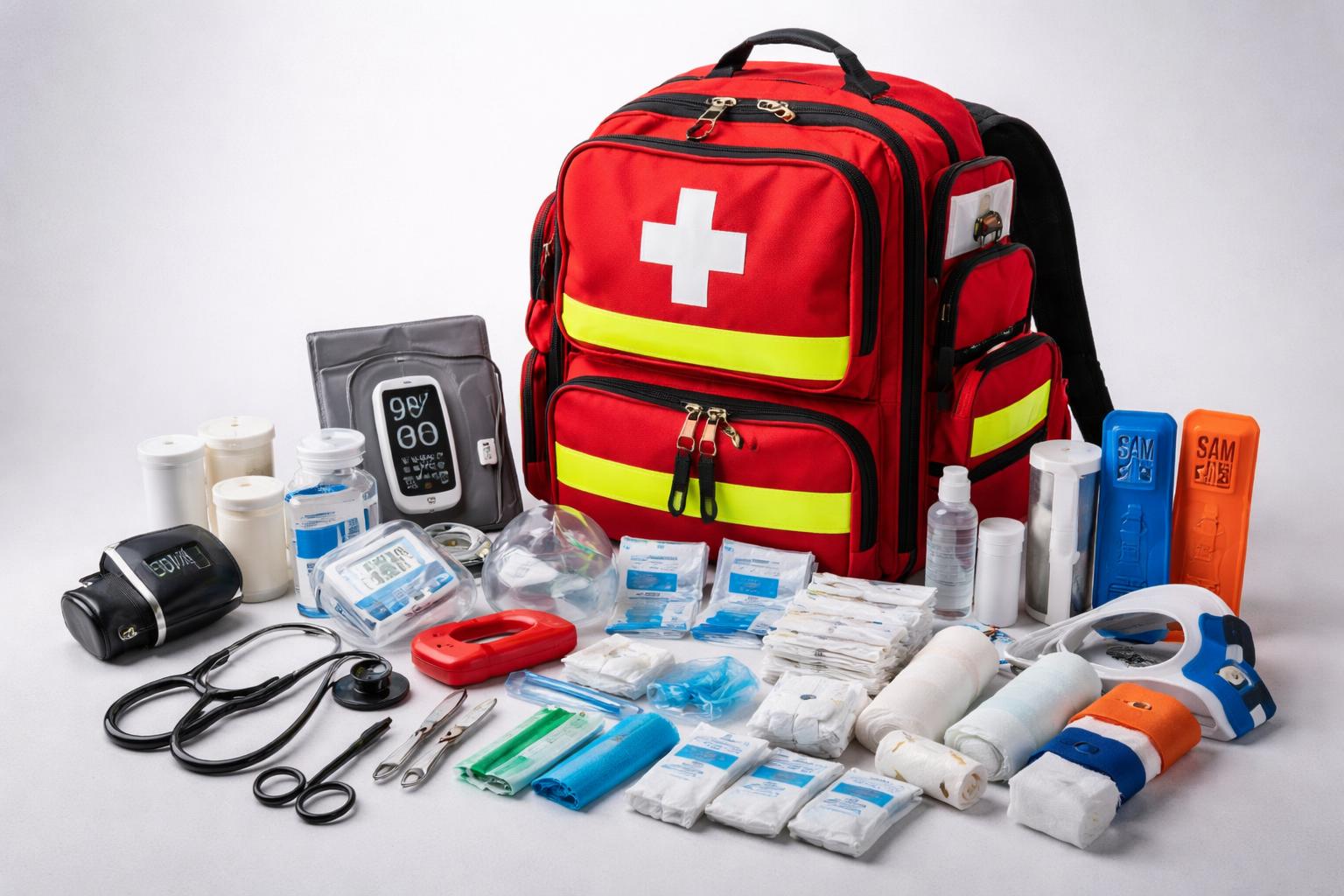
- Bleeding control: trauma dressings in several sizes, hemostatic gauze, and tourniquets rated for limb-threatening bleeds
- Airway and breathing: nasopharyngeal airways in a few sizes, a pocket mask or bag-valve mask, and chest seals for penetrating chest wounds
- Immobilization: a SAM splint or similar, and a cervical collar
- Advanced bandaging: large sterile sheets, compression dressings, and occlusive dressings
- Tools: trauma shears, a multi-tool, heavy-duty gloves, and a headlamp
- Longer-care consumables: saline, burn dressings, and IV supplies if you are trained to use them
- Monitoring and PPE: a vital-signs sheet, a pen, eye protection, an N95, and a pulse oximeter if available
When to use it: severe hemorrhage, airway compromise, major trauma, or any situation where advanced care may be delayed. Price runs roughly $75 to $1,000 or more. Consumer-grade bleeding-control bags usually land between $75 and $400, while professional EMS bags cost more. Training matters here as much as gear: advanced first aid at a minimum, with Stop the Bleed, wilderness first aid, or EMS-level courses strongly recommended. Best for trained responders, outdoor leaders, and high-risk workplaces. If you are untrained, a consumer bleeding-control kit focused on tourniquets and pressure dressings is a smarter buy than a full provider bag.
How to Choose Your Level
Three questions usually settle it:
- Who will use it? A casual caregiver, a parent, or a trained responder?
- Where will it live? Home, car, workplace, backpack, or a remote cabin?
- What are the real risks, and how long until professional help arrives? Short EMS response times favor simpler kits, while long delays favor more advanced supplies.
Match the kit to the likely scenario, not to the scariest one you can imagine. A few starting points:
- Typical home with quick EMS: a home station plus a small boo-boo kit for outings
- Families with children: a home station plus a child-focused boo-boo kit, with pediatric dosing noted
- Drivers and commuters: a compact home-station kit in the car, and a small bleeding-control kit for rural or commercial routes
- Outdoor leaders and high-risk workplaces: a trauma bag sized to the group, plus at least one trained responder
Kits for Your Car
A car kit is its own thing: compact, organized for quick one-handed access, and focused on what actually happens on the road. Build it at whichever level fits your driving.
- Car boo-boo kit: bandages, antiseptic wipes, a pain reliever, tweezers, small scissors, an instant cold pack, gloves, tape, and gauze in a glovebox pouch
- Car home-station lite: all the boo-boo contents plus larger gauze, an elastic bandage, a CPR mask, trauma shears, an emergency blanket, a flashlight, and a reflective triangle, which is plenty for family road trips
- Car bleeding-control kit: a quality tourniquet, hemostatic dressing, pressure dressing, chest seals, gloves, and trauma shears, ideally with a wallet-sized instruction card, worth it for rural drivers or anyone carrying passengers
Keeping Your Kit Ready
A kit only works if it is stocked and current, so build in a simple routine:
- Check every 3 to 6 months, and replace expired medications, sterile items, and hemostatic dressings at least twice a year
- Restock consumables the moment you use them, so the kit is always whole
- Keep an inventory list on or inside the kit so you can see at a glance what is missing
- Store kits in a cool, dry, clearly labeled spot, and keep one portable kit for travel and one full kit at home
- When buying, match contents to your real scenarios rather than the biggest piece count, and prioritize quality tourniquets and approved hemostatic dressings over filler
- Skip advanced items you are not trained or legally cleared to use, like airways and IV kits, and pair any kit with training, since CPR, basic first aid, and bleeding-control courses do more for outcomes than any single supply
Final Thoughts
Organizing your supplies by level, boo-boo kit, home station, and trauma bag, turns a vague ‘I should get a first aid kit’ into a clear plan. Match each kit to where it lives and who will open it, keep it maintained, and back it with the right training. A well-stocked, well-placed kit will not just ease the small stuff. On the worst day, it can save a life.