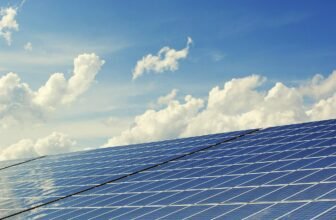
Solar gets most of the attention, but the wind keeps blowing at night and through the storms when panels sit dark. Introduction to Wind Energy is the free course that teaches how we turn moving air into usable power. It runs about 3 to 4 hours at the intermediate level, and it costs nothing to take.
Why wind is worth understanding right now
Wind has become one of the fastest-growing sources of new electricity in the world, and the cost of wind power has fallen sharply over the past decade. That shift has pulled small turbines into the conversation for homes and off-grid sites, often paired with solar. For a prepper, that pairing is the real appeal. Wind and sun rarely fail at the same time. Panels fade at night and under heavy winter cloud, which is often exactly when the wind picks up. Understanding wind is how you decide whether it belongs in your own power plan rather than buying on a hunch.
How a wind turbine actually makes power
A turbine blade works like an airplane wing. Moving air slips past its curved shape and creates lift, which spins the rotor, which turns a generator into electricity. Two facts from the course are worth knowing before you shop. First, power rises with the cube of wind speed, so doubling the wind gives roughly eight times the power, which is why a windy site matters so much more than a bigger blade. Second, no turbine can capture more than about 59 percent of the wind's energy, a physical ceiling called Betz's limit. The course explains why blade count and design are always a trade between efficiency and cost.
That grounding pays off fast. It tells you whether your land has the steady wind a turbine needs, how to size one honestly, and how to spot the overpriced gimmicks that promise more than physics allows.
A fair note: this is an intermediate course, so it lands best once you have the basics of energy down. If the terms above are new, start with Renewable Energy Fundamentals on our Free Shelf and come back to this.
What this means for your own setup
Here is the practical test the course prepares you to make. A useful home turbine needs genuinely open ground and real height above nearby trees and rooftops, because obstacles churn the wind into turbulence a turbine cannot use. Many suburban lots simply do not have the steady flow to justify one, and that is worth knowing before you spend a cent. Where the wind is reliable, though, a small turbine earns its keep by filling the gaps solar leaves. A modest turbine, a solar array, and a shared battery bank become a system that keeps producing across the day, the night, and the season, and this course is what lets you judge honestly which half of that story is yours.
One honest expectation before you invest: small wind is more mechanical than a solar panel, with a spinning rotor and moving parts that need the occasional check and service. That is not a reason to skip it, just a reason to treat a turbine as a committed part of a system rather than something you bolt up and forget. The course gives you enough grounding to weigh that trade and to judge any turbine kit on its real merits instead of its marketing.
What you will learn
- How turbines capture wind and the main turbine types
- Why power rises so steeply with wind speed
- Betz's limit and what caps a turbine's efficiency
- How lift, drag, and blade count shape a design
What the course covers
- Capture the wind: how a turbine converts moving air into electricity.
- Respect the speed: the cube relationship between wind speed and power.
- Know the ceiling: Betz's limit and real turbine efficiency.
- Judge a design: lift, drag, and why blade count is a trade-off.
The lessons are free to finish. When you complete the course, a certificate is available that you can add to your resume or LinkedIn, and a credential in a fast-growing field like wind can help you land a job or make the case for a raise. Buying it is optional and never required to finish the lessons.
The most resilient home draws from more than one source. Learn how the wind works, and you can decide with clear eyes whether it deserves a place next to your panels.
Start the free course and earn your certificate
This course is part of our Free Shelf collection of free courses for preppers, in the Keep the Lights On track.
Some links are affiliate links, and they never change your price. Details: /legal-pages/affiliate-disclosure/