
Most emergency advice is written for a healthy adult who can grab a bag and walk out the door. That does not describe every household. Older adults often manage medications, mobility aids, medical equipment that depends on electricity, and a support network that has to be coordinated long before a storm arrives. A winter power outage or a long stretch of extreme heat is an inconvenience for a younger person and a genuine health risk for someone in their seventies or eighties.
The work itself is not complicated. Preparedness guides aimed at older adults keep returning to the same handful of moves: figure out what you personally need, decide whether you would stay or leave, write down who you can count on, and gather supplies before the shelves are empty. This guide walks through each part and points to the free resources worth keeping on hand.
Why a Standard Emergency Kit Falls Short
A generic checklist assumes you can carry your own supplies, drive yourself to a shelter, and bounce back quickly. The risks older adults actually face look different. The National Council on Aging describes two situations that catch people off guard: being confined at home because the outside air is unsafe to breathe, and needing to leave home suddenly because the power went out during a dangerous winter storm.
Heat belongs on that list too. The California Department of Aging publishes heat advisories and points residents toward resources for staying safe during extreme heat, including finding cooling centers. Natural disasters such as hurricanes, tornadoes, floods, earthquakes, and extreme heat are covered in geriatric mental health guidance alongside man-made emergencies. The point is not to scare anyone. It is to accept that the plan has to match the person, not the other way around.
Start by Assessing Your Own Needs
Recent 2026 guidance for older adults is built around a short sequence of steps that begins with assessing your needs and then creating a plan. That order matters. Buying gear before you know what you are preparing for usually produces a closet full of items you never touch.
Sit down with a notebook and answer a few honest questions about your daily life. What medications do you take, and how would you refill them if pharmacies closed for a week? Does any of your medical equipment rely on electricity? Can you walk to a car, or would you need a ride and help carrying things? Do you have pets or another person in the household who depends on you? State aging departments make the same recommendation: evaluate your personal needs first, then build the plan around them.
Decide Now Whether You Will Stay or Go
Emergency planning for older adults usually splits into two paths. The first is staying home, which means preparing to be self-sufficient for at least two weeks. The second is evacuating, which means having a destination, a route, and a way to get there before conditions deteriorate.
If you would need help evacuating, decide who will provide that help and confirm it with them now, not during a mandatory evacuation order. Find out whether your community has a program, registry, or local contact for residents who need evacuation assistance, and verify the details with your local emergency management office or area agency on aging. Contact information and program names change, so a phone call beats an assumption every time.
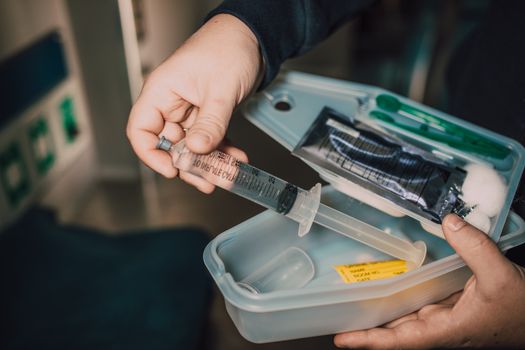
Assemble Your At-Home Emergency Kit
Preparedness resources for older adults consistently list assembling an at-home emergency kit as a core task. Size it to the two-week stay-home window rather than a weekend. Instead of copying a generic list, build yours in categories:
- Water and shelf-stable food you actually enjoy eating, plus a manual can opener
- A current written list of your medications, doses, and prescribing doctors, kept with a small supply of the medications themselves
- Flashlights, batteries, and a battery bank or car charger for your phone
- Copies of important documents in a waterproof bag
- Basic first aid supplies and any medical equipment you rely on daily
- A change of clothes, sturdy shoes, and a blanket near your sleeping area
Store the heaviest items where you can reach them without a ladder and without lifting anything awkward. A kit you cannot physically manage is not a kit.
Learn Where Your Shelters and Cooling Centers Are
One of the most common recommendations in older adult preparedness material is simple and often skipped: learn the locations of nearby emergency shelters before you need one. Knowing the address is only part of it. Ask how you would get there, whether pets are accepted, and whether the site can accommodate mobility equipment.
Cooling centers matter during heat events, and some state aging agencies maintain resource pages for finding them during advisories. Because locations open and close based on conditions, treat any list you print as a starting point and confirm with your local officials when an event is underway.
Write Down Your Trusted Contacts
Phones die, get lost, and lose signal. Write down the names and phone numbers of trusted contacts on paper and keep that paper in your kit, your wallet, and near your landline if you still have one. Include family, a neighbor, a pharmacist, your doctor’s office, and anyone who has agreed to check on you.
Give those same people a copy. A neighbor who knows to knock on your door after a storm is worth more than a contact list nobody else can see.

Plan for Communication, Power, and Medical Equipment
Power loss is the thread that runs through most older adult emergency scenarios. If you use equipment that requires electricity, talk with your medical provider and your equipment supplier about what to do during an outage, and build the answer into your plan. Ask specifically what the backup options are, how long they last, and who you call if they fail.
For communication, keep your phone charged as a storm approaches, and keep a car charger or power bank in the kit. Agree on a check-in routine with one family member so nobody has to guess whether you are fine.
Prepare for the Emotional Side of a Disaster
Geriatric mental health guidance is blunt about recovery: allow time for grief and healing. Speak openly about feelings of fear, anxiety, and irritability, along with other reactions that may surprise you, and ask for help when those feelings persist. Older adults who have weathered previous disasters sometimes assume they should handle the aftermath alone. They should not have to.
Recovery assistance exists as well. National Institute on Aging material covers both disaster preparedness and recovery for older adults, including how to explore assistance options after an event. Knowing that help exists before you need it removes one more thing to figure out under stress.
Bring In Family, Caregivers, and Community Organizations
You do not have to build this plan alone, and the organizations that serve you should not be starting from scratch either. Federal guidance for the aging services network addresses how community-based organizations can strengthen their own emergency preparedness so they are better positioned to assist older adult clients. That matters because senior centers, meal programs, and faith communities often reach people faster than any government alert.
Ask the groups you already use a direct question: what is your emergency plan, and how would you contact me? State programs can play a role too. Washington’s long-term care program, the WA Cares Fund, is described as one example of a state program that can support emergency preparedness for eligible workers. Availability and eligibility vary by state, so confirm anything like this with the administering agency.

Free Guides Worth Downloading
Several reputable organizations publish preparedness material specifically for older adults, and all of it is free. Downloading one good checklist and filling it out beats reading ten of them.
| Resource | What it covers |
|---|---|
| Ready.gov, Older Adults | Planning basics for older adults and the people who assist them |
| American Red Cross, Older Adults Emergency Preparedness | What to do before, during, and after a disaster or emergency |
| National Institute on Aging | Disaster preparedness and recovery for older adults, including assistance options |
| State aging departments | Pocket preparedness guides, heat resources, and state-specific contacts |
| ACL aging services network tip sheet | Guidance for community organizations serving older adult clients |
| AAGP patient guide | Mental health and emotional recovery after a disaster |
One practical tool shows up repeatedly: a short pocket guide built around a few easy steps. The Pennsylvania Department of Aging, for example, directs residents to download a three-step pocket guide as a starting point. The approach is deliberately small so it actually gets finished.
A Simple 2026 Checklist
- Assess your needs, including medications, mobility, and equipment that needs power.
- Decide whether you would stay home for at least two weeks or evacuate.
- Confirm who will help you evacuate if you need assistance.
- Assemble an at-home emergency kit sized for a two-week stay.
- Learn the locations of nearby emergency shelters and how you would reach them.
- Write down trusted contacts on paper and share the list.
- Talk with your doctor and equipment supplier about power outages.
- Ask your senior center or faith community how they would reach you.
- Download an official preparedness guide and fill it in.
Preparedness is not a purchase, it is a set of decisions you make while the weather is calm and the power is on. Plans and program details do change, so treat any checklist as a starting point and confirm local specifics with the agency that runs them. Once the basics are written down, the rest is maintenance: refresh supplies, update phone numbers, and revisit the plan each year.
Frequently Asked Questions
How much food and water should an older adult keep at home?
Guidance for older adults frames staying home as a two-week plan, so size your supplies for that window rather than a weekend. Rather than guessing quantities, work from an official checklist and adjust for your own health needs and appetite. If you take medication with food or need a special diet, account for that when you stock up.
What should I do if I would need help evacuating?
Decide who would help you and confirm it with them now, before an evacuation order is issued. Then find out whether your area offers assistance or a registry for residents who need evacuation help, and verify it with your local emergency management office or area agency on aging. Keep that contact information on paper as well as in your phone.
How do I prepare if I rely on electricity for medical equipment?
Start by talking with your medical provider and the supplier of your equipment about what to do during an outage. Ask what backup options exist, how long they last, and who to call if they fail. Build those answers into your written plan, and share them with a family member or caregiver who can act on your behalf.
Where can I get a free emergency preparedness guide for older adults?
Ready.gov maintains an older adults page, the American Red Cross publishes before, during, and after guidance, and the National Institute on Aging covers both preparedness and recovery. State aging departments often offer short pocket guides. Pick one, fill it out, and confirm any local program details with the agency that administers them, since services and contacts change.
Who can help me build a plan if I live alone?
Family members, caregivers, and the organizations you already use are the natural starting points. Senior centers, meal programs, faith communities, and community-based aging services organizations all interact with older adults regularly, and federal guidance encourages those groups to strengthen their own emergency preparedness so they can assist clients when something happens.