When a heart stops or someone starts choking, the minutes before help arrives decide the outcome, and this free Alison course teaches you what to do with them. CPR, AED and First Aid runs about 1.5 to 3 hours with video and covers scene safety, chest compressions, using an AED, choking help across every age, and responding to common medical emergencies. It costs nothing, and it teaches skills that genuinely save lives.
Why This Matters for Preppers
Emergencies do not wait for convenient timing, and in a disruption professional help can be delayed or unreachable. Knowing CPR, how to use an AED, and basic first aid means you can act in the critical first minutes instead of standing by helplessly. For a prepared household, that capability matters as much as any supply on the shelf.
The skills here apply far beyond disasters. Cardiac arrest, choking, and injuries happen on ordinary days, in kitchens and backyards, and the person who knows what to do is often a family member, not a professional. This course puts that knowledge within reach of anyone willing to spend a couple of hours.
It also covers the groundwork that keeps a rescuer safe and effective: scene safety, protective equipment, and hand hygiene. Helping without becoming a second casualty is a real skill, and it is the difference between a rescue and a bigger emergency.
There is confidence in knowing you would not freeze. Many people avoid acting in an emergency because they fear doing the wrong thing. Learning the steps ahead of time replaces that fear with a plan, which is exactly what you want when seconds count.
It is also worth making sure you are not the only one who knows this. If the trained person is the one who collapses, the skill leaves with them, so having a spouse, teen, or neighbor take the same course builds real redundancy into your household. Shared training is resilient training.
It helps to remember how common these emergencies really are. Cardiac arrest, choking, and serious falls do not only happen in disasters, they happen at family dinners, pool days, and quiet evenings at home, and survival often depends on a bystander acting within the first few minutes. Learning these skills is less about preparing for a rare catastrophe than for an ordinary day that suddenly goes wrong, which is why they are worth the small time investment for every capable adult in a household.
How the Response Works
The course walks through the chain of response: check the scene, check the person, call for help, and begin care. It covers chest compressions and rescue breaths, when and how to use an AED, and how choking help changes for an adult, a child, and an infant.
Seeing the whole sequence laid out ahead of time is what makes it usable. In a real emergency you will not have time to think it through, so the goal is to have practiced the pattern enough that it comes back to you under pressure.
The honest next step is to pair this knowledge with hands-on practice. Online learning teaches you the what and the why, but compressions and AED use are physical skills, so an in-person session on a manikin is what turns this understanding into real ability.
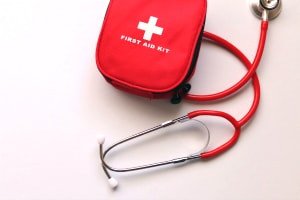
A good habit is to keep your first-aid kit where everyone can find it and to check it now and then, so the gear is ready when the skills are. Knowing where the AED is in the places you frequent, from the gym to the office, is part of the same readiness.
When you finish, take a few concrete steps to make the knowledge real: assemble or refresh a proper first-aid kit, note where the nearest AEDs are in the places your family spends time, and walk everyone through a simple what-if so each person knows their part. Then plan to sit an in-person CPR class when you can, since practicing compressions on a manikin is what turns this course from understanding into muscle memory.
What You Will Learn
The course covers the core life-saving skills every household should have. Here is what you will learn:
- What first aid is and what belongs in a first-aid kit
- Scene safety, protective equipment, and hand-washing for rescuers
- How to recognize common medical problems and their symptoms
- How to handle trauma injuries
- Chest compressions, rescue breaths, and mask use
- How to help a choking adult, child, and infant
- When and how to activate emergency services
- How to respond to environmental injuries and illnesses
Together, these lessons give you a working response for the most common life-threatening emergencies. That is knowledge that protects your family every day, not just in a crisis, and it is the foundation the rest of the first-aid track builds on.
What the Course Covers
- Scene safety and preparation: checking the scene, using protective equipment, and washing up so you help safely.
- CPR: chest compressions, rescue breaths, and mask technique for a person who is not breathing.
- Using an AED: when a defibrillator is needed and how to use one.
- Choking: the symptoms and the response for adults, children, and infants.
- Medical and environmental emergencies: recognizing common problems and handling injuries and environmental illness.
Where It Fits in Your Prep
First aid and CPR sit at the heart of the Well-Stocked Body track, because no supply matters more than a person who knows how to keep someone alive until help arrives. Every prepared household should have at least one member with these skills, and ideally more than one.
It pairs naturally with a stocked first-aid kit and a plan for reaching help. The kit is the gear, this is the training, and together they turn a frightening moment into one you can actually manage.
Take it early, before you need it, and revisit it now and then so the steps stay fresh. Skills like these fade without review, and the time to relearn them is not in the middle of an emergency.
Above all, do not let it sit as knowledge you learned once. A quick refresher every year or so, ideally with hands-on practice, is what keeps these skills genuinely ready rather than half-remembered.
This is educational first-aid knowledge, and an online course is not the same as hands-on certification. It will not replace an in-person CPR class where you practice on a manikin, and it is never a substitute for professional medical care or for calling emergency services when you can. Treat it as the knowledge foundation, back it with real practice, and it is genuinely valuable for anyone.
The lessons are free to finish. When you complete the course, a certificate is available that you can add to your resume or LinkedIn, and a credential like this can help you make the case for a job or a raise. Buying the certificate is optional and never required to finish the lessons.
The skills in this free course are the ones you hope never to need and are deeply grateful to have when you do. Learn them, practice them, and keep them fresh. Being ready to help is one of the most important forms of preparedness there is.
Start the free course and earn your certificate
Looking for more free training like this? Browse the full lineup on our Free Shelf, our hand-picked collection of free Alison courses for preppers.
Some links are affiliate links, and they never change your price. Details: /disclaimer.