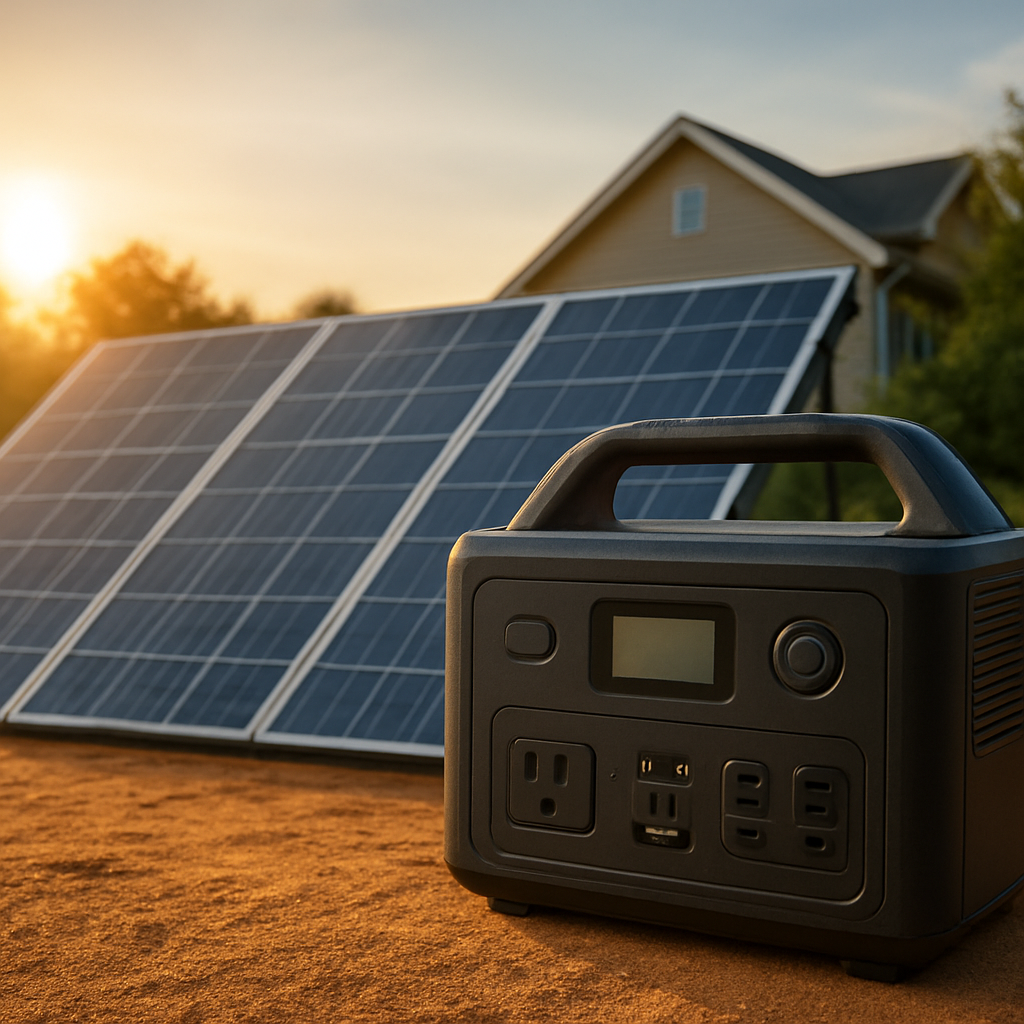
Outages are inevitable, and a reliable solar generator can keep essential loads humming when the grid goes dark. This guide shows you the best solar generator for home backup by offering real-world benchmarks, practical sizing steps, and panel-pairing strategies that actually work in a home setting. You’ll get a clear decision framework—prioritize loads, size appropriately, weigh the budget against safety and maintenance, and walk away with concrete, model-specific guidance you can act on today.
Understanding Home Backup Power with Solar Generators
A solar generator isn’t a magic wand for outages; it’s a sizing-and-scenario tool for keeping critical loads alive. For homeowners, the best solar generator for home backup is defined by three levers: capacity in watt-hours, inverter power for startup surges, and how quickly you can recharge from sun or wall. You size around what you need to sustain refrigeration, communications, lighting, and climate control during the outage duration you expect, not what a marketing sheet promises. A practical baseline is a system that can cover your running watts for a full day with headroom for startup spikes.
Differentiating between portable solar generators and stationary home backup solutions matters: portable units are lighter, cheaper, and power individual circuits via outlets; stationary systems come as larger builds that can interface with your home panel through a transfer switch or interlock kit. The interface choices drive how you implement outage strategy: rely on one portable box, or deploy a modular setup that feeds essential circuits through a dedicated panel. For frequent daily disruptions, a portable kit with solar charging can suffice; for multi-day outages or stronger home resilience, a larger, expandable option wins.
Typical outage scenarios reveal the limits: solar charging can stall on cloudy days, and appliances like refrigerators spike during startup. A practical example: a fridge about 200W running and 600W startup, a Wi‑Fi router around 12W, and two LED lights about 20W together. That’s roughly 232W running with startup bursts to 600W. A 1,500Wh unit with a 1,000W inverter can keep these loads for about a day in steady sun, while heavier loads or longer outages eat into that, unless you supplement with daytime recharging or extra batteries.
Tradeoffs matter here: high-capacity, expandable models offer long durations but take more space, cost more, and demand more maintenance. Cheaper, compact options fit a few essentials but struggle with surge-heavy devices or longer outages. The right approach is to map a minimal viable kit for your typical outage window, then add battery modules or extra panels as needed. Don’t overpay for capacity you won’t use; plan for the sun you actually get rather than the best-case spec.
Concrete example: in a real outage, a family fridge (~200W running, ~600W startup), a modem (~12W), and two LED lights (~20W total) comprise about 232W of running load with startup spikes to 600W. A 1,500Wh unit with a 1,000W inverter keeps these devices running for roughly a day under steady sun, and longer if you leverage daytime recharging. Add a second battery or a few panels to boost daytime recharge, and you can extend usable time across a day with sun.
Sizing rule: ensure the continuous inverter rating exceeds your running loads by a comfortable margin and include a 20–30% buffer for startup surges; ensure your solar input can restore energy during daylight.
Safety and home integration matter from day one. Basic precautions include proper ventilation for battery storage and respecting manufacturer guidance. When you start tying a solar generator into a home panel, involve a licensed electrician for interconnection work, transfers, and code compliance to avoid backfeed and safety risks.
Takeaway: start with essential loads, establish a baseline capacity, and secure a reliable daytime recharging plan. That framework helps you pick between portable and expandable whole-home strategies without overcommitting on upfront cost.
How to Choose the Best Solar Generator for Home Backup
When you choose the best solar generator for home backup, anchor your decision in real outages and real loads, not marketing hype. Prioritize how long essential circuits run with daytime recharging in mind, and look for a unit that scales with your home energy storage needs rather than a one-off fix. This is a decision about resilience, not a single feature race.
- Capacity (Wh) and runtime framing: interpret the capacity as the expected runtime for your essential loads, then test against your daily usage and night-time needs.
- Inverter continuous watts and surge: ensure the continuous rating covers your typical load and that you can handle startup surges for devices like refrigerators or sump pumps.
- Solar input and recharge speed: higher solar input reduces downtime between outages; consider whether you need expandable or modular options for multi-day events.
- Battery chemistry and cycle life: lithium chemistries differ in daily cycling and longevity; factor warranty terms and expected lifespan into total cost of ownership.
- Expandability and safety features: look for modular batteries or expandable packs and solid safety protections, including protections for off-grid configurations and proper BMS implementations.
- Charging options and panel compatibility: verify you can charge from AC, solar, and, if relevant, a vehicle, and confirm the panels you plan to use are compatible with the model.
Practical insight: expandability often beats raw capacity in real-world outages, especially where daylight recharging is intermittent. A mid-sized core with add-ons can outpace a larger fixed unit that stays idle for long stretches. For reference, many readers consider public reviews and spec comparisons alongside sources like CNET’s best solar generators and Tom’s Guide picks to calibrate expectations.
Concrete Example: A fridge (~150W running), a modem (~10W), and four LED lights (~40W) draw about 200W in steady operation, with a compressor startup surge around 600W. A 1000Wh core with a 600W continuous inverter can sustain these loads for roughly 4–6 hours in a typical outage. If you secure about 300–400W of solar input in good sun, you could replenish that 1000Wh core in 2–4 hours of daylight, enabling another cycle before nightfall.
Key takeaway: plan around daytime recharging and expandable capacity. A mid-sized, expandable system with robust solar input provides the most practical resilience for typical home backup scenarios.
Trade-offs matter: heavier, higher-capacity units offer longer runtimes but take more space and cost more; smaller, non-expandable kits are cheaper upfront but can limit outage duration. Align the balance with your available space, budget, and how often you face multi-day outages.
Takeaway: start with a disciplined load calculation for essential circuits, choose a model with room to grow, and pair it with panels that maintain daytime recharge. The goal is reliable, repeatable readiness, not one-time performance.
Top Contenders for Home Backup
Choosing the best solar generator for home backup isn’t about chasing the largest battery. It’s about aligning capacity, recharge speed, and ecosystem with your outage profile. Here are five strong contenders that cover the spectrum, from all-in-one expansion systems to modular stacks you grow over time.
Key point: expandability and daytime recharge speed often beat raw Wh when you’re facing multi-day outages and variable sun. The models below illustrate practical paths to reliable operation, not vanity specs.
EcoFlow Delta Pro
What it shines at: high total capacity when you couple it with optional battery packs, plus robust power management that helps run essential loads during outages. Real-world setups rely on it for fridge duty, Wi‑Fi, lighting, and small pumps during multi-day events. Tradeoffs: price and size make it less portable, and you’re investing in EcoFlow’s ecosystem and firmware updates to keep the system integrated with a home-transfer approach.
- Pros: expandable storage up to potential multi-kWh footprints, strong surge handling for refrigerators and pumps, fast daytime recharging with high solar input.
- Cons: heavier bulk, higher upfront cost, best results when paired with proper transfer-switching or professional guidance for home interfaces.
Goal Zero Yeti 6000X
What it shines at: reliability and ecosystem compatibility. It’s a calm, rugged option for home backup or remote cabins, with a straightforward setup and extensive accessory support. Tradeoffs: the unit is heavy, and solar recharging can be slower than the top expandable boxes, which matters in longer outages. Best-use: a dependable, stationary backbone for a limited-but-repeatable outage strategy, where you value proven outdoor performance and modular paneling over rapid expansion.
- Pros: solid build, broad accessory ecosystem, straightforward to deploy with basic safety considerations.
- Cons: weight and slower recharges; less modular scalability than true modular systems.
Jackery Explorer 2000 Pro
What it shines at: a portable workhorse with solid capacity and convenient handling. It’s well-suited for weekend cabins, RVs, or a limited home backup where you still need to move the unit between rooms or vehicles. Tradeoffs: fewer expansion options and a more conventional charging curve than modular Bluetti or Delta Pro setups; you’ll want extra panels if you face multi-day outages.
- Pros: portable for a mid-range system, reliable inverter performance, broad retailer support.
- Cons: limited scalability compared with modular or fixed-box systems, higher per-Wh cost when expanding.
Bluetti AC200P
What it shines at: strong value for essential-load resilience. Its 2 kWh-ish footprint powers a fridge, lights, modem, and small devices with solid inverter capacity at a competitive price. Tradeoffs: not designed for heavy expansion; best when you’re optimizing for cost per watt and portability rather than multi-room, all-at-once resilience.
- Pros: excellent price/performance, reliable for daily essentials, broad accessory support.
- Cons: limited future expandability, heavier for the capacity class.
Bluetti AC300 with B300 battery modules
What it shines at: a modular, scalable path to home resilience. Start with a practical baseline and grow to a multi-day, whole-house profile by adding B300 packs. Tradeoffs: heavier, more complex to manage, and scheduling with a transfer switch or panel integration becomes more important as you scale.
- Pros: true scalability, potential to reach high total capacity, strong long-term value if you plan ahead.
- Cons: upfront planning needed, heavier upfront footprint, more configuration work than single-box units.
Key takeaway: for most households, prioritize a design that can be expanded and recharged quickly in daylight over chasing the absolute highest Wh rating in a single box.
Takeaway: match the contender to your expected outage pattern—daily sun, multi-day events, and whether you’ll stack modules or keep a portable core. Your choice should reflect loads, sun hours, and how you plan to recharge between outages.
Solar Panel Pairing and Charging Strategy
Panel pairing isn’t about accumulating the most watts. The real value comes from how fast you recharge the battery during daylight and keep essential loads powered through outages.
A practical pairing framework centers on three levers: battery capacity, solar input, and the outage profile. Treat them as a system rather than independent specs.
A practical pairing framework
- Estimate daytime recharge capacity: Calculate your essential daily load in Wh and set a realistic daytime recharge target based on peak sun hours.
- Match input to your recovery window: For multi-day outages prioritize higher solar input or modular panels; ensure your generator’s MPPT can handle higher voltages safely. Consider quality panels to maintain performance in heat and shade; see Renogy 100W panels for reference.
- Plan for expansion and compatibility: Choose equipment with battery expansion or add-on panels without messy wiring. Look for systems that support modular batteries so you don’t outgrow the kit too quickly.
- Ground truth your numbers: Use field performance rather than lab numbers; consider shading, temperature, and cable losses.
Concrete example: In a weekend outage, a family relies on a fridge with a typical running load around 120W and a startup surge up to 600W, plus a modem, LED lighting, and a small fan. They pair two 200W portable panels with an EcoFlow Delta Pro EcoFlow Delta Pro. In bright sun they net roughly 350–400W input, enough to push the Delta Pro from 15% to about 85% in 6–8 hours, leaving capacity to cover the fridge overnight. When a passing cloud bank reduces irradiance, recharge slows, highlighting the day-to-day variability of solar charging.
Panel pairing considerations: MPPT versus PWM matters for efficiency. Ideally, you match panel voltage to the generator input to minimize current, reduce copper loss, and keep cable temps in check. Higher voltage, fewer parallel strings can help, but you must stay within the controller’s limits. For practical panel options, a couple of Renogy 100W panels are a common, reliable choice to pair with portable power stations.
Practical steps: Step 1 list essential loads and their running watts; Step 2 estimate daily Wh; Step 3 choose a generator with enough continuous inverter watts and a charging input that fits your panel candidates; Step 4 size panels to hit your daytime recharge target, then test under actual sun conditions.
Safety and weather: keep panels clear of shade, use weather-rated connectors, and avoid storing heavy batteries in unventilated spaces. If you plan any home interconnection with a transfer switch, involve a licensed electrician.
Key takeaway: design your panel pairing to meet daytime recharge needs within the peak sun window. If outages may extend, build in expansion potential so the system scales with longer events.
Takeaway: Start with daytime recharge targets and pair panels to meet them; then plan for expansion so the best solar generator for home backup stays ready for longer outages.
Practical Setup, Safety, and Home Integration
Start with safe interfacing—do not plug a solar generator directly into a wall outlet or into your home’s circuits without the proper hardware. The most reliable, code-consistent method is a transfer switch or an interlock kit that isolates the house from the grid while the generator is feeding the panel. Without it, you risk backfeeding and electrical fires, no matter how quiet or clean the generator is.
In practice, treat the solar generator as a component of a compact backup system: it powers a curated subset of circuits and is recharged by daylight or a dedicated charger. Portable units win in portability and immediate response; stationary systems with a transfer switch enable a cleaner, safer home integration and reduce the chance of accidental grid backfeed. When you scale up, you’ll want a plan that specifies which circuits stay online during an outage and how you’ll reallocate loads as the battery drains.
Placement matters: keep the unit in a well-ventilated area away from heat and moisture; battery chemistry prefers cool, dry spots. If you’re storing large-capacity packs, ensure clearance for air intake and avoid stacking batteries. These are not cosmetic choices—their safety and longevity depend on layout. For indoor storage, choose a ventilated closet or a garage with room for air to circulate around the hardware.
Example use case: during a 12-hour outage, a homeowner runs a fridge (about 120W idle with a 600W startup surge), a modem (10–20W), and essential lighting (60W) plus a small fan (40W). A 3.6 kWh-class unit with a 2–3 kW inverter, combined with daytime solar recharge, can sustain these loads through daylight and into the evening with disciplined load management. If a sump pump kicks in, the surge could push the system toward its peak; that scenario shows why you design around surge capacity as well as running watts.
Key safety precaution: never bypass building wiring or rely on daisy-chained outlets for house power. Use a proper interlock or transfer switch, and have a licensed electrician review any panel interconnection. This avoids backfeed, code violations, and safety hazards. For readers evaluating options, consider a dedicated transfer switch or interlock kit that matches your panel model and local code requirements.
Operationally, implement a simple maintenance rhythm: weekly visual checks of connections, monthly firmware/app updates, and an annual battery health check if your unit supports it. Track charging sources—solar input degrades a bit over time, and battery capacity fades with cycles. Plan for eventual expansion or battery replacements as part of long-term resilience.
Key takeaway: For reliable home backup power, pair a solar generator with a proper interlock/transfer solution, ventilated storage, and a realistic load plan that prioritizes essential circuits and daily recharging.
Budgeting, Deals, and Long-Term Considerations
Budgeting for the best solar generator for home backup isn’t about the sticker price. It’s about total cost of ownership: upfront purchase, warranty depth, expected battery life, maintenance, and the potential need for upgrades as loads or the grid evolve. Plan around how you’ll use the system, not just how much it can store.
- Entry-level kits: sub-$1k, 600–1,000 Wh, modest surge, and limited expansion options. They cover essential loads for short outages but will struggle with heavier appliances or multi-day events.
- Mid-range, better resilience: roughly $1.5k–$3k, 1,000–4,000 Wh, higher surge rating and some modular growth paths. Suitable for weekend outages and light whole-house needs when paired with panels.
- Premium, expandable systems: $3k–$8k+, 4,000–10,000+ Wh, modular battery banks and larger inverters. Designed for multi-day outages and potential full-house standby with careful panel integration.
Beyond sticker price, battery chemistry and cycle life drive long-term costs. A unit with a strong warranty and field-replaceable modules can save more over five to seven years than a superficially larger capacity that forces frequent replacements. Verify what counts as a warranty failure, whether batteries are serviceable, and what the local service network looks like.
- Define your load profile: list fridge, modem, lighting, essential climate control, and any pumps; estimate running watts and how many hours you expect them to run per outage.
- Match to a tier: ensure the continuous inverter watts comfortably cover peak loads; bigger loads demand headroom for startups and surges.
- Consider expansion path: choose models that offer battery modules or easy scaling, so you don’t outgrow the system in a year or two.
- Check deals with bundles: seasonal promos and bundles that include panels and cables can save, but verify warranty transfer and panel compatibility as part of the deal.
- Audit charging speed: confirm solar input and any vehicle or AC charging paths to meet outage recovery needs.
Concrete example: A family facing a 2-day outage prioritizes fridge, modem, lights, and a small fan. A mid-range setup with roughly 3,000–3,500 Wh usable capacity and strong solar input can cover this scenario and recharge daily to extend uptime. If the family anticipates longer outages or wants headroom for additional circuits, a premium expandable path offers more capacity but at a substantially higher upfront cost.
Key takeaway: In budgeting for the best solar generator for home backup, prioritize total cost of ownership over initial price. Battery warranty and upgrade options often determine long-term value far more than peak capacity.
End with a practical next step: map your outage scenarios to a budgeting path—start with a verified load estimate, pick a tier that covers that load with headroom, and look for bundles that preserve warranty while delivering the panels and cables you’ll actually use.